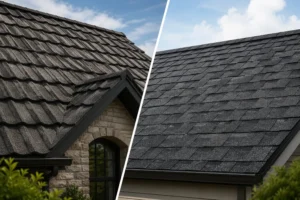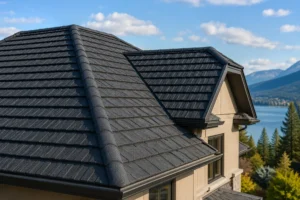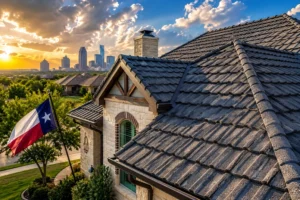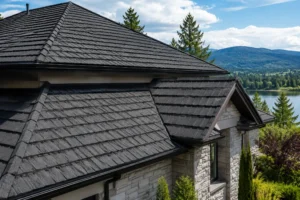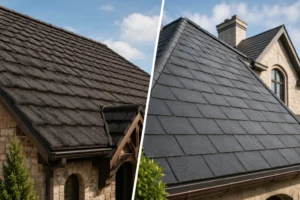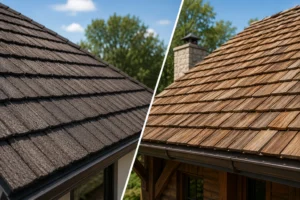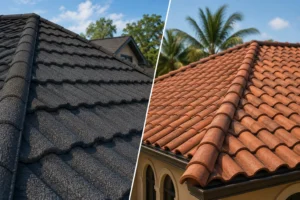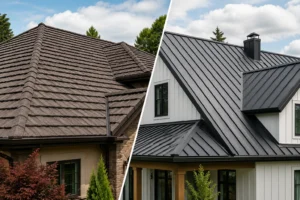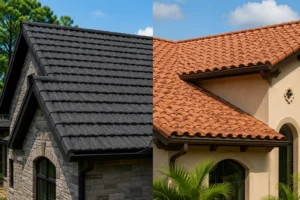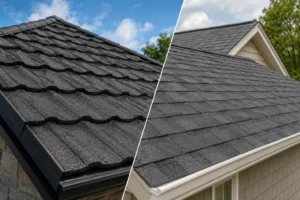
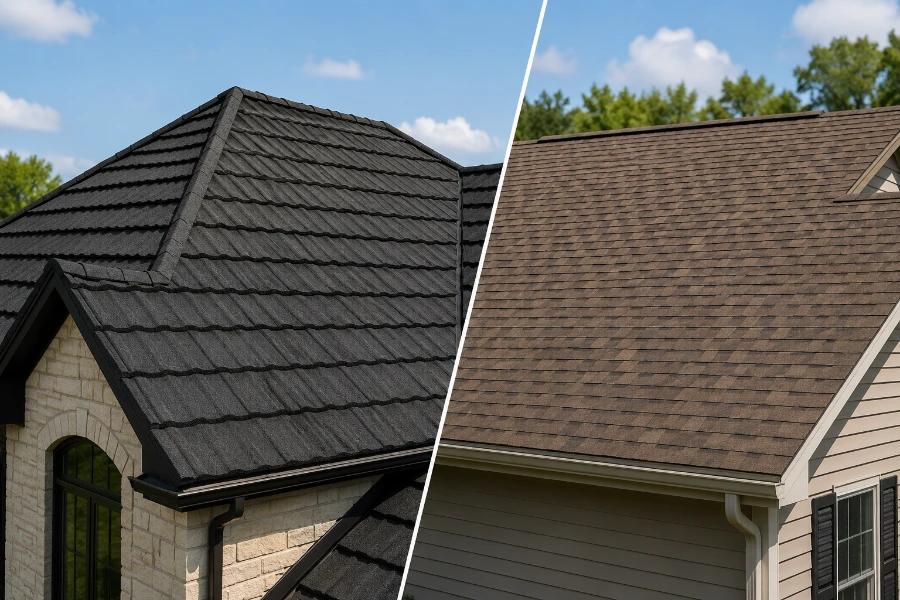
Choosing a new roof isn’t something most homeowners do often. In fact, it may only happen once or twice during the time they own a home. That’s exactly why comparing a stone coated roof vs architectural shingles deserves careful attention. While both options deliver better performance than traditional 3-tab shingles, they differ dramatically in durability, lifespan, maintenance, weather resistance, and long-term value.
At first glance, architectural shingles appear to be the more affordable option. They dominate residential neighborhoods across the country and have earned a reputation for reliability. However, stone coated roofing has become increasingly popular among homeowners looking for exceptional longevity and superior protection against severe weather.
So which roofing system deserves your investment?
Let’s break down every important category so you can confidently choose the right roof for your home.
What Is a Stone Coated Roof?
Stone coated roofing combines the strength of steel with the beauty of traditional roofing materials.
Unlike standard metal panels, these roofing systems consist of a steel base protected by multiple coatings before being covered with natural stone granules. Most manufacturers begin with steel that has undergone galvanization, a corrosion-resistant process that significantly improves durability before protective coatings and stone granules are applied.
The result is a roof that looks like shingles, slate, clay tile, or cedar shake while offering the structural strength of steel.
Common profiles include:
- Traditional shingle
- Wood shake
- Spanish tile
- Slate
- Barrel tile
Most premium systems carry warranties ranging from 50 years to a lifetime.
Unlike many roofing materials, stone coated roofs remain surprisingly lightweight while offering outstanding impact resistance.
What Are Architectural Shingles?
Architectural shingles are often called dimensional or laminated shingles.
Instead of using a single flat asphalt layer like traditional 3-tab shingles, architectural shingles contain multiple laminated layers that create thickness, texture, and improved durability.
These shingles generally consist of:
- Fiberglass mat
- Asphalt coating
- Ceramic-coated mineral granules
- Reinforced laminated construction
The added thickness improves wind resistance while giving the roof a more dimensional appearance.
Most architectural shingles last between 25 and 35 years, depending on climate, installation quality, and maintenance.
They’ve become the standard choice for many new homes because they balance affordability with improved performance.
Stone Coated Roof vs Architectural Shingles: Side-by-Side Comparison
| Feature | Stone Coated Roof | Architectural Shingles |
| Material | Steel with stone coating | Fiberglass and asphalt |
| Lifespan | 50+ years | 25–35 years |
| Wind Resistance | Up to 120–170 mph | Typically 110–130 mph |
| Hail Resistance | Excellent | Good |
| Fire Rating | Class A | Usually Class A |
| Weight | Lightweight | Moderate |
| Maintenance | Minimal | Moderate |
| Energy Efficiency | Excellent | Good |
| Initial Cost | Higher | Lower |
| Lifetime Value | Outstanding | Moderate |
Looking only at installation cost doesn’t tell the entire story. Long-term ownership costs often paint a very different picture.
Durability Comparison
When homeowners compare a stone coated roof vs architectural shingles, durability usually becomes the deciding factor.
A roof protects everything beneath it. Even small failures can result in expensive interior repairs.
Stone coated roofing is engineered to withstand years of punishment.
Architectural shingles are durable as well—but they’re still asphalt-based products that naturally age over time.
Hail Resistance
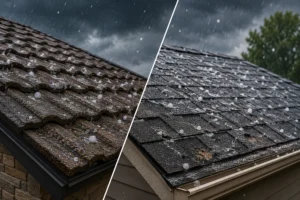
Large hailstones can crack asphalt shingles, loosen granules, or expose the fiberglass core.
Stone coated steel absorbs impacts differently.
Instead of cracking, the steel foundation distributes the force across the panel, dramatically reducing damage.
If impact resistance is one of your biggest concerns, our guide to Stone Coated Roof vs Impact Resistant Shingles takes a deeper look at how different roofing systems perform during hailstorms and severe weather.
Wind Performance
High winds are responsible for thousands of roof insurance claims every year.
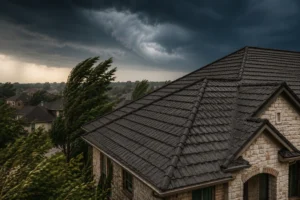
Architectural shingles perform well under normal conditions, but individual shingles can loosen or lift during powerful storms.
Stone coated roofing systems interlock together, creating a much stronger roof assembly.
Many systems are tested well above hurricane-force winds.
Heavy Rain
Both roofing systems shed water effectively when installed correctly.
However, steel panels naturally resist moisture penetration because they contain fewer exposed seams than individual shingles.
Snow and Ice
Heavy snow adds tremendous weight to roofing systems.
Fortunately, stone coated roofing is lightweight while maintaining excellent structural strength.
Snow also slides off more efficiently from many stone coated profiles, reducing long-term stress.
Lifespan: Which Roof Lasts Longer?
Here’s where the difference becomes difficult to ignore.
Architectural shingles generally provide dependable service for around three decades.
Stone coated roofing often doubles that lifespan.
Some systems continue protecting homes for more than half a century with minimal maintenance.
That’s an enormous difference.
Imagine replacing your asphalt roof twice while your neighbor’s stone coated roof continues performing beautifully.
Factors affecting roof lifespan include:
- Installation quality
- Local climate
- Ventilation
- Routine maintenance
- Storm exposure
Regardless of material, professional installation remains one of the biggest factors influencing longevity.
Weather Performance Across Different Climates
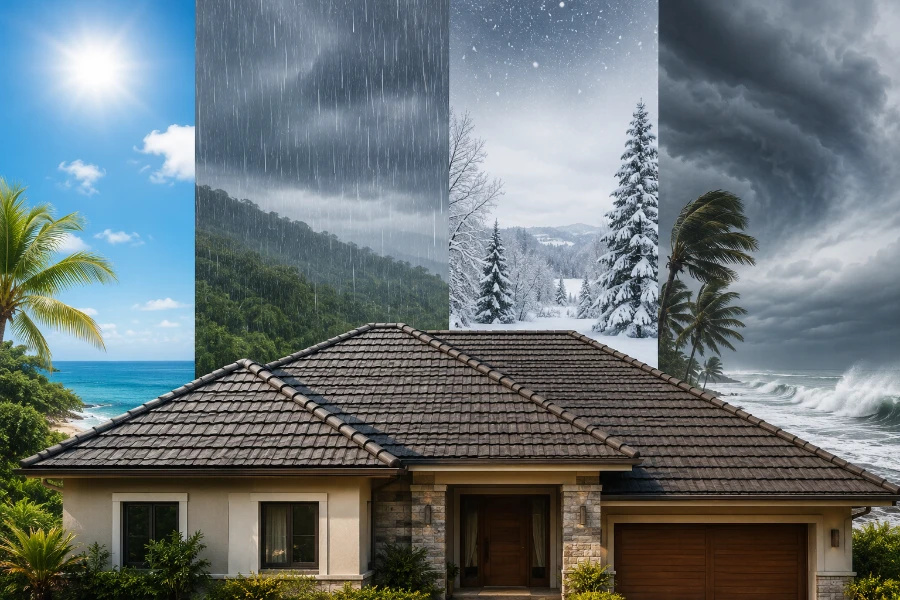
Every roofing material performs differently depending on location.
Hot Southern Climates
Intense sunlight accelerates asphalt aging.
Stone coated roofing reflects more radiant heat and experiences less degradation from ultraviolet exposure.
Coastal Areas
Salt air creates corrosion concerns for many roofing materials.
Fortunately, premium stone coated systems include multiple protective layers specifically designed to combat corrosion.
Hurricane Regions
Homes near the Gulf Coast or Atlantic shoreline benefit from roofing systems engineered for extreme winds.
The interlocking design of many stone coated panels offers exceptional uplift resistance.
Hail-Prone Areas
Hail remains one of the leading causes of roof replacement across the United States.
Stone coated roofing consistently outperforms asphalt products during severe hail events.
Homeowners comparing premium roofing materials may also want to read our comparison of Stone Coated Roof vs F-Wave Roofing, which explores durability, longevity, maintenance, and long-term value between these two high-performance systems.
Energy Efficiency Comparison
A roof influences much more than weather protection.
It also affects indoor comfort and monthly energy costs.
Many premium stone coated roofing systems incorporate reflective coatings that reduce solar heat gain.
Depending on the product selected, some materials may even qualify as ENERGY STAR roof products, helping improve cooling efficiency in warmer climates.
Architectural shingles also offer reflective options, but they generally absorb more heat than stone coated steel.
Benefits of improved energy efficiency include:
- Lower cooling bills
- More comfortable attic temperatures
- Reduced HVAC workload
- Improved summer comfort
While savings vary by climate, homeowners in hotter regions often notice the greatest benefits.
Appearance and Curb Appeal
Performance matters.
Appearance matters too.
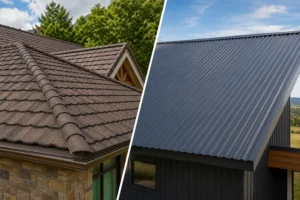
Stone coated roofing surprises many homeowners because it doesn’t resemble traditional standing seam metal roofing.
Instead, it closely mimics premium roofing materials while offering superior durability.
Available styles include:
- Cedar shake
- Slate
- Clay tile
- Traditional dimensional shingles
Architectural shingles also offer impressive curb appeal.
Manufacturers produce hundreds of color blends and textures that complement nearly every architectural style.
For many homeowners, the choice comes down to aesthetics combined with long-term performance.
Installation Differences
Although both roofing systems require professional installation, the process differs significantly.
Architectural shingles are familiar to most roofing contractors and generally install more quickly.
Stone coated roofing requires specialized knowledge, careful panel alignment, and precision fastening.
However, the extra installation effort contributes directly to the roof’s long-term durability and weather resistance.
Professional installation remains essential regardless of which material you choose.
More importantly, an experienced installer ensures the roofing system performs exactly as designed.
Maintenance Requirements
One of the biggest differences homeowners notice after installation is the amount of maintenance each roofing system requires.
Both options are considered low maintenance compared to older roofing materials. However, when comparing a stone coated roof vs architectural shingles, stone coated roofing generally demands less attention over its lifetime.
Stone Coated Roof Maintenance
A properly installed stone coated roof requires very little routine care.
Most maintenance consists of simple visual inspections after major storms and keeping gutters free of debris. Because the panels resist cracking, curling, and granule loss far better than asphalt products, repairs are relatively uncommon.
Recommended maintenance includes:
- Inspect the roof after severe weather.
- Remove leaves and branches from valleys.
- Clean gutters regularly.
- Check flashing around chimneys and vents.
- Schedule a professional inspection every few years.
Since steel doesn’t absorb moisture, homeowners also avoid many of the issues associated with water infiltration and premature deterioration.
Architectural Shingle Maintenance
Architectural shingles also perform well but naturally age over time.
As asphalt expands and contracts through changing temperatures, shingles may begin to curl, crack, or lose protective granules. These changes are normal, but they increase maintenance needs as the roof ages.
Homeowners should periodically check for:
- Missing shingles
- Cracked shingles
- Granule accumulation in gutters
- Lifted shingle edges
- Damaged flashing
Routine inspections help identify small problems before they become expensive repairs.
Cost Comparison
Cost is often the first thing homeowners consider.
It shouldn’t be the only factor.
A roofing system should be evaluated based on lifetime ownership rather than installation price alone.
Initial Installation Cost
Architectural shingles typically cost less upfront.
The materials are widely available, installation is straightforward, and labor costs are generally lower.
Stone coated roofing carries a higher initial investment because of premium materials and specialized installation.
For homeowners working within a tight budget, asphalt may appear to be the clear winner.
However, that changes when long-term expenses are considered.
Lifetime Cost of Ownership
Replacing a roof isn’t inexpensive.
If an architectural shingle roof lasts around 30 years while a stone coated roof lasts 50 years or more, many homeowners may only replace the stone coated roof once during their ownership.
That significantly changes the overall value equation.
| Cost Factor | Stone Coated Roof | Architectural Shingles |
| Initial Investment | Higher | Lower |
| Expected Lifespan | 50+ years | 25–35 years |
| Maintenance Costs | Low | Moderate |
| Replacement Frequency | Less frequent | More frequent |
| Long-Term Value | Excellent | Good |
When viewed over several decades, the higher upfront investment often becomes much easier to justify.
Environmental Impact
Many homeowners also consider sustainability before choosing a roofing material.
Stone coated roofing performs well in this category.
Steel is one of the world’s most recycled construction materials, and many stone coated roofing products contain recycled content themselves. At the end of their service life, the steel can typically be recycled again instead of ending up in a landfill.
Architectural shingles have improved over the years, but asphalt roofing still generates a considerable amount of construction waste during replacement.
Environmental advantages of stone coated roofing include:
- Long service life
- Recyclable steel components
- Reduced replacement frequency
- Lower landfill waste over time
Choosing a roof that lasts decades longer can reduce material consumption over the lifetime of a home.
Noise Levels During Rain and Storms
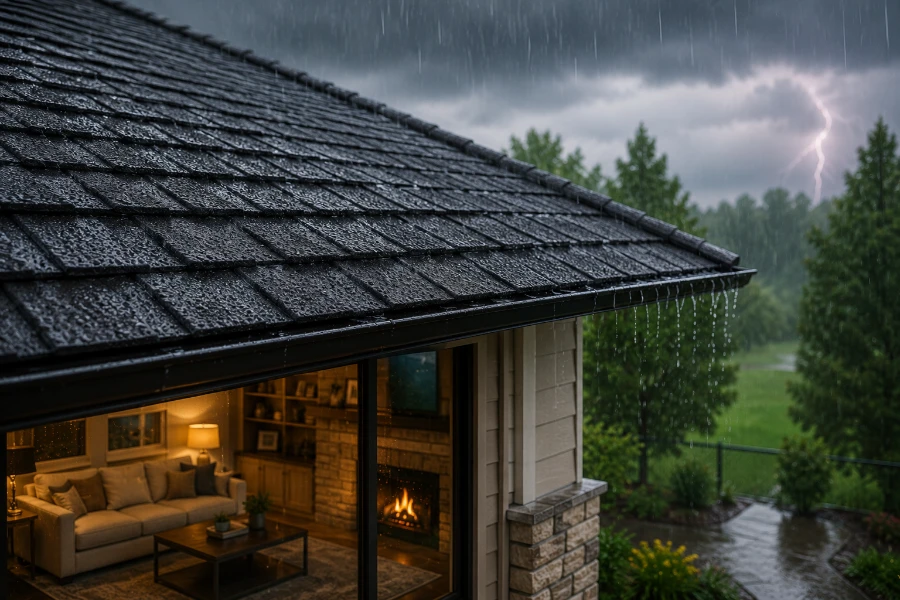
One common misconception keeps many homeowners from considering metal roofing.
People often assume metal roofs are noisy.
In reality, modern stone coated roofing installed over proper roof decking and underlayment sounds very similar to architectural shingles.
Most homeowners notice little to no difference during rainfall.
The insulation, attic space, decking, and underlayment absorb much of the sound before it reaches the living space.
Unless you’re comparing an exposed metal barn roof to a residential roofing system, excessive noise simply isn’t an issue.
Home Insurance Considerations
Insurance companies evaluate roofing materials differently because they directly affect future claims.
A roof with greater resistance to hail, wind, and fire often presents lower risk.
Stone coated roofing performs exceptionally well in these categories.
Depending on your insurance provider, roof rating, and geographic location, homeowners may qualify for reduced premiums when installing highly impact-resistant roofing systems.
Always ask your insurance company whether your selected roofing material qualifies for discounts.
Potential insurance advantages include:
- Better hail resistance
- Higher wind ratings
- Class A fire ratings
- Improved storm performance
While savings vary, it’s worth asking before making a final decision.
Best Applications for Stone Coated Roofs
Although stone coated roofing works well on nearly any home, certain situations make it especially attractive.
It is an excellent choice for:
- Homes located in hurricane-prone regions
- Areas with frequent hailstorms
- Coastal properties exposed to salt air
- Luxury homes
- Homeowners planning to stay for decades
- Properties where long-term durability is a priority
Its combination of longevity, weather resistance, and low maintenance makes it one of the strongest premium roofing investments available.
Best Applications for Architectural Shingles
Architectural shingles remain an outstanding roofing material for many homeowners.
They are particularly well suited for:
- Budget-conscious renovations
- New residential construction
- Traditional suburban neighborhoods
- Homes expected to be sold within the next decade
- Projects requiring lower upfront costs
They continue to offer an attractive appearance and dependable performance while remaining one of the most affordable premium roofing choices.
Pros and Cons
Stone Coated Roof Pros
- Exceptional lifespan
- Outstanding wind resistance
- Excellent hail protection
- Lightweight construction
- Attractive appearance
- Low maintenance
- Fire resistant
- Strong long-term value
Stone Coated Roof Cons
- Higher initial cost
- Requires experienced installers
- Fewer contractors specialize in installation
Architectural Shingle Pros
- Lower upfront investment
- Widely available
- Easier to repair
- Broad selection of colors and styles
- Familiar installation process
Architectural Shingle Cons
- Shorter lifespan
- More vulnerable to hail damage
- Gradual granule loss
- May require replacement sooner
- Higher long-term maintenance needs
Which Roof Offers Better Long-Term Value?
When comparing a stone coated roof vs architectural shingles, many homeowners initially focus on price.
That’s understandable.
However, value extends far beyond the first invoice.
Imagine paying more today but avoiding another complete roof replacement decades later. Add lower maintenance costs, stronger storm protection, possible insurance savings, and excellent curb appeal, and the long-term picture becomes much clearer.
Architectural shingles still provide outstanding value for homeowners with limited budgets or shorter ownership plans.
Stone coated roofing, however, often delivers a lower annual cost of ownership because it lasts significantly longer.
If your goal is maximizing durability and minimizing future roofing expenses, the investment frequently pays for itself over time.
Final Verdict
There isn’t a universal winner because every homeowner has different priorities.
If affordability is your primary concern, architectural shingles remain a dependable, attractive, and proven roofing solution. They offer excellent performance, a wide range of design options, and a lower initial investment.
However, if you’re looking for exceptional durability, outstanding weather resistance, minimal maintenance, and a roof that could last half a century or more, a stone coated roofing system stands in a class of its own.
Ultimately, the decision comes down to balancing today’s budget with tomorrow’s savings. When evaluating stone coated roof vs architectural shingles, think beyond the installation estimate. Consider your local climate, how long you plan to stay in your home, maintenance expectations, and the total lifetime cost of ownership.
For homeowners seeking the best combination of strength, beauty, and long-term value, stone coated roofing is often the investment that continues paying dividends for decades.
FAQs
Stone coated roofs use steel with a stone finish, while architectural shingles are made from laminated asphalt.
Stone coated roofs typically last 50+ years, while architectural shingles last about 25–35 years.
Yes, many homeowners find the longer lifespan and lower maintenance justify the investment.
Stone coated roofing generally provides better impact resistance than architectural shingles.
No. Proper installation makes them about as quiet as other residential roofing systems.
Stone coated roofing typically requires less maintenance over its lifespan.
Yes. Its durability and premium appearance may improve resale appeal.
Yes. They offer reliable performance at a lower upfront cost.
Stone coated roofing often reflects more heat, helping improve energy efficiency.
Choose based on your budget, climate, and long-term ownership plans.