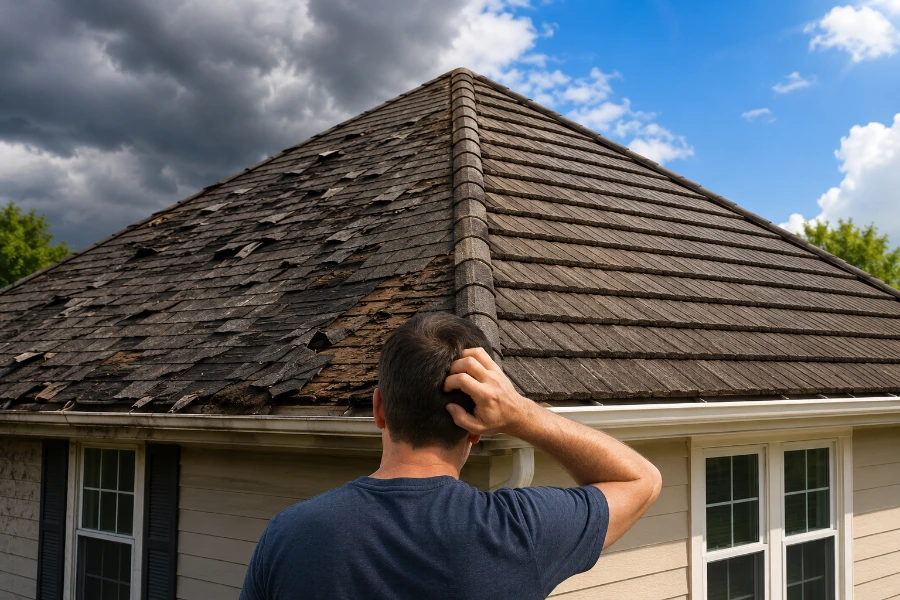
Your roof is your home’s first line of defense. It shields your family from hail, heat, hurricanes, heavy rain, wind-driven debris, and everything else Texas weather throws at it. But no roof lasts forever.
Many homeowners wait until they see a leak before thinking about replacement. By then, the damage is often much larger and far more expensive. Water intrusion can affect insulation, decking, drywall, ceilings, electrical systems, and even indoor air quality.
Replacing your roof before catastrophic failure is one of the smartest investments you can make in your property. A modern stone coated steel roof offers longer lifespan, stronger storm resistance, lower maintenance, and better long-term value than traditional roofing systems.
Signs Your Roof May Need Replacement
Some roofing problems are obvious. Others are hidden until major issues develop. If your roof is showing any of the signs below, it may be time for a professional inspection.
Common Warning Signs
- Missing or lifted shingles
- Granule loss in gutters
- Curling or cracked shingles
- Water stains on ceilings
- Soft spots on the roof deck
- Sagging roof sections
- Repeated leak repairs
- Mold or mildew in the attic
- Higher energy bills
- Storm or hail damage
- Roof age exceeding 15–20 years
Even small warning signs can point to larger structural problems underneath the surface.
The Real Cost of Waiting
Delaying roof replacement often costs more in the long run.
A damaged roof rarely improves on its own. Moisture spreads. Decking weakens. Insulation becomes less effective. Small repairs turn into major reconstruction projects.
Here’s how postponing replacement can impact your home:
| Problem | Potential Consequence |
|---|---|
| Minor roof leak | Interior drywall damage |
| Damaged shingles | Water intrusion into decking |
| Poor ventilation | Higher cooling costs |
| Storm damage | Insurance complications |
| Aging roof | Reduced property value |
| Persistent moisture | Mold growth |
The earlier issues are addressed, the more options homeowners typically have.
Why Texas Roofs Wear Out Faster
Texas roofs face extreme conditions year-round.
Between intense UV exposure, severe thunderstorms, hailstorms, hurricanes, and dramatic temperature swings, roofing materials in Texas endure more stress than in many other parts of the country.
Texas Weather Challenges
Hailstorms
Texas consistently ranks among the top states for hail claims. Hail impacts can bruise shingles, loosen granules, crack materials, and shorten roof lifespan significantly.
High Heat
Summer temperatures place constant stress on roofing systems. Expansion and contraction gradually weaken traditional shingles over time.
Strong Winds
Straight-line winds, tropical storms, and tornado activity can lift shingles and expose vulnerable underlayment.
Heavy Rain
Once water penetrates the roofing system, damage accelerates quickly.
When Repairs Are No Longer Enough
Repairs make sense in some situations. But there comes a point where replacing the entire roof becomes more cost-effective.
You may want to consider replacement if:
- Repairs are becoming frequent
- Your roof has multiple leak areas
- Storm damage affects large sections
- Materials are nearing end-of-life
- Insurance claims continue recurring
- Energy efficiency has declined
- Your roof no longer matches current building standards
A full replacement creates a clean, durable roofing system instead of patching aging materials repeatedly.
Why Homeowners Are Switching to Stone Coated Steel Roofing
Stone coated steel roofing combines the strength of metal with the appearance of traditional roofing styles.
Instead of looking industrial, modern stone coated steel systems can mimic:
- Architectural shingles
- Clay tile
- Slate roofing
- Cedar shake
That means homeowners can upgrade durability without sacrificing curb appeal.
Key Benefits of Stone Coated Steel
| Feature | Benefit |
|---|---|
| Steel core construction | Exceptional strength |
| Stone-coated finish | Traditional appearance |
| Interlocking panels | Superior wind resistance |
| Lightweight system | Reduced structural stress |
| Long lifespan | Often 40–70 years |
| Fire resistance | Improved safety |
| Impact resistance | Better hail protection |
For Texas homeowners, those advantages matter.
Better Protection Against Hail
Hail damage is one of the biggest reasons homeowners replace roofs in Texas.
Traditional asphalt shingles absorb repeated impact damage over time. Even when leaks are not immediately visible, hail can weaken the roof system and shorten its usable life.
Stone coated steel roofing is designed for impact resistance.
Many systems carry Class 4 impact ratings, which represent the highest hail resistance category commonly available for residential roofing.
That can help:
- Reduce future damage
- Lower maintenance costs
- Improve long-term durability
- Potentially qualify for insurance discounts
Stronger Wind Resistance
Wind damage often starts small.
Lifted shingles expose nails and underlayment. Once moisture gets underneath, deterioration spreads quickly.
Stone coated steel panels interlock securely, helping them resist uplift far better than many conventional roofing systems.
Some systems are rated for winds exceeding 120 mph.
That level of protection is especially valuable in areas vulnerable to hurricanes, severe thunderstorms, and tornado activity.
Longer Lifespan Than Asphalt
One of the biggest frustrations with traditional shingles is replacement frequency.
Many asphalt roofs in Texas need major replacement within 15–20 years due to weather exposure.
Stone coated steel roofing is built differently.
Typical Roof Lifespan Comparison
| Roofing Material | Average Lifespan |
|---|---|
| 3-tab asphalt shingles | 15–20 years |
| Architectural shingles | 20–30 years |
| Clay tile | 40–50 years |
| Standing seam metal | 40–60 years |
| Stone coated steel | 40–70 years |
For many homeowners, replacing the roof once instead of multiple times becomes a major long-term financial advantage.
Improved Energy Efficiency
Your roof affects indoor comfort more than many people realize.
Older roofing systems often trap heat inside the attic, forcing HVAC systems to work harder during Texas summers.
Modern roofing systems can help improve energy performance through:
- Better ventilation
- Reflective coatings
- Improved airflow
- Reduced heat absorption
Some stone coated steel systems are specifically engineered to improve thermal performance.
That can contribute to lower cooling costs over time.
Increased Home Value
A new roof is one of the most visible upgrades a homeowner can make.
Buyers notice roofing condition immediately. An aging or damaged roof can reduce buyer confidence and complicate real estate transactions.
Replacing your roof can help:
- Improve curb appeal
- Increase resale value
- Reduce buyer concerns
- Improve inspection results
- Strengthen insurance eligibility
Premium roofing systems also help homes stand out in competitive markets.
Lower Long-Term Maintenance
Older roofs often require:
- Frequent patching
- Leak repairs
- Flashing replacement
- Shingle replacement
- Storm maintenance
Those recurring costs add up.
Stone coated steel roofing systems are designed for long-term durability with lower maintenance requirements.
That means fewer emergency repairs and greater peace of mind.
Insurance Considerations
Insurance companies are becoming stricter about aging roofs.
In many areas, older roofs may lead to:
- Higher premiums
- Coverage limitations
- Actual cash value policies
- Non-renewal notices
Impact-resistant roofing systems may improve insurability and potentially qualify for discounts depending on the carrier and policy structure.
Every insurance company is different, but roof condition now plays a major role in underwriting decisions.
Environmental Advantages
Roof replacement can also be an opportunity to make a more sustainable choice.
Many traditional shingles eventually end up in landfills after replacement.
Stone coated steel roofing systems often contain recycled materials and are themselves recyclable at the end of their lifespan.
Their longer service life also reduces replacement frequency, which lowers overall material consumption over time.
Is It Better to Replace Before a Leak Happens?
In many cases, yes.
Waiting for visible leaks often means hidden damage has already been developing for months or even years.
Preventive replacement can help homeowners avoid:
- Interior repairs
- Mold remediation
- Structural damage
- Emergency service costs
- Temporary tarping
- Insurance disputes
Proactive replacement creates more scheduling flexibility and reduces the likelihood of crisis situations during major storm seasons.
What Happens During a Roof Replacement?
Every project differs slightly, but most roof replacements follow a similar process.
Typical Roof Replacement Process
- Initial inspection
- Material selection
- Estimate and project planning
- Tear-off of old roofing
- Deck inspection
- Underlayment installation
- New roofing installation
- Flashing and ventilation upgrades
- Cleanup and final inspection
A professional contractor should explain the full process clearly before work begins.
Choosing the Right Roofing Contractor
Not every contractor specializes in stone coated steel roofing.
Installation quality matters just as much as the materials themselves.
When choosing a roofing company, homeowners should look for:
- Proper licensing and insurance
- Manufacturer certifications
- Experience with stone coated steel systems
- Local project references
- Clear written estimates
- Strong warranties
- Knowledge of Texas weather conditions
A quality installation helps maximize the lifespan and performance of the roof.
Why More Homeowners Are Making the Switch
Homeowners today want more than a temporary solution.
They want:
- Durability
- Storm resistance
- Better aesthetics
- Lower maintenance
- Long-term value
- Energy performance
- Insurance advantages
Stone coated steel roofing delivers those benefits while maintaining the visual appeal of traditional roofing styles.
For many homeowners, it becomes a once-in-a-generation investment rather than another recurring repair cycle.
Final Thoughts
Roof replacement is not just about fixing problems. It is about protecting your home, improving long-term value, and reducing future stress.
If your roof is aging, storm-damaged, leaking, or simply nearing the end of its lifespan, now may be the right time to explore modern roofing options.
Stone coated steel roofing offers a powerful combination of strength, longevity, energy efficiency, and curb appeal designed specifically for demanding climates like Texas.
A stronger roof does more than protect your home.
It protects everything underneath it.