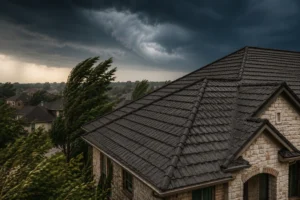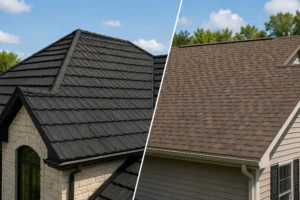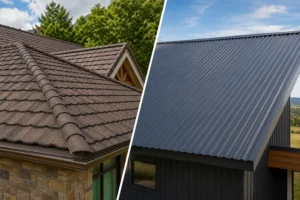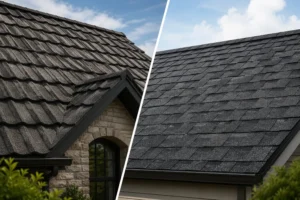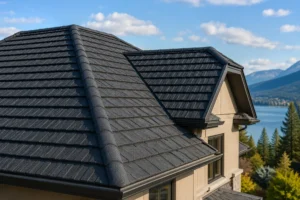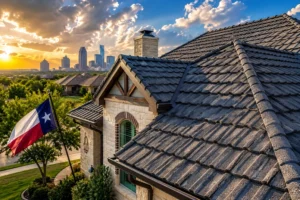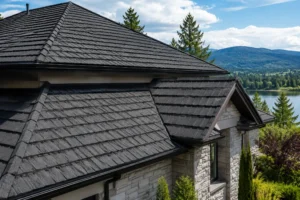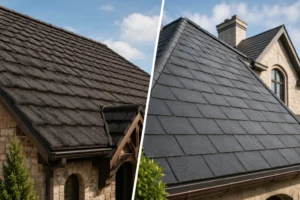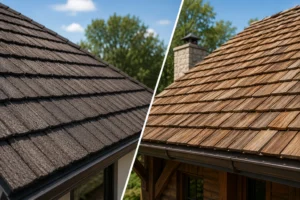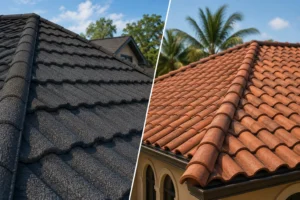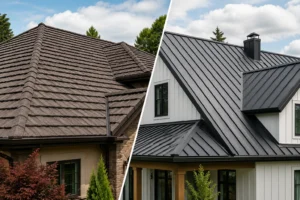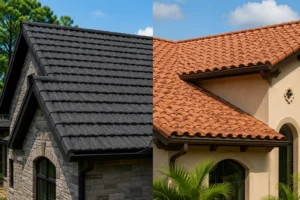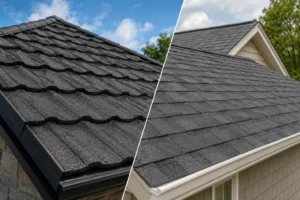
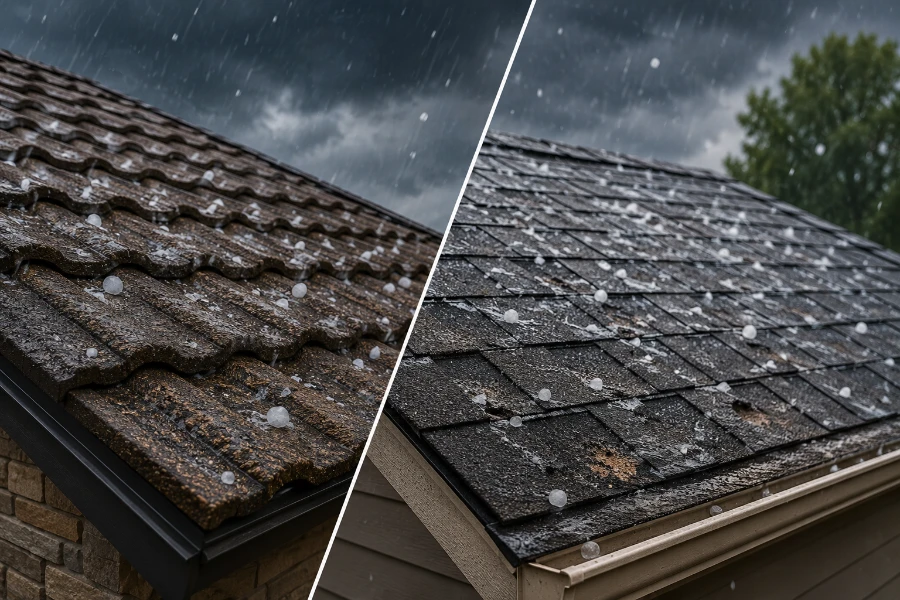
Hailstorms can turn an ordinary afternoon into an expensive nightmare. One storm is often all it takes to crack shingles, strip away protective granules, or leave a roof vulnerable to leaks that may not become obvious for weeks. That’s why understanding Stone Coated Roofs vs Asphalt During Hail is so important before investing in a new roof. While both roofing systems are widely used across the United States, they perform very differently when hail begins falling at high speeds. Choosing the right material isn’t simply about today’s installation cost. It’s about protecting your home, reducing future repair expenses, and gaining confidence every time severe weather appears in the forecast.
Hail is becoming a growing concern in many parts of the country, particularly in regions that experience frequent spring and summer thunderstorms. Roof replacements following severe weather can cost thousands of dollars, and repeated claims may even affect insurance premiums over time. For homeowners looking to make a long-term investment, comparing roofing materials before damage occurs is a smart move.
If you live in an area where hailstorms are common, it’s also worth exploring our guide to the best roofing materials for hailstorms in Texas, which examines how different roofing systems perform under repeated storm impacts.
In this guide, we’ll compare Stone Coated Roofs vs Asphalt During Hail, explain how each material responds to impacts, and help you decide which roofing system offers the best value based on durability, maintenance, and long-term performance.
Why Hail Is Such a Serious Threat to Roofing Systems
Not every hailstorm causes catastrophic damage. Even so, every impact places stress on roofing materials. The larger the hailstone, the greater the force delivered to your roof.
According to the National Weather Service, severe hail can range from small pellets to stones larger than baseballs. Larger hailstones carry enough energy to fracture roofing materials, dent metal components, damage flashing, and even break skylights.
How Hail Forms
Hail develops inside powerful thunderstorms where strong updrafts repeatedly carry water droplets above the freezing level. Each trip through the storm adds another layer of ice until the hailstone becomes too heavy to remain suspended.
As hailstones fall, they accelerate rapidly until approaching their terminal velocity. Larger hailstones strike roofs with tremendous force, sometimes exceeding speeds capable of damaging even high-quality roofing materials.
The combination of size, speed, and wind direction determines how much damage ultimately occurs.
Factors That Influence Roof Damage
Even two neighboring homes can experience different levels of damage from the same storm.
Several variables influence the outcome:
- Size of the hailstones
- Wind speed and direction
- Roof pitch
- Roofing material
- Roof age
- Existing wear and tear
- Installation quality
- Underlayment condition
A newer roof installed correctly generally performs better than an aging system nearing the end of its service life. Likewise, impact-resistant roofing products often withstand repeated storms better than conventional materials.
Understanding Stone Coated Roofing
Stone coated roofing has earned a strong reputation among homeowners looking for exceptional durability without sacrificing curb appeal. Although it resembles traditional shingles, tile, or shake roofing from the ground, its construction is entirely different.
Rather than relying on asphalt for strength, stone coated roofing uses engineered steel panels protected by multiple layers of specialized coatings.
What Stone Coated Roofing Is Made Of
A typical stone coated roofing panel consists of several protective layers working together.
These usually include:
- Steel core
- Corrosion-resistant metallic coating
- Primer layer
- Natural stone granules
- Protective acrylic finish
Each layer contributes to the roof’s ability to resist weather, impacts, corrosion, and fading.
Unlike traditional shingles that depend primarily on asphalt for flexibility, stone coated roofing derives much of its strength from the steel beneath the decorative stone coating.
How Stone Coated Roof Panels Are Installed
Installation differs significantly from asphalt shingles.
Instead of overlapping hundreds of individual shingles, contractors install interlocking steel panels that create a continuous roofing system. Panels are securely fastened to the roof deck using specialized fastening methods designed to resist high winds while limiting movement during storms.
The interlocking design also distributes impact forces more evenly across the roof surface.
This engineering advantage becomes especially important during hailstorms, where repeated impacts occur across large portions of the roof rather than in isolated locations.
Why Stone Coated Roofing Is Designed for Severe Weather
Modern stone coated roofing systems are often selected because they combine attractive architectural styles with exceptional durability.
Homeowners appreciate benefits such as:
- High impact resistance
- Excellent wind performance
- Fire resistance
- Long service life
- Reduced maintenance
- Resistance to cracking
- Better structural stability during severe weather
While no roofing material is completely immune to storm damage, stone coated roofing is specifically engineered to withstand demanding weather conditions that challenge many conventional roofing products.
This durability often makes it an appealing option for homeowners planning to stay in their homes for decades rather than just a few years.
Understanding Asphalt Shingle Roofing
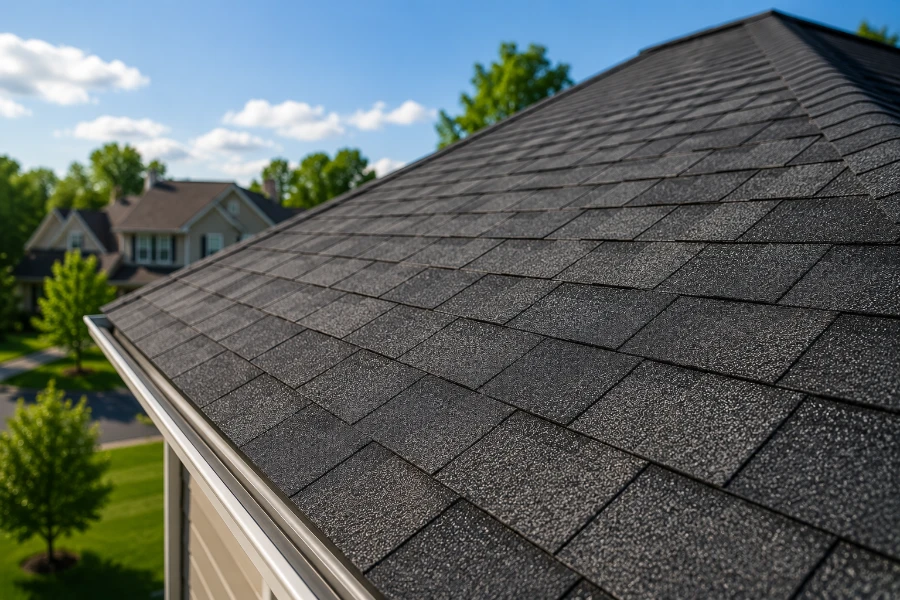
Asphalt shingles remain the most common residential roofing material in the United States. They’re affordable, widely available, and familiar to nearly every roofing contractor.
For many homeowners, asphalt offers a practical balance between initial cost and performance. However, when comparing Stone Coated Roofs vs Asphalt During Hail, understanding the limitations of asphalt becomes just as important as recognizing its advantages.
Composition of Asphalt Shingles
Although asphalt shingles appear simple from the outside, they’re made of several layers that work together to provide weather protection.
Most modern shingles include:
- Fiberglass mat
- Asphalt coating
- Mineral granules
- Adhesive seal strips
The fiberglass mat provides structural support, while asphalt helps create a water-resistant barrier. The mineral granules protect the asphalt from ultraviolet rays and contribute to the roof’s appearance.
Over time, however, weather exposure gradually wears away these protective granules, leaving shingles more susceptible to aging and storm damage.
Common Types of Asphalt Shingles
Not all asphalt shingles perform equally.
Homeowners generally choose from three primary categories:
| Shingle Type | Characteristics | Typical Performance |
| Three-tab | Lightweight and economical | Lowest impact resistance |
| Architectural | Thicker laminated construction | Better durability |
| Luxury | Premium appearance with additional thickness | Highest performance among asphalt products |
Architectural shingles have become especially popular because they provide improved wind resistance and a more dimensional appearance compared to traditional three-tab shingles.
Still, even premium asphalt products remain vulnerable to repeated hail impacts over time.
Why Asphalt Roofing Remains Popular
Despite its limitations, asphalt roofing continues to dominate residential construction for several practical reasons.
Some of its biggest advantages include:
- Lower upfront installation cost
- Wide product availability
- Faster installation
- Easier repairs
- Broad selection of colors and styles
- Familiarity among contractors
For homeowners working within a tight budget, asphalt often provides an affordable roofing solution.
However, lower installation costs don’t always translate into lower lifetime ownership costs. Multiple hailstorms over twenty or thirty years may lead to repeated repairs or full roof replacements that gradually narrow the price gap between asphalt and more durable roofing systems.
Stone Coated Roofs vs Asphalt During Hail: Side-by-Side Comparison
When homeowners compare roofing materials, they often focus on price first. That’s understandable. But after a few severe storms, durability, maintenance, and repair frequency become just as important.
The table below highlights some of the most significant differences between these two roofing systems.
| Feature | Stone Coated Roofing | Asphalt Shingles |
| Impact resistance | Excellent; many products achieve Class 4 ratings | Moderate; varies by shingle type |
| Resistance to cracking | Very high | Moderate to low after repeated impacts |
| Granule loss | Minimal under normal hail conditions | More susceptible to granule loss |
| Wind performance | Excellent with interlocking panels | Good, depending on product and installation |
| Expected lifespan | Often 40–70 years | Typically 20–30 years |
| Maintenance needs | Generally lower | More frequent inspections and repairs |
| Hail repair frequency | Less frequent | Higher likelihood of repair or replacement |
| Insurance considerations | May qualify for discounts in some areas | Standard policy treatment |
| Long-term ownership cost | Higher initial investment but lower lifetime maintenance | Lower upfront cost but potentially higher long-term repair expenses |
The comparison between Stone Coated Roofs vs Asphalt During Hail extends beyond the first storm. It reflects how each roofing system performs year after year as severe weather continues to test its durability.
How Hail Damages Asphalt Roofs
A hailstorm doesn’t have to leave holes in your roof to cause expensive problems. In many cases, the damage starts small and becomes more noticeable over time.
Asphalt shingles are designed to withstand everyday weather conditions, but repeated hail impacts can weaken their protective layers. Even if a roof appears intact from the ground, hidden damage may already be reducing its ability to keep water out.
Granule Loss
The outer layer of mineral granules serves an important purpose. These granules shield the asphalt beneath from ultraviolet (UV) rays while helping the shingles shed water effectively.
When hail strikes, those granules can become dislodged.
Signs of granule loss include:
- Bare spots on shingles
- Granules collecting in gutters
- Uneven roof coloration
- Faster weathering
Without this protective layer, shingles deteriorate much more quickly under the sun.
Bruised Shingles
Not all hail damage is immediately visible.
A hailstone may compress the asphalt beneath the surface, creating what’s known as a bruise. While the shingle may look normal from a distance, the damaged area has lost much of its structural integrity.
Over time, these bruises can develop into cracks that allow water to penetrate the roofing system.
Cracking
Larger hailstones may crack shingles outright, especially on older roofs where the asphalt has become brittle.
Cracks allow moisture to reach the underlayment and roof deck, increasing the likelihood of leaks and wood rot.
Water Intrusion Risks
Once water bypasses the shingles, the damage often extends far beyond the roof itself.
Moisture can affect:
- Roof decking
- Insulation
- Drywall
- Ceiling finishes
- Electrical components
- Interior paint
Repairing interior damage often costs considerably more than replacing a few shingles.
Accelerated Aging After a Hailstorm
Even when a roof doesn’t leak immediately, hail damage can shorten its lifespan.
Granule loss, bruising, and cracking all contribute to faster deterioration. A roof that might otherwise have lasted another decade could require replacement much sooner after repeated storms.
How Stone Coated Roofs Respond to Hail
When comparing Stone Coated Roofs vs Asphalt During Hail, one of the biggest differences lies in how each roofing material absorbs and distributes impact energy.
Stone coated roofing isn’t indestructible, but it is engineered to minimize the types of damage commonly seen in asphalt systems.
Energy Absorption
The steel core beneath the stone coating provides remarkable strength.
Instead of concentrating the force in one small location, the panel helps spread the impact across a broader surface. This reduces the likelihood of fractures and structural failure.
Impact Distribution
The interlocking panel system also contributes to performance.
Each panel works together with adjacent panels, creating a roofing assembly that resists localized damage more effectively than hundreds of individual shingles.
Resistance to Cracking
Unlike asphalt, steel does not become brittle with age in the same way.
While exceptionally large hailstones may still leave cosmetic dents, stone coated roofing is far less likely to crack or split under normal hail conditions.
Reduced Maintenance After Severe Storms
Because stone coated roofs are less susceptible to granule loss and cracking, homeowners often spend less time and money addressing storm-related repairs.
Routine maintenance generally consists of:
- Annual roof inspections
- Clearing debris from valleys and gutters
- Checking flashing around penetrations
- Replacing isolated components if necessary
For many homeowners, that translates into fewer unexpected repair bills over the life of the roof.
Impact Ratings Explained
Roofing materials aren’t all tested the same way. That’s where impact ratings become valuable.
They provide a standardized method for comparing how different roofing products perform when struck by simulated hail.
What Is a Class 4 Impact Rating?
A Class 4 rating is generally considered the highest impact resistance classification available for residential roofing products.
Products earning this rating have demonstrated an ability to withstand significant impacts during laboratory testing.
Keep in mind that a Class 4 rating doesn’t mean a roof is “hail-proof.” Instead, it indicates a higher level of resistance compared to lower-rated materials.
How Roofs Are Tested
Impact testing typically involves dropping hardened steel balls from predetermined heights onto roofing assemblies.
Inspectors then evaluate the roofing material for signs of cracking, rupture, or structural failure.
These controlled tests help manufacturers and consumers compare products using consistent performance standards.
If you’re considering upgrading after storm damage, our article on Class 4 roofs and Texas insurance discounts explains how impact-resistant roofing may influence insurance premiums and long-term ownership costs.
Why Impact Ratings Matter
Impact ratings offer homeowners another tool for making informed decisions.
While no rating guarantees complete protection, choosing a roof with higher impact resistance may reduce:
- Repair frequency
- Maintenance costs
- Storm-related interruptions
- Long-term ownership expenses
Cosmetic Damage vs Functional Damage
Not every dent requires a roof replacement.
Understanding the difference between cosmetic and functional damage is essential after any hailstorm.
Cosmetic Damage
Cosmetic damage affects appearance more than performance.
Examples include:
- Small dents
- Minor surface marks
- Slight discoloration
- Visible blemishes
Although these imperfections may concern some homeowners, they don’t always compromise the roof’s ability to shed water.
Functional Damage
Functional damage directly affects the roofing system’s performance.
Examples include:
- Cracked roofing materials
- Torn shingles
- Exposed underlayment
- Water infiltration
- Compromised flashing
Functional damage usually requires prompt repairs to prevent more extensive problems.
Which Roofing Material Performs Better?
When evaluating Stone Coated Roofs vs Asphalt During Hail, stone coated roofing generally offers better resistance to functional damage because its steel construction is less prone to cracking and granule loss.
While cosmetic dents may occasionally occur, the roof often continues performing as intended.
Roof Lifespan After Repeated Hailstorms
One storm may not determine the value of a roofing system.
Several storms over decades certainly can.
Asphalt Roof Longevity
Traditional asphalt roofs generally provide dependable service for 20 to 30 years under favorable conditions.
Frequent hailstorms, however, may significantly shorten that lifespan.
Stone Coated Roof Longevity
Stone coated roofing is commonly expected to last 40 to 70 years with proper installation and maintenance.
Its resistance to repeated impacts contributes to that extended service life.
Long-Term Cost Comparison
| Factor | Stone Coated Roofing | Asphalt Roofing |
| Initial investment | Higher | Lower |
| Average lifespan | 40–70 years | 20–30 years |
| Hail repair frequency | Lower | Higher |
| Replacement likelihood | Less frequent | More frequent |
| Lifetime ownership value | Excellent | Moderate |
Looking only at installation costs tells part of the story. Looking at ownership costs over several decades often paints a very different picture.
Maintenance Requirements After Hail
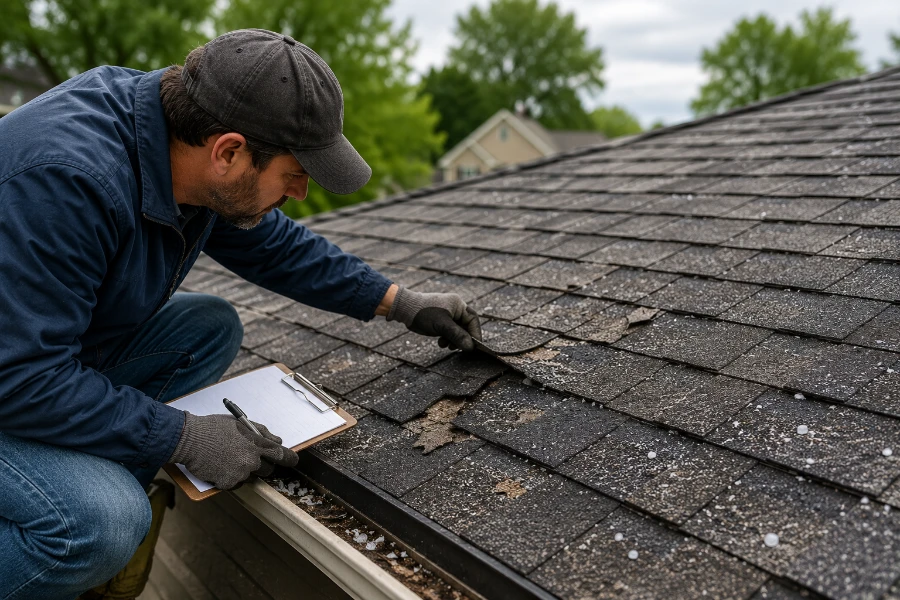
Regardless of roofing material, every roof should be inspected after a significant hailstorm.
Stone Coated Roof Maintenance
Recommended maintenance includes:
- Annual professional inspections
- Cleaning debris from valleys
- Checking flashings
- Inspecting fasteners
- Removing tree branches promptly
Asphalt Roof Maintenance
Asphalt roofing generally requires closer monitoring.
Homeowners should watch for:
- Missing shingles
- Granule accumulation
- Curling edges
- Cracks
- Soft spots
- Interior water stains
Addressing minor issues early can prevent far more expensive repairs later.
Insurance Considerations
Insurance plays an important role when evaluating Stone Coated Roofs vs Asphalt During Hail.
While every policy differs, insurers generally assess similar factors after a storm.
These include:
- Extent of roof damage
- Age of the roof
- Repair versus replacement costs
- Building code requirements
- Overall condition before the storm
Some insurers may also recognize the value of impact-resistant roofing systems.
Depending on the insurer and location, homeowners installing qualifying roofing products may become eligible for premium discounts or other incentives.
Even when discounts aren’t available, a more durable roof can reduce the frequency of future claims and minimize unexpected repair expenses.
Always review your policy carefully and discuss available options with your insurance provider before making roofing decisions.
When Asphalt Roofing Still Makes Sense
Stone coated roofing isn’t automatically the best solution for every homeowner.
Asphalt may remain the right choice when:
- Budget is the primary concern.
- The home may be sold within a few years.
- Severe hailstorms are uncommon.
- A straightforward replacement is preferred.
- Immediate installation costs must remain low.
Choosing asphalt isn’t necessarily the wrong decision. It simply reflects different priorities.
When Stone Coated Roofing Is the Better Investment
For homeowners focused on long-term performance, stone coated roofing often provides advantages that extend well beyond storm protection.
It may be the better choice if you:
- Live in a hail-prone region.
- Expect to own your home for many years.
- Want fewer roof repairs.
- Value longer service life.
- Prefer greater resilience against severe weather.
- Are looking for a roofing system that combines durability with architectural appeal.
Although the upfront investment is higher, many homeowners appreciate the confidence that comes with installing a roof designed to withstand decades of demanding conditions.
Final Thoughts
Choosing between Stone Coated Roofs vs Asphalt During Hail involves much more than comparing installation costs. It’s a decision that affects your home’s durability, maintenance requirements, and long-term value for years to come.
Asphalt shingles continue to be a practical and affordable option for many homeowners, especially in areas where severe hail is less common. However, they are generally more susceptible to granule loss, bruising, cracking, and accelerated aging after repeated storms.
Stone coated roofing approaches the challenge differently. Its steel core, protective coatings, and interlocking design provide exceptional resistance to impact while helping preserve the roof’s structural integrity through years of harsh weather. For homeowners living in regions where hailstorms are a regular concern, that added durability can translate into fewer repairs, a longer service life, and greater peace of mind.
Ultimately, the best roofing choice depends on your budget, climate, and long-term goals. If you plan to stay in your home for decades and want a roofing system built to handle severe weather with confidence, Stone Coated Roofs vs Asphalt During Hail is a comparison worth taking seriously before your next roof replacement decision.
FAQs
Stone coated roofs generally offer better impact resistance than asphalt shingles, making them more durable during severe hailstorms.
Yes, extremely large hail can cause cosmetic dents, but stone coated roofs are less likely to suffer functional damage than asphalt roofs.
No. Minor hail damage may only require repairs, but significant cracking, bruising, or granule loss can warrant a full replacement.
For many homeowners, especially in hail-prone areas, the longer lifespan and lower maintenance costs can make stone coated roofing a worthwhile investment.
A Class 4 roof has achieved the highest standard for impact resistance in standardized testing, helping it better withstand hail impacts.
Some insurance companies offer discounts for qualifying impact-resistant roofs, but eligibility depends on your insurer, location, and policy.
With proper installation and maintenance, a stone coated roof can last 40 to 70 years or more.
It’s a good idea to schedule a professional inspection after any significant hailstorm, even if no obvious damage is visible from the ground.
No. When installed over proper decking and underlayment, stone coated roofs are typically no louder than asphalt roofs during rain or hail.
Look for cracked shingles, missing granules, dents in metal roof components, or signs of water intrusion, and have a qualified roofing professional perform a thorough inspection if you suspect damage.