Why Texas Homeowners Must Plan for Hail Damage
Texas Experiences Some of the Nation’s Most Severe Hailstorms
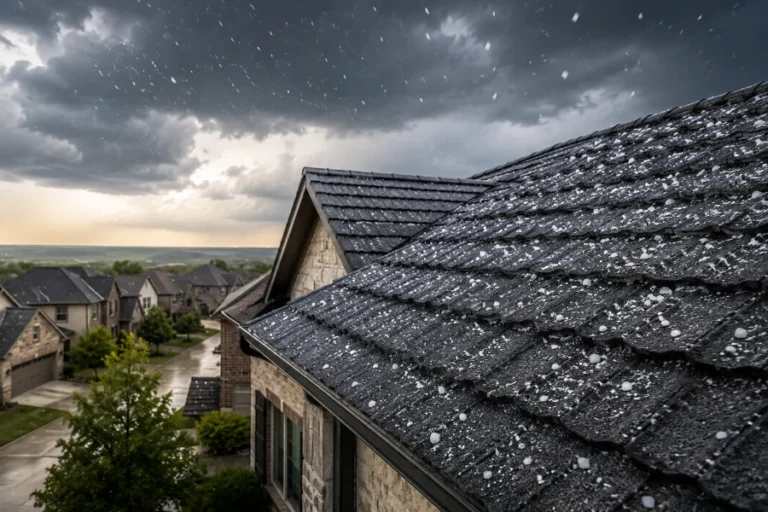
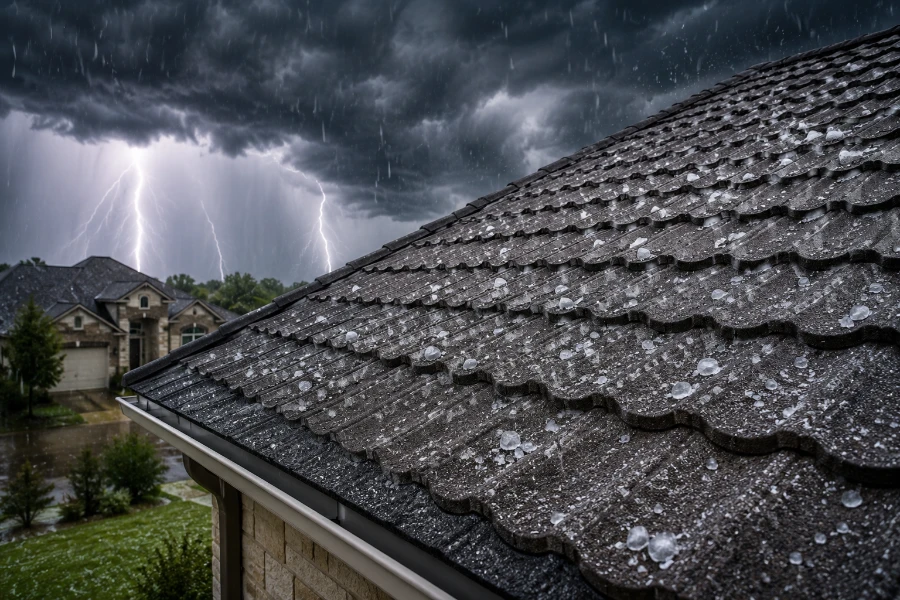
Texas has earned a reputation for extreme weather, and hail is no exception. Many communities across North, Central, West, and Central Texas experience multiple severe hail events every year. While hailstones vary in size, larger stones can fracture roofing materials, damage flashing, dent gutters, and create hidden vulnerabilities that eventually allow water to enter the home.
According to the National Oceanic and Atmospheric Administration (NOAA), severe thunderstorms capable of producing damaging hail occur regularly across Texas, making roof durability an important consideration for homeowners.
Although no roof is completely immune to severe weather, selecting the Best Roofing Material for Hailstorms in Texas significantly improves your home’s ability to withstand repeated storms.
The Hidden Costs of Hail Damage
Many homeowners focus only on replacing damaged shingles. In reality, hail damage often creates a chain reaction of costly repairs.
Potential expenses include:
- Roof replacement
- Roof deck repairs
- Water intrusion
- Damaged insulation
- Ceiling stains
- Mold growth
- Interior drywall repairs
- Insurance deductibles
- Temporary living expenses during major repairs
Even cosmetic damage shouldn’t be ignored. Small cracks and dents may allow moisture to penetrate over time, reducing the roof’s lifespan and increasing future maintenance costs.
What Makes a Roofing Material Hail Resistant?
Not all roofing materials respond to hail the same way. Some absorb impact exceptionally well, while others crack, chip, or fracture under pressure. Understanding what contributes to hail resistance makes choosing the Best Roofing Material for Hailstorms in Texas much easier.
Impact Resistance Ratings Explained
One of the most important specifications homeowners should understand is the impact resistance rating.
Many roofing products undergo standardized testing that measures how well they withstand simulated hail impacts. These products are commonly classified into four categories:
| Rating | Impact Performance |
|---|---|
| Class 1 | Basic protection |
| Class 2 | Moderate protection |
| Class 3 | High protection |
| Class 4 | Highest impact resistance available |
Class 4 roofing products are generally considered the gold standard for areas that frequently experience hailstorms because they are designed to better withstand repeated impacts without cracking or failing.
If you’re comparing roofing systems, learning more about Class 4 roofing can help you understand why these products are often recommended for homes in storm-prone regions.
Material Flexibility Versus Brittleness
Every hailstone carries force when it strikes a roof. The amount of damage depends largely on how the roofing material manages that force.
During a hailstorm, each hailstone transfers kinetic energy upon impact. Roofing materials that can absorb or disperse that energy generally suffer less damage than materials that are rigid or brittle.
For example:
- Flexible roofing materials often resist cracking.
- Brittle materials may chip or fracture.
- Metal roofing may dent but continue protecting the home.
- Composite materials often absorb impacts better than traditional materials.
Understanding these differences is essential when evaluating the Best Roofing Material for Hailstorms in Texas.
Proper Installation Matters Just as Much
Even the strongest roofing material can fail if it isn’t installed correctly.
A properly installed roof functions as a complete system rather than a collection of individual materials.
Important installation components include:
- High-quality underlayment
- Proper fastener placement
- Secure flashing
- Correct ventilation
- Sound roof decking
- Manufacturer-approved installation methods
Working with experienced roofing professionals helps ensure the roofing system performs as intended when severe weather strikes.
Best Roofing Materials for Hailstorms in Texas
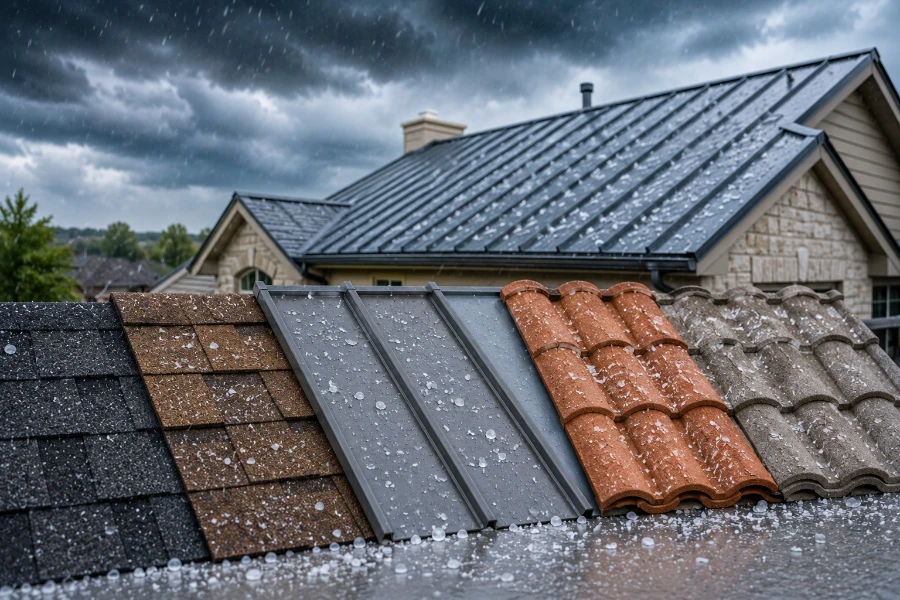
Texas homeowners have more roofing choices than ever before. Each option offers unique strengths, but some clearly outperform others during hailstorms.
Stone-Coated Steel Roofing
Stone-coated steel has become one of the most respected roofing systems available for homeowners living in hail-prone regions.
Unlike conventional asphalt shingles, stone-coated steel combines a steel core with protective coatings and a stone-chip finish. The result is a roofing material that delivers exceptional durability while maintaining the appearance of traditional shingles, shake, or tile.
Its advantages include:
- Excellent impact resistance
- Outstanding wind resistance
- Fire resistance
- Lightweight construction
- Long service life
- Low maintenance requirements
- Attractive architectural appearance
- Excellent performance during severe weather
Many homeowners also compare stone coated roofing vs asphalt shingles before deciding on a replacement roof. While asphalt remains popular because of its lower upfront cost, stone-coated steel often provides greater long-term value through increased durability, fewer repairs, and a significantly longer lifespan.
For many professionals, stone-coated steel represents one of the strongest candidates for the Best Roofing Material for Hailstorms in Texas, particularly for homeowners planning to stay in their homes for many years.
Class 4 Asphalt Shingles
Not every homeowner has the budget for premium roofing materials, which makes Class 4 asphalt shingles an attractive alternative.
These shingles are specifically engineered to better withstand hail impacts than traditional asphalt products.
Benefits include:
- Lower initial investment
- Wide availability
- Improved impact resistance
- Familiar appearance
- Easier repairs
- Broad selection of colors and styles
While they generally don’t match the lifespan of stone-coated steel, they offer a substantial improvement over standard three-tab shingles and provide excellent value for many Texas homeowners.
Metal Roofing
Metal roofing has grown in popularity throughout Texas, especially in rural areas and regions exposed to frequent severe weather.
Standing seam metal roofs, in particular, perform well during hailstorms because they are engineered to resist water penetration and withstand strong winds.
Advantages include:
- Exceptional longevity
- Excellent fire resistance
- Strong wind performance
- Minimal maintenance
- Energy efficiency
- Recyclable materials
It’s worth noting that while metal roofing may occasionally show cosmetic dents after large hail impacts, those dents often do not affect the roof’s ability to protect the home.
Concrete Roof Tiles
Concrete tile roofing offers impressive durability and can withstand many severe weather conditions.
Homeowners appreciate concrete tiles for their:
- Long lifespan
- Resistance to fire
- Attractive appearance
- Low maintenance
- Strong weather resistance
However, exceptionally large hailstones can occasionally crack individual tiles, requiring targeted repairs. Concrete roofing also weighs considerably more than many other roofing systems, so the home’s structure must be capable of supporting the additional load.
Clay Tile Roofing
Clay tile remains a favorite for Mediterranean and Spanish-style homes throughout parts of Texas.
Its benefits include:
- Beautiful appearance
- Exceptional longevity
- Excellent fire resistance
- Minimal fading over time
Despite these strengths, clay tiles can be more vulnerable to large hail impacts than some modern roofing systems. Individual tiles may crack when struck by larger hailstones, making repairs more specialized and potentially more expensive.
Synthetic Roofing Materials
Synthetic roofing products continue to gain attention among homeowners seeking an attractive combination of durability and aesthetics.
Many modern composite roofing systems are manufactured using advanced polymers designed to imitate slate, cedar shake, or traditional shingles.
Benefits include:
- Lightweight construction
- High impact resistance
- Reduced maintenance
- Resistance to moisture
- Excellent curb appeal
For homeowners looking beyond conventional roofing options, synthetic materials provide another strong contender for the Best Roofing Material for Hailstorms in Texas, particularly when impact resistance and design flexibility are both priorities.
Roofing Materials That Perform Poorly During Severe Texas Hail
Some roofing materials simply struggle under repeated hail exposure.
While they may perform adequately in milder climates, Texas weather often exposes their weaknesses.
Materials that typically require more frequent repairs after significant hailstorms include:
- Standard three-tab asphalt shingles
- Aging organic shingles
- Weathered roofing systems nearing the end of their lifespan
- Untreated wood shakes and shingles
Older roofs deserve particular attention. Even materials that once performed well gradually become more brittle with age, making them increasingly susceptible to cracking and impact damage.
Comparing Roofing Materials for Texas Hailstorms
The following comparison provides a quick overview of how popular roofing materials stack up.
| Roofing Material | Hail Resistance | Expected Lifespan | Maintenance | Insurance Benefits* | Relative Cost |
|---|---|---|---|---|---|
| Stone-Coated Steel | Excellent | 40–70+ years | Low | Often favorable | $$$ |
| Class 4 Asphalt Shingles | Very Good | 25–40 years | Moderate | Often favorable | $$ |
| Standing Seam Metal | Very Good | 40–70 years | Low | May qualify | $$$ |
| Synthetic Roofing | Very Good | 30–50 years | Low | May qualify | $$$ |
| Concrete Tile | Good | 50+ years | Low | Varies | $$$$ |
| Clay Tile | Moderate to Good | 50–100 years | Moderate | Varies | $$$$ |
*Insurance benefits vary by insurer, policy terms, roofing product, and location.
How Roofing Material Affects Insurance Claims
Your choice of roofing material doesn’t just influence how well your home stands up to hail. It can also affect the insurance claim process, repair costs, and even future premiums.
Insurance companies evaluate many factors when assessing risk, and the roof is one of the most important. A durable, impact-resistant roofing system is generally less likely to suffer extensive damage during a storm, which can translate into fewer claims over the life of the home.
While every insurer has its own underwriting guidelines, investing in the Best Roofing Material for Hailstorms in Texas may provide financial benefits beyond protecting your property.
Why Insurance Companies Care About Roofing Materials
Insurance providers analyze historical claim data to estimate future risk. Roofing materials that consistently perform well during hailstorms often present a lower risk of costly claims.
When evaluating a roof, insurers may consider:
- Roofing material
- Roof age
- Impact resistance rating
- Installation quality
- Roof condition
- Previous claim history
- Geographic location
A roof built to withstand severe weather can help reduce the likelihood of major losses, making it an attractive feature from an insurance perspective.
Potential Premium Discounts
Some insurance companies offer premium discounts for qualifying impact-resistant roofing systems, particularly products with a recognized Class 4 impact rating.
Before replacing your roof, ask your insurance company:
- Does this roofing material qualify for a discount?
- Are there specific products that meet your underwriting requirements?
- Is documentation from the manufacturer required?
- Will an inspection be necessary after installation?
Although discounts vary, even modest annual savings can add up over the lifespan of a durable roof.
Documentation Matters
Keep records of your roofing investment. Proper documentation can simplify future insurance claims and help verify the quality of your roofing system.
Useful documents include:
- Manufacturer warranties
- Product specifications
- Impact resistance certifications
- Installation invoices
- Contractor warranties
- Inspection reports
- Maintenance records
Having these documents readily available can save valuable time if your roof is ever damaged by a severe hailstorm.
Factors to Consider Before Choosing a Hail-Resistant Roof
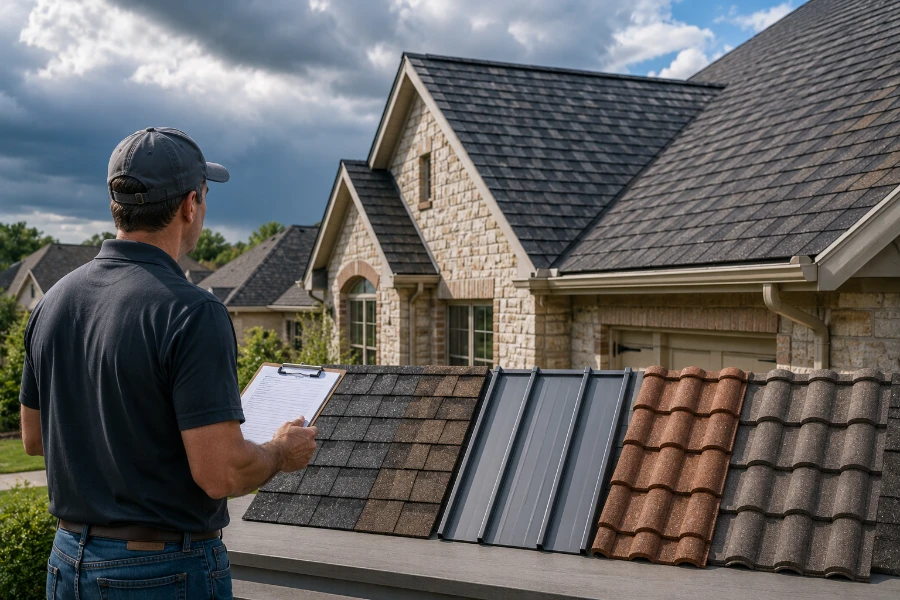
Every home is different. The Best Roofing Material for Hailstorms in Texas for one homeowner may not be the ideal choice for another.
Taking a broader view of your needs helps you make a more informed investment.
Your Budget
Price is always part of the conversation.
However, focusing only on the initial installation cost can be misleading. A roofing system with a higher upfront price may require fewer repairs, last decades longer, and provide better long-term value.
Instead of asking, “What’s the cheapest roof?” ask, “Which roof offers the lowest lifetime cost?”
Your Home’s Style
A new roof should complement the home’s architecture.
Fortunately, modern roofing materials come in a wide variety of profiles, textures, and colors. Stone-coated steel, for example, is available in designs that resemble traditional shingles, wood shakes, and clay tiles while delivering significantly greater durability.
Choosing a roof that blends performance with curb appeal can enhance both protection and property value.
HOA Requirements
If you live in a neighborhood governed by a homeowners association, review the community guidelines before making a decision.
Some HOAs restrict:
- Roofing colors
- Roofing profiles
- Material types
- Architectural styles
Confirming approval requirements before purchasing materials can prevent costly delays.
Local Weather Conditions
Texas weather varies dramatically from one region to another.
While hail is a major concern across much of the state, homeowners should also consider:
- High winds
- Intense summer heat
- Heavy rainfall
- UV exposure
- Occasional ice storms in northern areas
The most durable roofing systems are designed to perform well under multiple weather conditions rather than addressing only one risk.
Long-Term Ownership Plans
How long do you expect to stay in your home?
If you plan to move within a few years, a quality impact-resistant asphalt roof may provide an appropriate balance between cost and performance.
If this is your forever home, investing in premium materials like stone-coated steel may deliver greater value through decades of dependable protection.
Common Mistakes Homeowners Make When Selecting Roofing Materials
Choosing a roof is a significant decision, and rushing the process can lead to expensive regrets.
Avoid these common mistakes.
Choosing Based Only on Price
The least expensive roof isn’t always the most affordable over its lifetime.
Frequent repairs, premature replacement, and storm damage can quickly erase any initial savings.
Ignoring Impact Ratings
Many homeowners compare color, style, and price while overlooking one of the most important specifications: impact resistance.
In hail-prone regions, impact ratings deserve a prominent place on your checklist.
Hiring Inexperienced Installers
Even premium materials can underperform if installation shortcuts are taken.
Always choose experienced roofing professionals who follow manufacturer installation guidelines and understand local building codes.
Overlooking Warranty Coverage
Not all warranties offer the same protection.
Review:
- Material warranty
- Workmanship warranty
- Wind coverage
- Hail exclusions
- Transferability
Understanding the warranty before installation helps prevent surprises later.
Assuming All Metal Roofs Perform the Same
The term “metal roof” covers a wide range of products.
Differences in metal thickness, coatings, panel design, and installation methods can all influence long-term performance during hailstorms.
Tips for Maximizing the Life of Any Hail-Resistant Roof
Even the Best Roofing Material for Hailstorms in Texas benefits from routine maintenance.
Simple preventive care can extend the roof’s lifespan and reduce the likelihood of expensive repairs.
Consider the following maintenance routine:
- Schedule a professional roof inspection once a year.
- Inspect the roof after every significant hailstorm.
- Remove leaves and debris from valleys and gutters.
- Trim tree branches that overhang the roof.
- Replace damaged flashing promptly.
- Keep attic ventilation functioning properly.
- Address minor problems before they become major repairs.
Regular maintenance not only protects your investment but can also make it easier to identify storm damage early.
Is Stone-Coated Steel the Best Roofing Material for Texas?
There is no single roofing product that’s perfect for every homeowner.
That said, stone-coated steel consistently ranks among the strongest options for homes exposed to severe Texas weather.
Its appeal comes from combining several desirable characteristics into one roofing system.
Advantages include:
- Exceptional hail resistance
- Outstanding wind performance
- Long service life
- Lightweight construction
- Fire resistance
- Attractive architectural designs
- Low maintenance requirements
- Excellent long-term value
Unlike some traditional roofing materials that become increasingly brittle with age, stone-coated steel is engineered to provide reliable performance for decades with relatively little maintenance.
For homeowners planning to remain in their homes for many years, it often represents one of the most cost-effective investments despite the higher initial installation cost.
When evaluating the Best Roofing Material for Hailstorms in Texas, it’s important to think beyond the next storm. Consider how the roof will perform after years of repeated hail events, intense sunlight, high winds, and seasonal temperature changes. A roofing system that maintains its strength under those conditions can deliver lasting peace of mind.
Final Thoughts
Texas homeowners know severe weather isn’t a matter of if—it’s a matter of when. Hailstorms can arrive with little warning, leaving behind damaged roofs, expensive repairs, and frustrating insurance claims.
Choosing the Best Roofing Material for Hailstorms in Texas is one of the most effective ways to prepare for those challenges before they occur. Whether you select stone-coated steel, Class 4 asphalt shingles, standing seam metal, or another high-quality impact-resistant option, investing in a durable roofing system can help reduce maintenance, improve long-term value, and better protect your home.
As you compare roofing materials, don’t focus solely on the purchase price. Consider impact resistance, expected lifespan, maintenance requirements, warranty coverage, energy efficiency, and potential insurance benefits. Those factors often have a much greater influence on the true cost of ownership over the life of the roof.
Finally, work with a reputable roofing contractor who understands Texas weather, follows manufacturer installation standards, and can recommend products suited to your home’s design and your local climate. The right material, installed correctly, can provide decades of dependable performance.
When all factors are considered, it’s easy to see why so many homeowners researching the Best Roofing Material for Hailstorms in Texas place durability, impact resistance, and long-term reliability at the top of their priorities. A well-informed decision today can help protect your home for many years to come.
FAQs
What is the best roofing material for hailstorms in Texas?Stone-coated steel is widely considered one of the best options because it combines excellent impact resistance, long lifespan, and strong performance in severe weather.
Is a Class 4 roof worth the investment in Texas?Yes. Class 4 roofing materials are designed to better withstand hail impacts and may reduce repair costs while potentially qualifying for insurance discounts.
Can metal roofs withstand large hail?Yes. Most quality metal roofs can withstand hail well, though larger hailstones may leave cosmetic dents without compromising the roof’s protective performance.
Do stone-coated steel roofs dent during hailstorms?Do stone-coated steel roofs dent during hailstorms?
Stone-coated steel roofs are engineered to resist hail damage, and while severe storms can cause minor cosmetic effects in rare cases, they generally perform exceptionally well against impact.
Some insurance companies offer discounts for qualifying impact-resistant roofing systems, but eligibility and savings vary by insurer and policy.
How often should I inspect my roof after a hailstorm?You should inspect your roof as soon as it is safe to do so and schedule a professional inspection after any significant hailstorm, even if no damage is immediately visible.
Are asphalt shingles a good choice for Texas hailstorms?Class 4 asphalt shingles are a solid option for many homeowners, offering improved impact resistance compared to standard three-tab shingles.
How long does a stone-coated steel roof typically last?With proper installation and maintenance, a stone-coated steel roof can last 40 to 70 years or more, depending on the product and local conditions.
What signs indicate hail damage on a roof?Common signs include cracked or bruised shingles, dents in metal components, damaged flashing, granule loss, and leaks inside the home.
What should I consider before choosing a new roof in Texas?Evaluate impact resistance, lifespan, maintenance requirements, warranty coverage, energy efficiency, budget, and the experience of the roofing contractor before making your decision.