What storm damage roof replacement actually involves
Storm damage roof replacement is the process of documenting what hail or wind did to your roof, working through the insurance claim, and installing a new roof that restores the home and, ideally, holds up better the next time a storm comes through. In Texas that cycle repeats often. Hail season runs hardest from spring into early summer across North Texas, the Hill Country, and the Panhandle, while the Gulf Coast deals with tropical storms and hurricanes, including Harvey in 2017 and Beryl in 2024. This guide walks through each step in order, with the decisions that matter most at each one.
Stone Coated Roofs installs stone coated steel roofing across Texas, so we see a lot of homes on their second or third asphalt roof in a decade. The goal here is to help you make clear decisions whether or not you end up working with us.
Step 1: The post-storm roofing evaluation
A good post-storm roofing evaluation starts on the ground, not on a ladder. Walking a wet or damaged roof is dangerous, and you can learn a lot without climbing.
What to check from the ground and yard
- Soft metals: dents in gutters, downspouts, AC fins, mailbox, and roof vents are a quick indicator of hail size and direction.
- Granules: heavy piles of dark granules at downspout outlets suggest shingles lost a meaningful amount of their protective surface.
- Missing or lifted pieces: shingles, ridge caps, or flashing in the yard point to wind damage.
- Interior signs: new ceiling stains, damp insulation in the attic, or daylight around roof penetrations.
- Exterior surfaces: spatter marks on siding, fences, and patio furniture help an adjuster confirm the storm date and hail size.
Whether you end up with a roof replacement after storm damage or a simple repair, photograph everything with date stamps, and note the date of the storm. Our hail damage roof checklist gives you a printable list so you do not miss anything before the inspection.
What a professional inspection adds
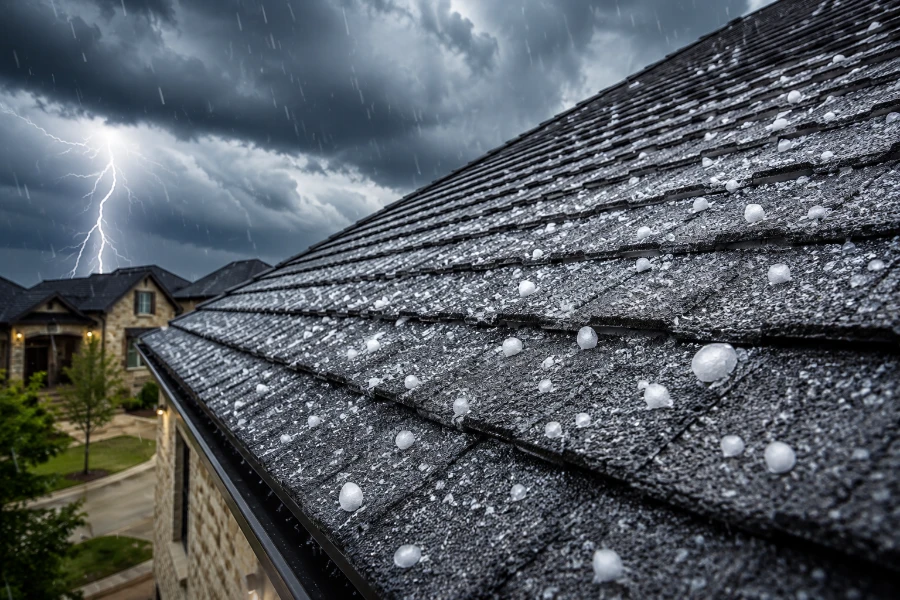
A roofer or adjuster on the roof will look for hail bruises (soft spots where the shingle mat is fractured), circular granule loss with exposed asphalt, cracked tabs, creased shingles from wind uplift, and damaged flashing, pipe boots, and vents. They should check every slope, because hail often hits the windward side hardest. Ask for a written report with photos labeled by slope.
Step 2: The insurance claim in Texas
This section is general information, not legal or insurance advice. Your policy is the document that controls, so read it and ask your agent or carrier when something is unclear.
- Read your declarations page. Look for your wind and hail deductible, which in many Texas policies is a percentage of the dwelling coverage rather than a flat dollar amount. Also check whether your roof is covered at replacement cost or actual cash value.
- Report the loss promptly. Most policies require notice as soon as practical after you discover damage, and many Texas policies set a deadline to file that is measured from the date of the storm. Find the duties-after-loss section and do not wait.
- Prevent further damage. Policies typically require reasonable steps to protect the home, such as a temporary tarp. Keep receipts.
- Meet the adjuster. Have your photos, the storm date, and your roofer's inspection notes ready. It helps to have your roofer present so both parties look at the same evidence.
- Review the estimate line by line. Check that it includes every slope, ridge cap, drip edge, underlayment, flashing, vents, and code-required items. Missing items are common.
- Understand the payments. On a replacement cost policy, carriers often pay actual cash value first and release recoverable depreciation after the work is completed and invoiced.
- Ask about disputes if needed. If you disagree with the scope, ask for a re-inspection and review the appraisal provisions in your policy.
One Texas-specific point worth knowing: state law prohibits a contractor from offering to waive, absorb, or rebate your insurance deductible. A roofer who offers to "cover your deductible" is a red flag.
Step 3: Repair or replace?
Homeowners often ask, "should I replace my roof after hail damage, or will a repair hold?" The answer depends on how widespread the damage is, how old the roof is, and whether matching materials are still available. "Do I need a new roof after hail?" is really a question about how many slopes are compromised, not about any single dent. A hail storm damage roof with fractured shingles on every slope is a hail damage roof replacement case; a few hits near one valley usually is not. Our guide to roof replacement after a hail storm goes deeper on hail specifically. The table below summarizes how we think about it.
| Situation | Usually repair | Usually replace |
|---|---|---|
| Extent of hail hits | A few isolated hits on one slope | Bruises or fractures across multiple slopes |
| Roof age (asphalt) | Under roughly 5–7 years old | Over roughly 10 years, or near the 12–18 year range typical in Texas |
| Granule loss | Light, scattered | Heavy, with exposed asphalt mat |
| Wind damage | A handful of missing tabs | Widespread creasing, lifted sections, or failed sealant strips |
| Leaks | One leak traced to a single flashing or boot | Multiple leaks or wet decking |
| Material match | Same shingle line still available | Discontinued product, visible mismatch |
| Prior claims | First event on this roof | Repeated patching after several storms |
So how much hail damage is needed to replace a roof? Carriers commonly inspect a test square on each slope and count functional hits, and the threshold for replacement varies by company. Ask your adjuster which method was used. If the roof was already older, a storm often accelerates a replacement you were going to face within a few years anyway. Our page on why homeowners replace instead of patching covers that math in more detail.
Roof replacement after hurricane and high wind
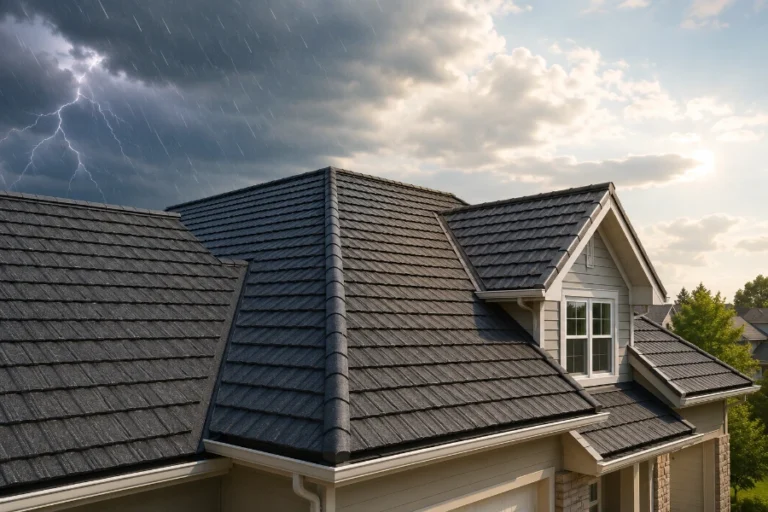
Roof replacement after a hurricane is different from a hail claim. Damage tends to come from uplift and water intrusion rather than impact, and there may be wet decking, soaked insulation, or interior damage that needs drying before the new roof goes on. Coastal policies may also split wind coverage from the main homeowners policy, and flood damage is separate again. Document water entry carefully and ask your roofer to inspect the decking once the old roof is off.
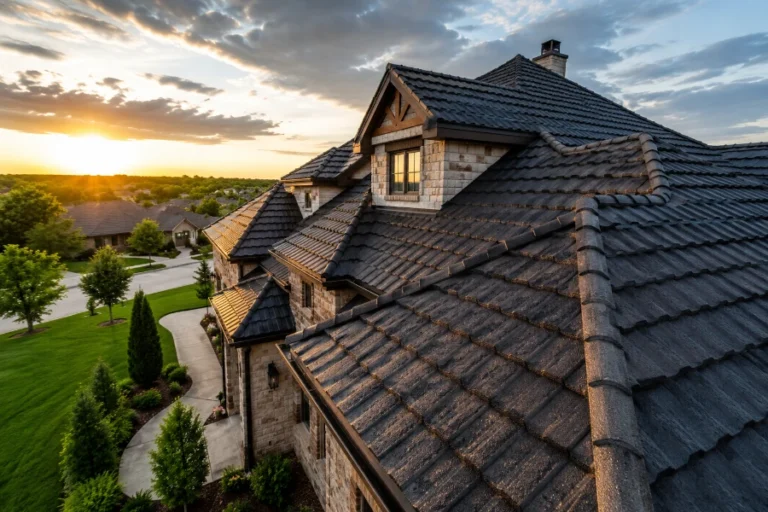
For coastal and high-wind homes, the install method matters as much as the material. Stone Coated Roofs uses foam-set installation for high-wind coastal work, and many stone coated steel systems are wind-rated to 120 mph, with some, such as Tilcor, rated higher for hurricane exposure. See hurricane-resistant roofing systems for how those ratings compare.
Upgrading to Class 4 stone coated steel during a claim
A claim is often the most cost-effective moment to change roof systems. Insurance typically pays to restore a roof of like kind and quality, so if you had asphalt shingles, the payout is based on asphalt. You can choose a better roof and pay the difference out of pocket. Tear-off, disposal, and much of the labor are already being paid for, so the net upgrade cost is lower than it would be on an undamaged roof.
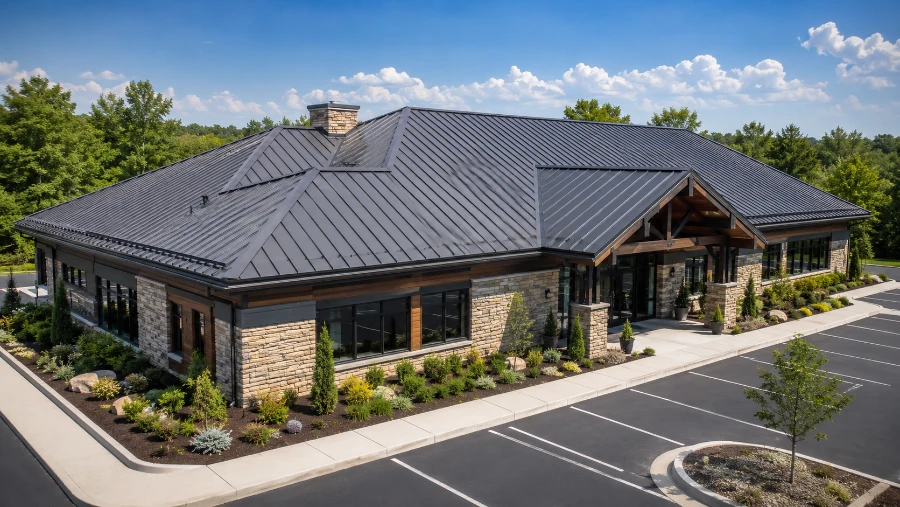
Stone coated steel is a strong candidate for that upgrade in hail country:
- Class 4 impact rating under UL 2218, the highest rating in that test.
- Class A fire rating.
- Light weight: about 2.4 lb per square foot, compared with roughly 9–10 for concrete tile and 8–12 for clay, so it usually works on framing built for shingles.
- Long service life: a planning range of 40–70 years, with manufacturer warranties from 50 years to lifetime.
- Possible premium savings: Class 4 discounts in Texas commonly range from 5% to 25% depending on the carrier. Confirm with your own insurer before counting on it.
As a planning range, stone coated steel installed in Texas runs about $10–$18 per square foot. That is a planning figure, not a quote. You can model your own home with the stone coated roof cost calculator and compare long-term ownership costs with the lifetime roof cost calculator. For a deeper look at the rating itself, read our guide to Class 4 stone coated roofing.
How to choose the best storm damage roof replacement contractor
The best storm damage roof replacement is the one done right by a contractor who will still be around when you need warranty service. After big hail events, out-of-area crews often arrive within days. Some do fine work; many leave homeowners with unfinished jobs, voided warranties, or no one to call.
Storm chaser warning signs
- Door-to-door solicitation immediately after a storm, often with out-of-state plates.
- Pressure to sign a contract or an "authorization" on the spot.
- Requests for a large upfront deposit before materials are delivered.
- Offers to cover or waive your deductible.
- Vague scopes without material brand, profile, underlayment, or flashing details.
- No verifiable Texas address, references, or proof of insurance.
What a solid contractor provides
- A written inspection report with labeled photos of every slope.
- A detailed scope listing the manufacturer, profile, install method, and accessories.
- Proof of general liability and workers' compensation coverage.
- Manufacturer installer credentials, which affect warranty eligibility.
- A clear payment schedule tied to milestones.
Texas does not issue a statewide roofing license, which makes your own vetting more important.
Typical timeline from storm to new roof
Timelines vary with storm size, carrier workload, and material availability. After a widespread event, every step takes longer. Use this as a general guide.
| Phase | Typical timing | What happens |
|---|---|---|
| Initial check and tarping | Day 1–3 | Ground inspection, photos, temporary protection |
| Report the claim | Within days | Notify the carrier, get a claim number |
| Adjuster inspection | 1–4 weeks | On-site inspection, often longer after major storms |
| Estimate and first payment | 2–6 weeks | Scope review, supplements, ACV check issued |
| Material selection and ordering | 1–4 weeks | Choose brand, profile, and color; order materials |
| Installation | Several days for most homes | Tear-off, decking repair, underlayment, new roof |
| Final invoice and depreciation | After completion | Submit final invoice to release recoverable depreciation |
Preventative roofing measures for future storms
Once the new roof is on, a few preventative roofing measures for future storms will help it perform and keep your claim history cleaner:
- Keep your paperwork: save the Class 4 certification, manufacturer warranty, and final invoice, and send them to your insurer to request any impact-resistance discount.
- Trim trees: overhanging limbs cause a large share of wind damage.
- Secure the details: make sure flashing, ridge, and edge metal are fastened to the manufacturer's spec, especially in high-wind areas.
- Inspect after major storms: a quick post-storm check catches small issues before they become leaks.
- Follow a maintenance routine: our stone coated roof maintenance checklist lays out what to look at each year.
Bottom line
Roof replacement after storm damage goes smoothest when you document early, read your policy, review the estimate carefully, and choose a contractor on evidence rather than urgency. If your roof needs replacing anyway, a claim is a sensible moment to move to a Class 4 system that is built for Texas hail and wind. Stone Coated Roofs installs every leading stone coated steel brand statewide and can inspect your roof, review your adjuster's scope, and price an upgrade. Call +1 (512) 297-7580 or request a free estimate from Stone Coated Roofs.