The best gutter guards for most Texas homes are stainless steel micro-mesh guards that screw to the front lip of the gutter. They stop leaves, oak tassels, pine needles and roof grit while still handling heavy downpours, and they install without lifting a single roof panel. Aluminum perforated screens are a solid lower-cost choice for homes with mostly large leaves, and brush or foam inserts are best treated as a quick, temporary fix.
That short answer covers most houses, but the right guard for your home depends on what falls into your gutters, how big your gutters are, and what kind of roof sits above them. If you have, or are planning, a stone coated steel roof, a few installation details matter more than the brand name on the box. This guide walks through each type, a short list of well-reviewed kits on Amazon, how to size them, and how to install them without damaging your roof.
Why gutter guards matter on a Texas roof
Gutters are part of the roof system. When they clog, water spills over the front edge, soaks fascia boards, stains siding and pools next to the foundation. In the worst cases it backs up under the roof edge. Our stone coated roof maintenance checklist lists gutter cleaning as one of the most important routine tasks for exactly that reason.
Texas adds a few specific challenges:
- Oak debris most of the year. Live oaks and red oaks drop leaves, tassels (catkins) and acorns in waves, and the fine tassels slip through coarse screens.
- Pine needles in East Texas. Needles spear through large-hole screens and mat together in the gutter trough.
- Intense rain bursts. A summer storm can dump a lot of water in a short time, so a guard has to let water in quickly or it will simply overshoot the gutter.
- Heat and UV. Cheap plastic guards can get brittle and warp after a few summers on a south- or west-facing eave.
- Hail. Thin aluminum and plastic guards can dent or crack in a hailstorm, just like the gutters themselves.
A guard will not make gutters maintenance-free. What it does is turn a messy, frequent ladder job into a lighter, less frequent one, and it keeps water moving in between.
Types of gutter guards compared
Almost every product on the market falls into one of five designs. Here is how they stack up for typical Texas debris.
| Type | Best at stopping | Weak spots | DIY difficulty | Relative cost |
|---|---|---|---|---|
| Stainless micro-mesh | Leaves, oak tassels, pine needles, seeds, roof grit | Fine pollen film can build up on top and needs an occasional brush-off | Moderate (screws into gutter lip) | Higher |
| Perforated aluminum screen | Large leaves and twigs | Needles and tassels can slip through or lodge in holes | Easy to moderate | Low to medium |
| Reverse-curve (surface tension) | Large leaves | Heavy rain can overshoot the nose; usually tucks under the roof edge | Hard, often pro-installed | High |
| Brush inserts | Large leaves | Needles and small debris tangle in the bristles; must be pulled to clean | Very easy (drop-in) | Low |
| Foam inserts | Large leaves | Holds fine debris and moisture; seeds can sprout; breaks down in sun | Very easy (drop-in) | Low |
Stainless steel micro-mesh
Micro-mesh guards use a fine stainless steel screen stretched over an aluminum frame. Water sheets off the roof, clings to the mesh and drops through, while almost all solid debris stays on top where wind and rain can move it off. For homes under oaks or pines, this is the type we would look at first. The tradeoff is price and a little upkeep: in pollen season a fine film can sit on the mesh and slow drainage until you rinse or brush it off.
Perforated aluminum screens
These are rigid aluminum panels punched with small holes. They are inexpensive, easy to cut, and keep out the large leaves that cause most clogs. They are a reasonable pick if your trees are mostly broad-leaf and you want a low-cost, durable upgrade. Pine needles and oak tassels are the weak point.
Reverse-curve or surface-tension hoods
Reverse-curve guards are solid hoods with a rounded nose. Water follows the curve into the gutter and leaves slide off the edge. They can work well, but most designs slide under the first course of roofing, which is a problem on many roofs (see the stone coated section below), and they are usually sold as a professionally installed system.
Brush and foam inserts
Brush and foam guards simply drop into the gutter trough. They are cheap and fast, which makes them handy for a rental or a short stretch of gutter under one problem tree. Over time, though, both tend to collect fine debris inside the gutter itself, so you trade cleaning the gutter for pulling out and cleaning the insert.
Best gutter guards on Amazon for DIY installs
Disclosure: some links in this section are Amazon affiliate links. If you buy through them, Stone Coated Roofs may earn a small commission at no extra cost to you. We have not tested these products ourselves; we picked well-reviewed listings that match the guard types above. Check the listing for current fit, size and price before you order.
Gutter guards are one of the few roof-adjacent upgrades a careful homeowner can handle, especially on a single-story home. These are the kits and tools we would shortlist:
- Stainless micro-mesh kit for 5-inch gutters. This contractor-grade stainless steel micro-mesh gutter guard kit covers a nominal 48 feet and includes screws. It is one of the most-reviewed micro-mesh kits on Amazon. The same kit is also sold in a 6-inch gutter size. Best for oak tassels, pine needles and roof grit.
- Aluminum screen for 5-inch gutters. The A-M Gutter Guard 5" x 50 ft black aluminum guard is a heavily reviewed DIY option for homes that mostly deal with broad leaves.
- Aluminum screen for 6-inch gutters. The VEVOR 6-inch aluminum gutter guard comes as a 26-piece, roughly 104-foot set, which covers a larger home in one order.
- Downspout guards. A 4-pack of expandable downspout guards keeps debris from plugging the outlet, which is where many "overflowing gutter" problems actually start. Useful even if you skip full-length guards.
- Ladder stabilizer. The Louisville Ladder LP-2200-00 aluminum stabilizer holds an extension ladder off the gutter so you are not leaning on the very thing you are working on. It also gives you a wider, steadier stance.
- Gutter scoop. Guards go on clean gutters only. The Amerimax Getter Gutter Scoop is a simple, inexpensive tool for the first clean-out.
If you are not sure which guard to buy, buy a short length or a sample first, install it under your worst tree, and watch it through a couple of rains before covering the whole house.
Best gutter guards for stone coated steel roofs
A stone coated steel roof is built from interlocking steel panels with a granule surface, fastened to battens or directly to the deck. That construction changes the gutter guard decision in three ways.
Do not lift or slide anything under the panels
Many guards are designed to tuck under the first row of asphalt shingles. On a stone coated roof, prying up the bottom course to slide a guard underneath can bend panel edges, disturb the interlock and, depending on the manufacturer, raise questions about your stone coated steel roof warranty. The safer choice is a guard that fastens only to the front lip of the gutter (and, if needed, to the fascia or gutter back), not to the roof. Most micro-mesh kits and many aluminum screens can be installed this way; read the instructions before you buy.
Expect a few loose granules
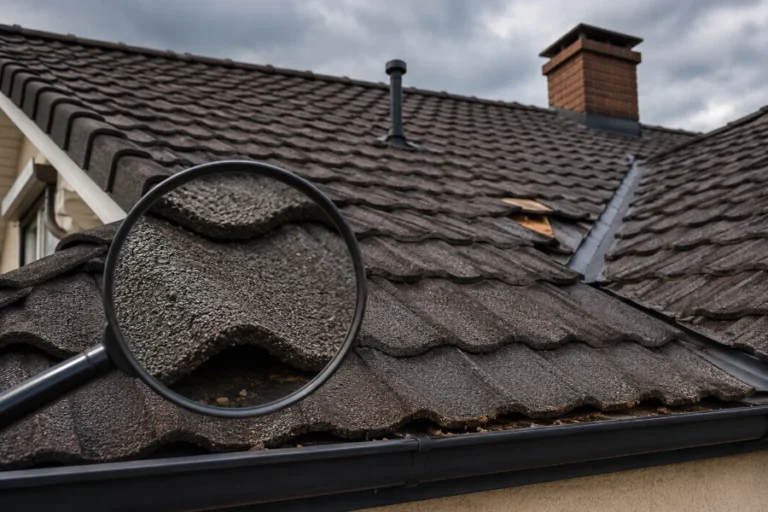
It is normal to find some loose stone granules in the gutters of a stone coated roof, especially after installation. A micro-mesh guard keeps them out of the trough and downspouts, but they can sit on top of the mesh. A soft brush or a gentle rinse during your regular checks takes care of it. If you are seeing heavy or ongoing granule loss, that is a different issue; our page on stone coated steel roof problems covers what is and is not normal.
Never walk the roof to install guards
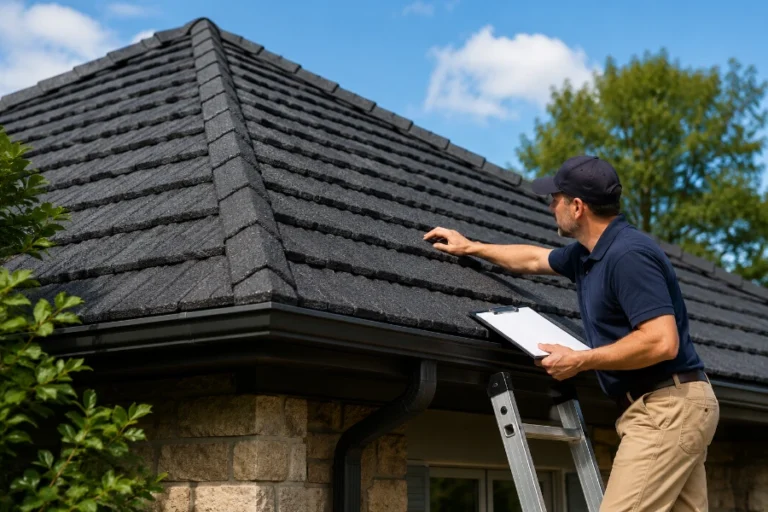
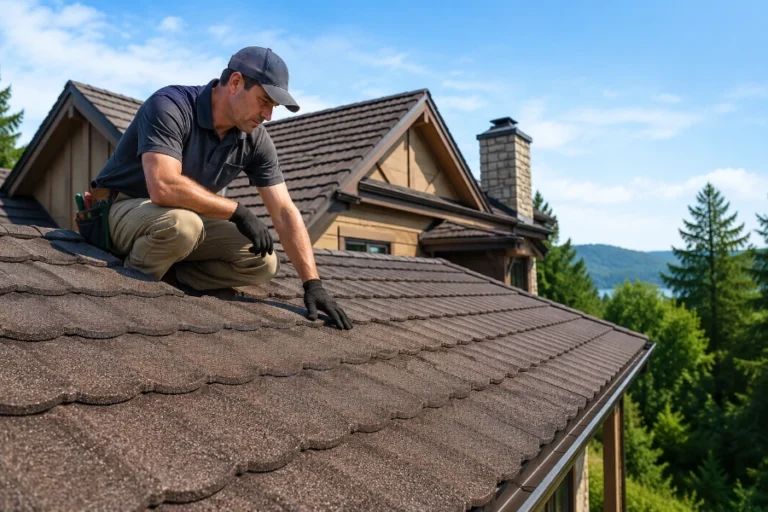
Stone coated panels should be walked only in specific spots, with the right technique, and the surface can be slick when dusty or wet. Install gutter guards from a properly placed ladder with a stabilizer, working from the gutter side. If an eave is too high or the ground is uneven, hire it out. For the full care routine, see our stone coated roof maintenance guide.
How to choose the best gutter guards for your home
Work through these questions in order and the choice usually becomes obvious:
- What falls on your roof? Broad leaves only: aluminum screen or micro-mesh. Oak tassels, pine needles or seeds: micro-mesh.
- What size are your gutters? Most homes use 5-inch or 6-inch K-style gutters. Measure across the top opening, from the back edge to the front lip, and buy the matching size.
- How do you want it attached? On stone coated steel, tile or any roof you do not want disturbed, choose a guard that attaches to the gutter lip rather than under the roof edge.
- How much rain does your roof shed? Large or steep roof planes send a lot of water into one gutter run. Favor guards with an open, high-flow design, and pay attention to inside corners and valleys where water concentrates.
- Will you do it yourself? One-story eaves on level ground are a reasonable DIY project. Two-story eaves, steep yards or fragile roofing are a job for a pro.
How to install gutter guards safely
Every kit has its own instructions, and those come first. The general sequence looks like this:
- Set up the ladder correctly. Use a stabilizer, set the base on firm, level ground, and keep three points of contact. Have someone hold the ladder if you can.
- Clean the gutters completely. Scoop out debris, then flush each run and downspout with a hose to confirm water flows freely.
- Check the gutters themselves. Tighten loose hangers, fix sagging sections and reseal leaking seams now. A guard on a sagging gutter just hides the problem.
- Dry-fit a section. Confirm the guard sits on the front lip and back edge without touching or lifting the roof panels.
- Fasten and overlap. Screw the guard to the gutter lip at the spacing the kit calls for, and overlap sections in the direction water flows.
- Trim corners and ends. Cut panels with tin snips to fit inside and outside corners, and close off the ends.
- Test with a hose. Run water down the roof edge, not on the panels with force, and watch for overshoot or pooling.
Avoid pressure washers anywhere near the roof surface. The same caution our maintenance guides give for stone coated panels applies to guards and gutters.
Maintaining gutter guards through the year
Guards cut down on cleaning, but they still need a look a few times a year. A simple Texas-friendly rhythm:
- Spring: brush off oak tassels and pollen film from mesh guards after the heaviest drop.
- Early summer: before storm season, check that downspouts flow freely and guards are tight.
- Fall and early winter: clear leaves sitting on top of the guards, especially at inside corners.
- After hail or high wind: look for dented, lifted or missing sections along with the rest of your post-storm check. Our hail damage roof checklist covers what else to look at.
The free roof maintenance checklist and log lets you note when you last cleaned and inspected the gutters, which helps if you ever need to show a history of upkeep.
When a professional makes more sense
Some situations are better handed off. Consider hiring help when the eaves are two stories or more, the ground slopes, the gutters are sagging or pulling away from the fascia, water is getting behind the gutters, or you see stains on the soffit or interior ceilings. Those can be signs of a drainage or roof-edge problem that a guard will not fix. After a big storm, damaged gutters are often documented along with roof damage, so it is worth reading our storm damage roof replacement guide before you start repairs.
Bottom line
For most Texas homes, the best gutter guards are stainless micro-mesh guards that fasten to the gutter lip. They handle oak and pine debris, keep up with heavy rain, and leave the roof itself alone. Aluminum screens are a good budget option for broad-leaf trees, and drop-in brush or foam inserts are a stopgap. On a stone coated steel roof, the most important rule is simple: do not lift the panels to install anything. If you are planning a new roof and want the gutters and roof edge handled together, Stone Coated Roofs can inspect your roof and give you a free written estimate.