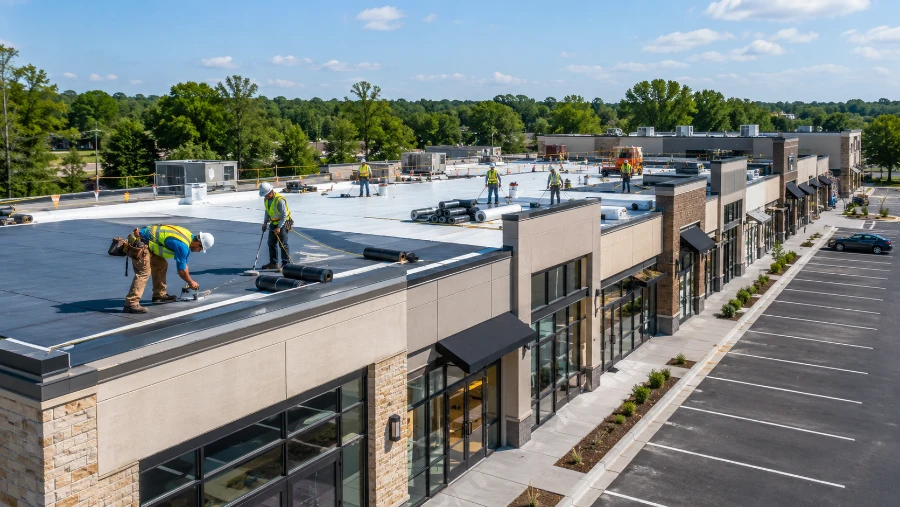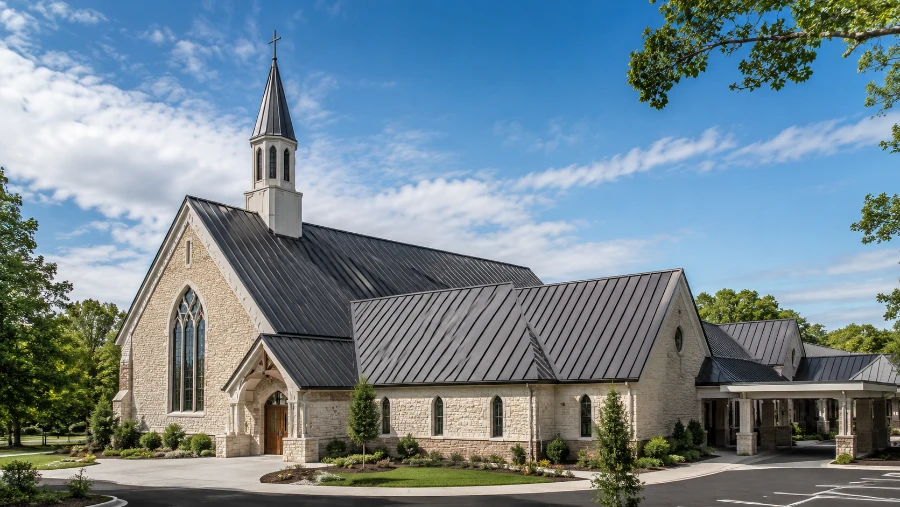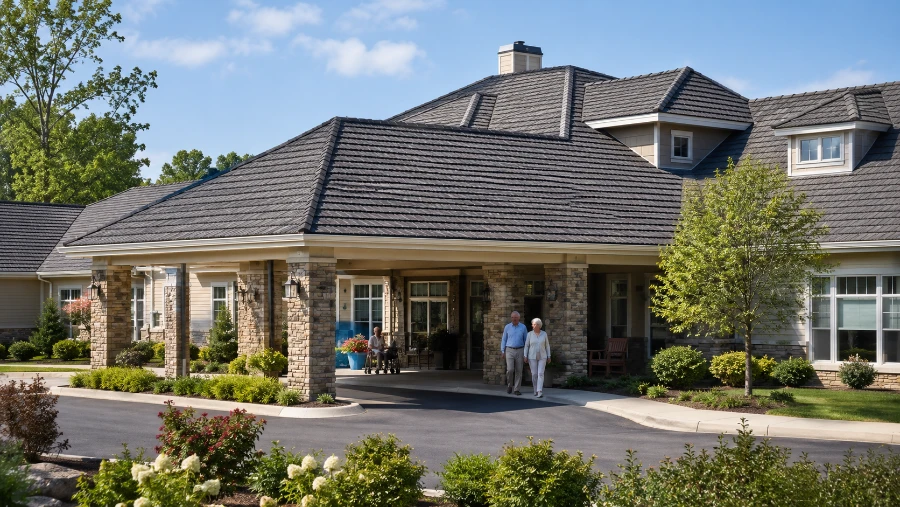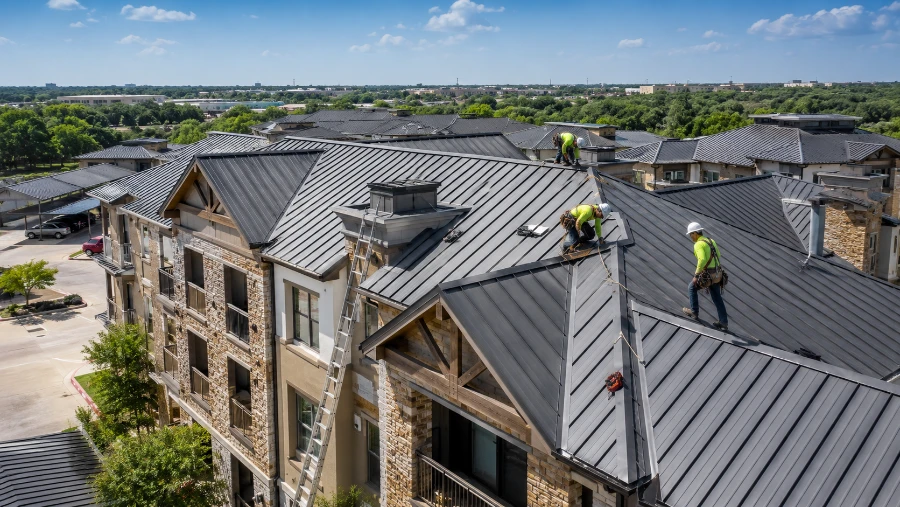
Hiring a multifamily roofing contractor Texas property owners can depend on is not a routine purchasing decision. The roof protects residents, building interiors, mechanical systems, rental income, and the long-term value of the community. When a project covers several occupied buildings, even a small planning error can create tenant complaints, access problems, interior damage, safety risks, and costly schedule delays.
The stakes are high.
A poorly planned installation can lead to repeated leaks, emergency repairs, damaged insulation, and frustrated residents. A properly managed project can reduce maintenance demands, improve curb appeal, strengthen weather protection, and make future budgeting more predictable.
Texas makes that challenge harder. Hail, strong winds, extreme heat, sudden rain, and sharp temperature changes can wear down roofing systems quickly. Therefore, owners need more than a crew that knows how to install shingles or metal panels. They need a contractor that understands occupied properties, large-scale logistics, and the demands of the regional climate.
This guide explains how to evaluate contractors, compare materials, control costs, plan construction, and protect residents throughout the process.
What Makes Multifamily Roofing Different?
Multifamily roofing is not simply residential roofing multiplied by the number of buildings.
An apartment complex, condominium community, townhome development, or senior living property may include several roof styles, hundreds of residents, shared parking areas, balconies, walkways, landscaping, rooftop equipment, and busy entrances. Work must continue without bringing the entire property to a halt.
A qualified multifamily roofing contractor Texas communities hire should be prepared to manage:
- Multiple buildings and roof sections
- Construction staging and material storage
- Resident and property-management communication
- Parking and entrance restrictions
- Pedestrian protection
- Noise and dust control
- Daily cleanup
- Permits and inspections
- Insurance-related documentation
- Quality control across every building
- Weather delays and schedule changes
Coordination matters just as much as installation.
Replacing the roof on one vacant home may take only a few days. Replacing roofs across a 20-building apartment community can require weeks or months of phased work. Crews must move efficiently while keeping emergency lanes open, protecting landscaping, and preventing debris from reaching balconies, vehicles, or walkways.
The roof is only one part of the project. Property operations must continue beneath it.
Texas Weather Creates Serious Roofing Risks
Texas roofs face several threats. Some strike in minutes. Others build gradually over years.
Hail Damage
Hail can bruise, crack, dent, loosen, or puncture roofing materials. However, not every sign of damage is visible from the ground.
Asphalt shingles may lose protective granules or develop fractures beneath the surface. Metal products may show dents, chipped coatings, or damaged seams. Vents, flashing, gutters, skylights, and air-conditioning components may also take direct hits.
The most dangerous problems may appear later.
A roof does not always leak immediately after a hailstorm. Weakened materials can continue separating as the roof heats, cools, and moves. Water may finally enter weeks or months after the storm, long after the connection between the leak and the original event becomes less obvious.
Arrange an inspection after significant hail, even when no residents have reported water intrusion.
High Winds
Wind commonly attacks vulnerable edges first.
Loose flashing, ridge components, perimeter materials, and poorly fastened sections may lift during strong gusts. Once moving air gets underneath the roof covering, damage can spread rapidly across a slope.
Each building should be assessed individually. Structures near the edge of a property may face greater wind exposure than buildings surrounded by trees or neighboring construction.
The contractor should review fastening patterns, perimeter details, roof height, slope, and exposure. A general installation plan may not be suitable for every building in the same community.
Extreme Heat and Sunlight
Heat is relentless.
Texas roof surfaces can become extremely hot during summer, particularly when dark materials receive hours of direct ultraviolet radiation. Over time, this exposure can contribute to fading and the deterioration of coatings, sealants, adhesives, and other exposed materials.
Repeated heating and cooling also cause thermal expansion and contraction. This ongoing movement can place stress on seams, fasteners, flashing, sealants, and roof penetrations.
Materials must be selected as part of a complete system.
Roof color, ventilation, underlayment, insulation, slope, and reflectivity all influence performance. Focusing on the surface material alone may leave major weaknesses unaddressed.
Heavy Rain and Drainage Problems
Heavy rain exposes weak details quickly.
Clogged drains, poor slope, damaged gutters, failed flashing, and low spots may allow water to collect or enter the building. Low-slope sections deserve close attention because water moves more slowly across them and may remain on the surface after a storm.
A contractor should inspect the complete drainage path, including:
- Gutters
- Downspouts
- Scuppers
- Internal drains
- Valleys
- Roof transitions
- Discharge areas near foundations
Replacing the roof surface without correcting drainage defects can leave the property with many of the same problems.
Signs a Multifamily Roof Needs Professional Attention
Roofing problems often begin quietly.
A small stain appears in one unit. Maintenance applies sealant. The leak stops temporarily. Months later, water appears in another room or building.
That pattern deserves attention.
Common warning signs include:
- Recurring leaks in the same units
- New leaks in several buildings
- Missing, cracked, lifted, or broken materials
- Ceiling or wall stains
- Soft or sagging decking
- Rust or corrosion
- Loose flashing
- Damaged vents or pipe boots
- Ponding water
- Granules near downspouts
- Mold or musty odors
- Increasing repair expenses
- Repeated emergency service calls
One isolated repair does not necessarily mean the entire system has failed.
Repeated repairs are different. When maintenance teams keep returning to the same slopes, valleys, penetrations, or roof-to-wall connections, the property may be paying to delay a larger problem.
Track every leak by building, unit, date, location, and weather condition. This simple record can reveal patterns that individual work orders fail to show.
Repair or Replace? Make the Decision Carefully
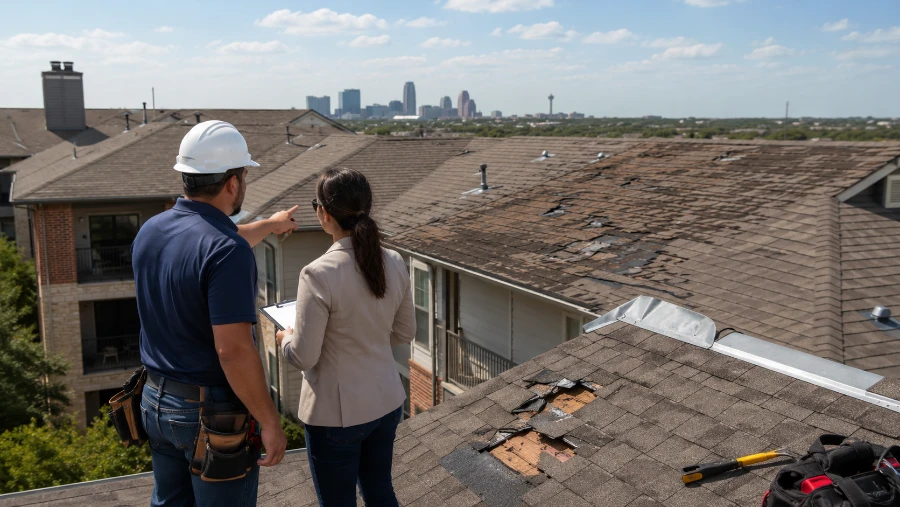
A full replacement is not always necessary.
Neither is another patch.
The correct decision depends on the roof’s age, the extent of damage, moisture conditions, repair history, material availability, and the owner’s plans for the property.
Repair May Be Appropriate When
- Damage is limited to a small area
- The roof has substantial remaining service life
- A specific flashing failure caused the leak
- Only a few shingles or panels are affected
- Decking and insulation remain dry
- Matching materials are available
- The surrounding system is performing well
Replacement May Be More Practical When
- Leaks occur across multiple buildings
- Materials are approaching the end of their useful life
- Hail or wind damage is widespread
- Moisture is trapped beneath the surface
- Decking has deteriorated
- Repairs are becoming frequent
- Existing materials are discontinued
- Several roof components are failing together
Use the following comparison as a starting point:
| Factor | Targeted Repair | Full Replacement |
|---|---|---|
| Upfront cost | Lower | Higher |
| Construction period | Usually shorter | Usually longer |
| Best application | Localized defects | Aging or widespread failure |
| Expected result | Extends current roof life | Establishes a new roof cycle |
| Main limitation | Hidden problems may remain | Requires greater capital |
| Budget predictability | Moderate | Often stronger long term |
Ask the contractor to support the recommendation with photographs, measurements, moisture findings, and building-specific notes.
A reliable multifamily roofing contractor Texas owners work with should explain what failed, why it failed, and how the proposed solution addresses the cause rather than only the symptom.
Best Roofing Materials for Multifamily Properties in Texas
Material selection affects appearance, maintenance, installation time, storm resistance, and long-term cost.
There is no universal answer.
The best choice depends on roof slope, architecture, structural capacity, budget, expected ownership period, and maintenance priorities.
Stone-Coated Steel Roofing
Stone-coated steel uses a steel core with a protective, textured surface. Depending on the profile, it can resemble shingles, wood shake, or traditional tile.
Potential advantages for multifamily properties include:
- Strong wind resistance
- Durable performance in hail-prone areas
- Long potential service life
- Lower weight than concrete or clay tile
- Attractive architectural profiles
- Resistance to curling and cracking
- Reduced replacement frequency
The initial investment may be higher than standard asphalt shingles. Even so, owners should compare projected maintenance, repair, and replacement costs over the planned ownership period.
Before making a property-wide decision, review the complete pros and cons of stone-coated steel roofing, including material cost, installation requirements, durability, and expected maintenance.
Asphalt Shingles
Asphalt shingles remain common because they are familiar, widely available, and generally affordable.
They provide:
- A lower initial price
- Broad color and style selection
- Straightforward localized repairs
- Easy product availability
However, product quality varies significantly. Lower-cost shingles may age faster under intense sunlight, hail, and strong winds.
Owners should compare impact ratings, wind ratings, warranty limitations, ventilation requirements, and fastening specifications rather than choosing based on color and price alone.
Standing-Seam Metal Roofing
Standing-seam metal offers a clean appearance and durable weather protection.
It works especially well on steep slopes, prominent entrance buildings, clubhouses, and architectural accents. Properly designed systems can handle heavy rain and high winds effectively.
Installation quality is critical.
Transitions, roof edges, clips, seams, and penetrations must be detailed correctly. Small errors can affect large roof areas.
Property owners considering premium metal options should review how stone-coated roofing compares with standing-seam metal in appearance, cost, maintenance, installation, and long-term performance.
TPO Roofing
TPO is commonly installed on low-slope multifamily buildings.
Its reflective surface can be useful in hot climates, while heat-welded seams create a continuous membrane when installed correctly. Still, drains, curbs, penetrations, parapets, and rooftop equipment require careful workmanship.
A TPO roof should also receive regular inspections. Service technicians walking across the surface can create punctures or damage vulnerable areas around equipment.
Modified Bitumen Roofing
Modified bitumen is another practical option for low-slope sections.
It can provide good durability and resistance to normal foot traffic. It is often used on smaller buildings, additions, porches, and properties with a mixture of steep- and low-slope roof areas.
Drainage remains essential. No membrane performs well when water is allowed to remain indefinitely.
Clay or Concrete Tile
Tile offers strong curb appeal and performs well in hot environments.
Yet tile is heavy.
Before selecting it, the building structure should be evaluated to confirm that it can carry the load. Repairs may also become expensive when matching profiles or colors are difficult to obtain.
Stone-coated steel may provide a tile-like appearance at a lower weight, making it worth evaluating for properties that want the architectural look without the same structural demand.
Why Stone-Coated Steel Deserves Serious Consideration
For long-term property owners, stone-coated steel deserves a close look.
It combines the visual appeal many residents expect with the strength of a metal-based roofing system. That balance can support both exterior appearance and long-term weather performance.
A professional multifamily roofing contractor Texas property managers consult should evaluate the entire installation, including:
- Existing decking
- Roof slope
- Structural condition
- Underlayment
- Flashing
- Valleys
- Penetrations
- Ventilation
- Edge details
- Manufacturer requirements
Stone-coated steel may be especially useful when owners want to reduce future replacement frequency, improve storm resistance, upgrade aging buildings, or create a consistent appearance across a large community.
Details still matter.
A premium roofing material cannot overcome poor flashing, inadequate fastening, blocked ventilation, or careless installation. Every component must function as part of one system.
What a Professional Roof Inspection Should Include
A quick ground-level walk is not a complete inspection.
A proper assessment should examine the roof surface, drainage system, interior conditions, previous repair areas, penetrations, transitions, and perimeter details.
Exterior Review
The contractor should inspect:
- Shingles, panels, tile, or membranes
- Ridge and hip components
- Valleys
- Roof-to-wall connections
- Flashing
- Pipe penetrations
- Vents
- Gutters and downspouts
- Scuppers and drains
- Parapet walls
- Sealants
- Fasteners
- Storm-damage indicators
- Previous patches
Photographs should show both close views and wider context. A close-up image of a crack means little when the owner cannot tell which building or roof section it came from.
Interior Review
Interior inspection may include:
- Attic spaces
- Upper-floor ceilings
- Mechanical rooms
- Wall stains
- Wet insulation
- Mold growth
- Damaged decking
- Ventilation conditions
Resident reports can be valuable. However, they should be verified rather than treated as the complete diagnosis.
Water can travel along decking, pipes, framing, and insulation before it becomes visible. The ceiling stain may be several feet away from the actual entry point.
Diagnostic Testing
Some buildings require additional investigation.
Moisture meters, infrared scans, core samples, or test cuts may help locate trapped water beneath a roof system. These tools can be especially useful on low-slope roofs where surface conditions do not reveal the full extent of damage.
The final report should include clear findings, photographs, measurements, recommended priorities, and repair or replacement options.
How a Multifamily Roof Replacement Project Works
Successful replacement follows a sequence.
Skipping steps creates confusion, unexpected costs, and avoidable disruption.
1. Property Assessment
The contractor reviews the number of buildings, roof types, age, access points, drainage conditions, known leaks, and previous repairs.
This stage should also identify:
- Narrow driveways
- Limited staging space
- Resident parking conflicts
- Balconies requiring protection
- Playground or pool areas
- Emergency access routes
- Landscaping concerns
- Rooftop mechanical equipment
These issues affect pricing and scheduling. They should not be discovered after work begins.
2. Scope Development
The scope must describe more than the visible roofing material.
It should address:
- Tear-off requirements
- Disposal
- Decking replacement
- Underlayment
- Flashing
- Fasteners
- Ventilation
- Drains and gutters
- Sealants
- Edge components
- Cleanup
- Inspections
- Warranty coverage
Detailed scopes help owners compare proposals fairly.
For example, one contractor may include full flashing replacement while another plans to reuse existing flashing. The lower bid may look attractive until change orders begin.
3. Budgeting and Scheduling
The project should be divided into manageable phases.
A useful schedule identifies:
- The order of buildings
- Expected duration for each phase
- Material-delivery locations
- Dumpster placement
- Parking restrictions
- Weather-delay procedures
- Daily work hours
- Resident-notification dates
The schedule will change when weather interferes. That is normal.
What matters is whether the contractor has a communication process for updating management and residents quickly.
4. Resident Communication
Residents need clear, timely notices.
Tell them when work will begin, which entrances may be affected, where vehicles must be moved, when balconies should be cleared, and who to contact with concerns.
Avoid vague announcements.
“Roofing will begin soon” does not help a resident decide where to park tomorrow morning. Notices should identify the building, date, expected work period, restrictions, and contact information.
5. Installation and Quality Control
Project supervision should occur every day.
A qualified multifamily roofing contractor Texas communities select should inspect the work while installation is underway, not only after every building is complete.
Early reviews can catch:
- Incorrect fastening
- Poor flashing alignment
- Damaged underlayment
- Inadequate overlaps
- Open penetrations
- Improper ventilation details
- Material defects
One repeated mistake can spread across several buildings before anyone notices. Daily quality control limits that risk.
6. Final Inspection and Cleanup
The final walkthrough should verify that:
- Flashing is complete
- Penetrations are sealed
- Drainage paths are open
- Gutters are clean
- Debris is removed
- Loose fasteners are collected
- Damaged landscaping is restored
- Warranty documents are delivered
- Punch-list items are closed
Magnetic sweeps should be performed around walkways, parking areas, lawns, patios, playgrounds, and pet areas.
Cleanup is not a cosmetic detail. It is a safety responsibility.
How to Reduce Tenant Disruption
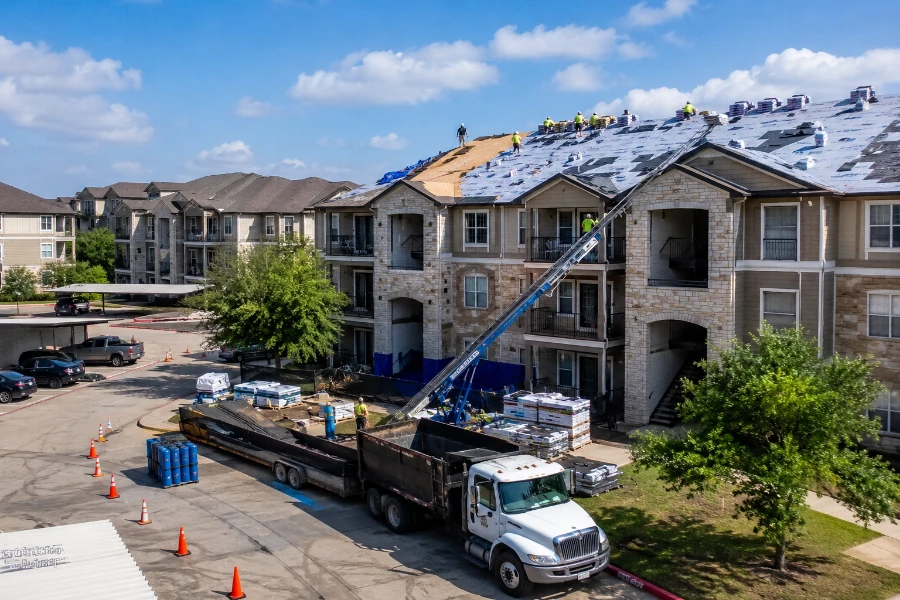
Roof replacement is loud.
It may also affect parking, entrances, balconies, home offices, pets, and residents who work night shifts. The goal is not to pretend that construction will be invisible. The goal is to keep disruption controlled and predictable.
Use these practical steps:
- Give written notice several days before each building begins
- Post daily work zones at entrances
- Complete one defined area before opening another
- Keep fire lanes and emergency routes clear
- Protect air-conditioning equipment
- Cover balconies, doors, and landscaping
- Clean work zones at the end of every day
- Assign one management contact
- Avoid restricting several nearby buildings at once
- Schedule the loudest work during normal daytime hours
- Provide rapid notice when weather changes the schedule
I have seen communication prevent problems that no construction technique could solve.
Residents become far more cooperative when they know what is happening, when it will end, and whom to contact.
What Does Multifamily Roofing Cost in Texas?
There is no reliable universal price.
Roof size matters, but it is only one factor. Height, slope, access, material, tear-off requirements, damaged decking, flashing complexity, drainage, permits, and construction phasing all affect the final amount.
| Cost Factor | Why It Affects Pricing |
|---|---|
| Total roof area | More surface requires additional labor and materials |
| Building height | Taller structures require more safety equipment |
| Roof pitch | Steep slopes slow installation and increase risk |
| Existing layers | Multiple layers add removal and disposal work |
| Decking damage | Soft or deteriorated areas must be replaced |
| Material selection | Premium systems cost more initially |
| Flashing complexity | Transitions and penetrations require additional labor |
| Drainage upgrades | New gutters, drains, or slope correction add work |
| Occupied buildings | Resident protection requires more coordination |
| Project phasing | Smaller phases can extend the overall schedule |
| Access limitations | Tight staging areas reduce crew efficiency |
Compare complete scopes, not just bottom-line totals.
A low proposal may exclude permits, ventilation, flashing, decking allowances, disposal, or final cleanup. Those omissions may later appear as change orders.
Ask each bidder to identify assumptions and exclusions in writing.
Insurance Claims After Hail or Wind Damage
Storm claims depend heavily on documentation.
A roofing contractor can inspect and describe physical damage. The insurance carrier decides whether that damage is covered under the policy. Keep those roles clear.
After a significant storm:
- Photograph visible damage
- Record the date and approximate time
- Save weather alerts
- Document resident leak reports
- Protect exposed areas
- Keep temporary-repair invoices
- Arrange a professional inspection
- Review the insurance policy
- Compare the contractor’s scope with the insurer’s estimate
- Save emails, reports, estimates, and photographs in one folder
Do not delay necessary emergency protection.
Temporary repairs may prevent water from reaching occupied units, insulation, electrical systems, and interior finishes. Whenever possible, document conditions before and after those repairs.
Avoid anyone who promises guaranteed insurance approval. A contractor does not control the carrier’s final coverage decision.
Questions to Ask Before Hiring a Contractor
Ask direct questions.
The answers should be specific enough to verify.
Experience
- How many multifamily properties have you completed?
- Have you worked on occupied apartment or condominium communities?
- Can you provide recent references?
- Have you installed the proposed roofing system before?
Project Management
- Who will supervise the site?
- How many crews will work on the property?
- How will the buildings be phased?
- Where will materials and dumpsters be placed?
- How will weather delays be communicated?
Safety and Resident Protection
- How will entrances and walkways remain safe?
- How will balconies and vehicles be protected?
- What steps will control loose nails and debris?
- How will emergency access remain open?
- What happens if a resident reports damage?
Scope and Warranty
- What exactly is included?
- How are decking repairs priced?
- Will existing flashing be replaced or reused?
- What manufacturer warranty is available?
- What workmanship warranty is included?
- Who handles a future warranty claim?
A dependable multifamily roofing contractor Texas owners choose should answer without hiding behind general statements.
How to Compare Roofing Proposals
Do not compare only the final price.
Compare every major component.
Check whether each proposal includes:
- The same roofing material and product line
- Comparable underlayment
- Complete flashing details
- Similar ventilation work
- Decking replacement terms
- Tear-off and disposal
- Permit costs
- Drainage work
- Cleanup procedures
- Warranty coverage
- Project schedule
- Payment terms
- Change-order procedures
Create a simple comparison sheet.
When one proposal is substantially lower, identify what is missing before assuming it represents a better deal. Sometimes it does. Often it does not.
Red Flags You Should Not Ignore
Some warning signs appear before the contract is signed.
Be cautious when a contractor:
- Cannot provide insurance documentation
- Has limited multifamily experience
- Offers a vague scope
- Demands an unusually large upfront payment
- Pressures you to sign immediately
- Avoids discussing resident safety
- Has no clear phasing plan
- Provides no written workmanship warranty
- Promises guaranteed insurance results
- Refuses to provide references
- Cannot explain cleanup procedures
- Uses allowances for major items without clear pricing
Trust should be supported by documentation, references, and a realistic plan.
A polished sales presentation is not a substitute for operational experience.
Preventive Maintenance Protects the Investment
A new roof still requires attention.
Schedule inspections at least once or twice each year and after significant hail, wind, or rain events. Keep drains clear. Repair flashing early. Monitor sealants. Record every finding.
A basic maintenance plan may include:
- Spring inspection
- Fall inspection
- Post-storm assessment
- Gutter and drain cleaning
- Flashing review
- Sealant review
- Debris removal
- Rooftop equipment inspection
- Leak tracking
- Written maintenance records
Coordinate with heating and cooling contractors as well. Service technicians can accidentally damage membranes, panels, and flashing while accessing rooftop units.
Small defects are less expensive to correct before water spreads into insulation, decking, walls, and occupied units.
Choose Long-Term Value, Not the Fastest Bid
The right roofing decision should support the property for years.
That requires balancing initial price, durability, appearance, maintenance, storm resistance, energy performance, warranty terms, and the planned ownership period. An owner preparing to sell may evaluate costs differently from an owner planning to hold the community for decades.
There is no single formula.
Still, the process should always include a detailed inspection, a complete scope, clear material comparisons, resident planning, and contractor verification.
Hiring the right multifamily roofing contractor Texas properties need can reduce recurring repairs and protect long-term asset value. More importantly, it gives the ownership team a plan instead of an endless cycle of emergency calls, temporary patches, and rising maintenance expenses.
Take time to compare proposals carefully.
Inspect the details. Check the references. Review the warranty. Confirm the contractor’s multifamily experience.
The roof protects every unit beneath it. The decision deserves that level of care.
FAQs
What does a multifamily roofing contractor in Texas do?They repair, replace, inspect, and maintain roofs on apartments, condos, and townhomes.
How is multifamily roofing different from residential roofing?Multifamily roofing involves larger areas, multiple buildings, resident safety, phased scheduling, material storage, parking restrictions, and more complex project coordination.
What roofing material works best for Texas multifamily properties?The best material depends on roof slope, budget, architecture, and long-term goals, though stone-coated steel, standing-seam metal, asphalt shingles, and TPO are common options.
Is stone-coated steel roofing suitable for apartment complexes?Yes. Stone-coated steel offers strong weather resistance, attractive profiles, and a long potential service life, making it suitable for many apartment and townhome communities.
How often should a multifamily roof be inspected?Most multifamily roofs should be inspected once or twice annually and after major hailstorms, high winds, or severe rainfall.
How do I know whether the roof needs repair or replacement?Localized damage may require only repairs, while widespread leaks, aging materials, trapped moisture, and repeated failures may indicate that replacement is more practical.
How long does a multifamily roof replacement take?The timeline depends on the number of buildings, roof size, material, weather, access, and project phasing, so larger communities may require several weeks or months.
How can roofing contractors minimize disruption to residents?Contractors can phase the work, provide advance notices, protect entrances and parking areas, maintain emergency access, and clean each work zone daily.
Does insurance cover hail damage to multifamily roofs?Coverage depends on the policy terms, cause of damage, deductible, exclusions, and reporting requirements, so owners should document damage and review the policy carefully.
What should I ask a multifamily roofing contractor in Texas?Ask about multifamily experience, insurance, references, project supervision, resident safety, materials, warranties, cleanup, scheduling, and change-order procedures.