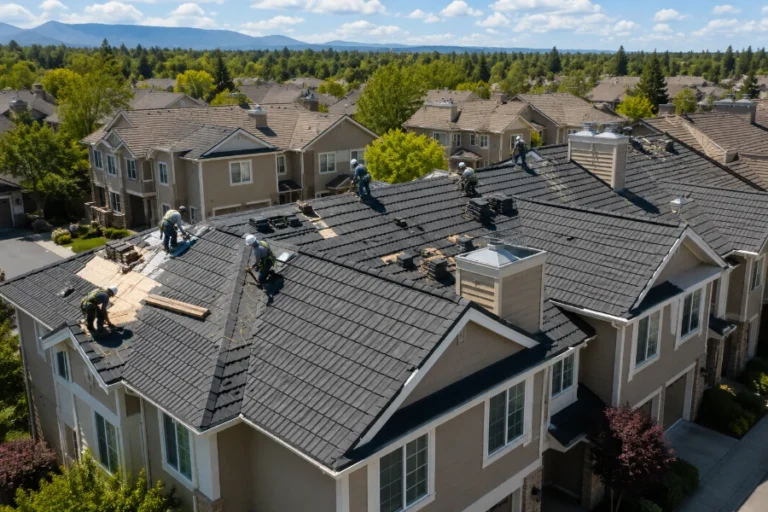
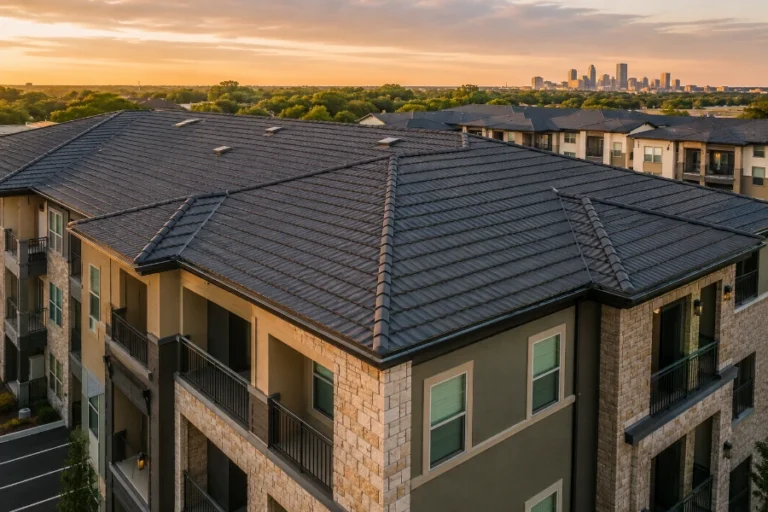
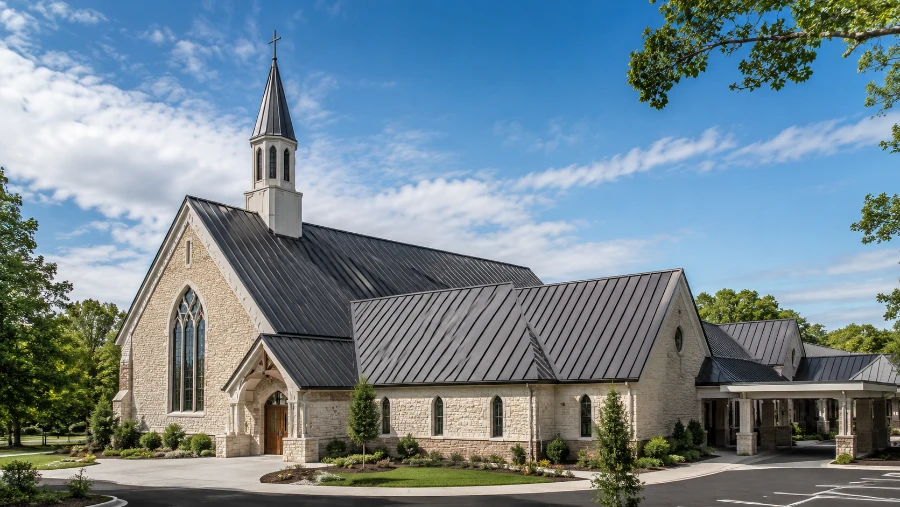
Hotel roofing replacement is not just another maintenance project. For a hotel, the roof protects guest rooms, lobbies, kitchens, conference spaces, staff areas, inventory, equipment, and the reputation that keeps rooms booked. When the roof starts failing, the damage rarely stays outside. It creeps into ceilings, walls, carpets, electrical systems, and guest reviews.
That is why hotel owners and property managers need to treat the roof as a revenue-protection system, not just a building component.
A small leak over one room can turn into a blocked-off hallway. A damaged flashing detail near a rooftop unit can create water stains in a conference room. Poor drainage can quietly weaken sections of the roof until the next storm exposes the problem at the worst possible time.
Hotels cannot afford that kind of surprise.
The good news is that hotel roofing replacement can be planned, phased, and managed in a way that protects guests, controls disruption, and improves the long-term value of the property. However, success depends on choosing the right roofing system, working with the right contractor, and preparing the hotel team before work begins.
Let’s break it down clearly.
Why Hotel Roofing Replacement Matters
A hotel roof has a harder job than many people realize.
It does not simply sit above a structure. It protects a business that operates almost every hour of every day. Guests arrive late. Housekeeping starts early. Maintenance teams move constantly. Food service, laundry, meetings, check-ins, and events all depend on a dry, safe, comfortable building.
So when the roof fails, operations feel it fast.
Water intrusion can damage guest rooms, which means those rooms may be pulled out of service. That directly affects revenue. Ceiling stains in public areas can make the property feel neglected. Moisture can create odor complaints. Noise from emergency repairs can disturb guests. Worse, a roof problem that started as a minor issue can grow into a major capital expense if ignored.
Hotel roofing replacement matters because it helps prevent those problems before they become operational headaches.
A new roof can also improve energy performance, boost curb appeal, and reduce the need for constant patching. For hospitality properties, that matters. Guests notice comfort. They notice appearance. They notice when something feels off.
And yes, they leave reviews.
Common Signs a Hotel Roof Needs Replacement
Not every roofing issue means the entire system needs to be replaced. Sometimes, targeted repairs are enough. However, when the same problems keep returning, hotel roofing replacement may be the smarter move.
Here are the signs worth taking seriously.
Frequent Leaks
One leak can happen. Repeated leaks are a warning.
If water keeps showing up in guest rooms, corridors, banquet areas, offices, or storage rooms, the roof may have reached the point where repairs are only buying short amounts of time. This is especially true when leaks appear in different areas after each storm.
Keep a leak log. Record the date, room number, location, weather conditions, photos, and repair notes. Over time, that record will show whether the issue is isolated or part of a larger roof failure.
Aging Roofing Materials
Every roofing system has a service life. Once materials begin to crack, curl, loosen, rust, split, blister, or lose protective coating, performance drops.
On sloped sections, watch for missing shingles, damaged panels, broken tiles, or exposed fasteners. On flat or low-slope sections, look for ponding water, membrane seams pulling apart, bubbling, soft spots, or worn surfaces.
Old roofs do not usually fail all at once. They fail in stages. Unfortunately, hotels often discover the final stage during a storm.
Rising Energy Costs
A weak roof can make heating and cooling systems work harder.
Hotels rely on consistent indoor comfort. If rooms are too hot, too cold, or uneven from one area to another, guests complain quickly. While HVAC problems may be part of the issue, the roof can also be a factor, especially when insulation, ventilation, reflectivity, or moisture intrusion has reduced performance.
Some properties may also benefit from a cool roof approach that reflects more sunlight and absorbs less solar energy, depending on the roofing system, building design, and local climate.
A roof inspection can help determine whether the current system is contributing to energy waste.
Visible Storm Damage
Storm damage should never be ignored. Hail, high winds, wind-driven rain, and flying debris can damage roofing materials, flashing, gutters, and rooftop equipment connections.
After severe weather, inspect the roof as soon as conditions are safe. Better yet, schedule a professional inspection. Damage that looks minor from the ground may be more serious up close.
Interior Stains, Odors, or Moisture
Water stains on ceilings are not decorative. They are evidence.
Brown rings, peeling paint, soft drywall, musty smells, wet insulation, or recurring mold concerns can point to roof problems. In a hotel, these issues can affect guest experience immediately. Even if the leak is small, the perception problem is big.
When guests see stains, they do not think, “minor roof penetration issue.” They think, “This place has problems.”
Unique Roofing Challenges for Hotels
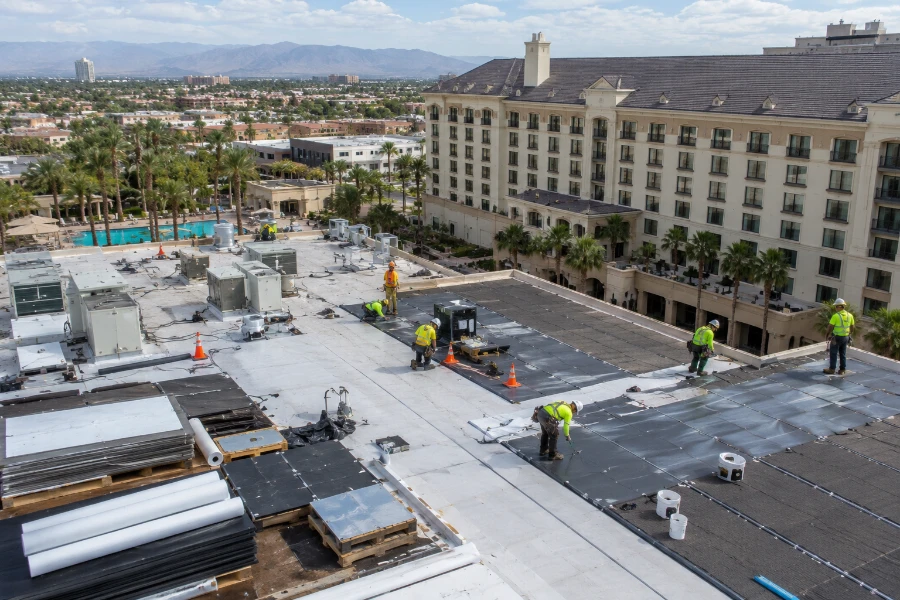
Hotel roofing replacement is different from replacing the roof on an empty warehouse or a small office building. Hospitality properties have more moving parts.
Guests may be sleeping during early work hours. Delivery trucks need access. Parking areas may be full. Entrances must remain safe. Event spaces may already be booked. Rooftop HVAC units, vents, satellite equipment, signs, and drainage systems may complicate the work.
That is why planning matters so much.
A strong hotel roofing replacement plan should consider:
- Guest noise expectations
- Parking and delivery access
- Safety zones around entrances
- Work hours and local restrictions
- Peak occupancy periods
- Event schedules
- Emergency access routes
- Rooftop equipment coordination
- Staff communication
- Daily cleanup requirements
The best projects do not feel chaotic. They feel organized.
That does not happen by accident.
Best Roofing Options for Hotels
The right roofing material depends on the hotel’s design, location, budget, roof slope, brand image, and long-term goals. A boutique inn, coastal resort, roadside hotel, and large full-service property may all need different roofing solutions.
Here is a simple comparison.
| Roofing Option | Best For | Key Advantages | Considerations |
|---|---|---|---|
| Stone-coated steel roofing | Hotels that want durability and strong curb appeal | Attractive, long-lasting, weather-resistant, lighter than tile | Higher upfront cost than basic shingles |
| Metal roofing | Commercial and hospitality properties needing long service life | Durable, efficient, low maintenance | Appearance depends on profile and finish |
| Asphalt shingles | Smaller hotels, inns, and budget-conscious projects | Affordable, familiar, easy to install | Shorter lifespan than premium systems |
| Tile roofing | Resort-style or upscale properties | Excellent visual appeal and durability | Heavy, may require structural review |
| Flat roofing systems | Large hotels with low-slope roofs | Works around rooftop equipment and wide roof areas | Drainage and installation quality are critical |
Each option has a place. The mistake is choosing based only on initial price.
A roof that costs less upfront may require more maintenance, more frequent repairs, and earlier replacement. Over time, that “cheap” roof can become very expensive.
Why Stone-Coated Steel Roofing Can Be a Strong Fit for Hotels
For many hospitality properties, stone-coated steel roofing deserves serious attention.
It combines the strength of metal roofing with the textured look of traditional roofing materials. That means a hotel can achieve the appearance of tile, shake, or shingle while gaining the benefits of a durable steel roofing system.
That is a powerful combination.
Hotels need exterior appeal. Guests form opinions before they walk through the door. A worn, faded, or patched roof can make the property look tired. A clean, well-designed roof can make the building feel cared for and higher value.
Stone-coated steel roofing can also be a practical choice because it is lighter than many tile systems, resistant to harsh weather, and designed for long-term performance. Property owners comparing premium systems can also review this guide on how long do stone coated roofs last to better understand lifespan expectations before choosing a roofing material.
Hotel roofing replacement is not only about fixing problems. It is also a chance to upgrade the building.
And when the roof is visible from the road, parking lot, upper floors, or nearby properties, that upgrade can make a noticeable difference.
Planning a Hotel Roofing Replacement Without Disrupting Guests
A roof replacement does not have to feel like a disaster for guests. But it must be planned carefully.
Start with occupancy. If the hotel has a slower season, that is usually the best window for major roofing work. If not, the project may need to be phased by building section, wing, or roof area.
Next, communication is key. The front desk should know where crews will be working each day. Housekeeping should know which rooms may be affected by noise. Maintenance should understand access needs. Management should receive regular updates.
Guest communication should be simple and controlled. Not every guest needs a full construction briefing. However, if certain parking areas, entrances, or amenities will be temporarily affected, guests should know before frustration builds.
Here are practical steps:
- Schedule loud work during reasonable daytime hours.
- Avoid high-impact work near occupied premium rooms when possible.
- Place clear signage near temporary access changes.
- Keep walkways clean and protected.
- Require daily debris cleanup.
- Coordinate with event schedules.
- Create a point of contact for hotel staff.
- Review emergency procedures before work starts.
A smooth hotel roofing replacement protects more than the roof. It protects the guest experience.
The Hotel Roof Replacement Process
A professional process helps avoid confusion, delays, and unexpected costs. Here is what property owners and managers should expect.
Roof Inspection
The project should begin with a detailed inspection. The contractor should evaluate the existing roofing materials, decking, flashing, drainage, penetrations, gutters, ventilation, and any signs of storm damage or moisture intrusion.
For hotels, the inspection should also consider guest-facing areas below the roof. Interior stains, repeated leak locations, and maintenance records can help reveal patterns.
Material Selection
This is where long-term thinking matters.
The right material should match the building’s architecture, climate exposure, budget, brand standards, and expected ownership timeline. If the property is being upgraded, repositioned, or prepared for long-term operation, a premium roofing system may make more financial sense than a short-term fix.
Scope and Estimate Review
Do not skim the estimate. Read it carefully.
A proper hotel roofing replacement estimate should explain removal, disposal, materials, underlayment, flashing, ventilation, decking repairs, fasteners, trim, permits, safety measures, warranties, and cleanup.
If the estimate is vague, ask questions. Vague estimates often become expensive later.
Permits and Scheduling
Permits, inspections, deliveries, staging areas, and crew access should be planned before the first roofing material comes off. For hotels, staging is especially important because guest parking and entrances may be affected.
Tear-Off or Overlay Decision
Sometimes, a new roof can be installed over an existing system. However, that is not always the best choice.
A full tear-off allows the contractor to inspect the decking and identify hidden moisture damage. For hotels with recurring leaks, this can be important. Covering old problems may only hide them temporarily.
Installation
Installation quality determines performance. Even great materials can fail if installed poorly.
Details matter: flashing, valleys, penetrations, ridges, drainage, transitions, fasteners, and ventilation. These are the areas where future leaks often begin.
Final Inspection and Cleanup
The project should end with a thorough inspection and cleanup. Walk the site. Review completed sections. Confirm that debris, nails, packaging, and equipment have been removed. Make sure hotel staff knows what changed and how to maintain the new system.
What Affects Hotel Roofing Replacement Cost
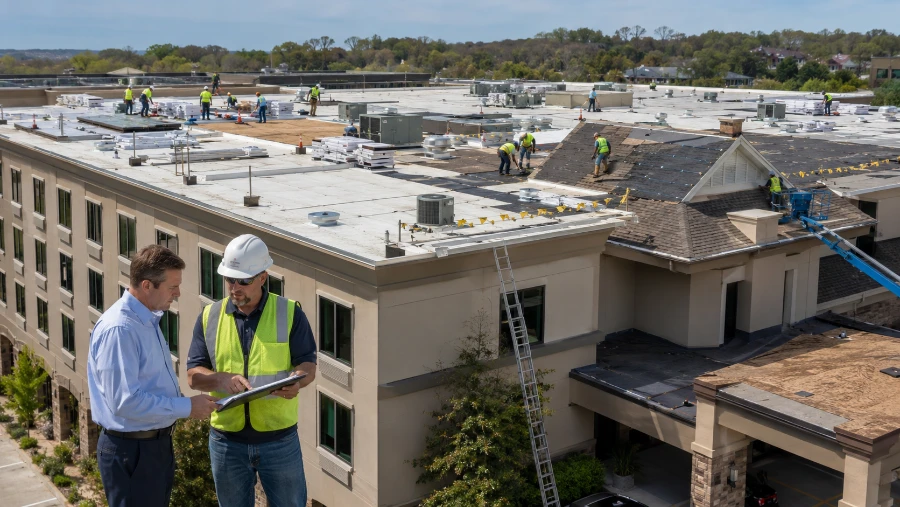
Hotel roofing replacement costs can vary widely. That is normal because no two hotel roofs are exactly the same.
The final price is usually shaped by several factors.
| Cost Factor | Why It Matters |
|---|---|
| Roof size | Larger roofs require more material, labor, and time |
| Roof slope | Steeper roofs may require extra safety measures |
| Material choice | Premium systems cost more upfront but may last longer |
| Tear-off needs | Removing old roofing adds labor and disposal costs |
| Decking repairs | Damaged wood or substrate must be fixed before installation |
| Rooftop equipment | HVAC units, vents, and penetrations increase complexity |
| Flashing details | More transitions mean more detailed labor |
| Access limitations | Tight sites may require special staging or equipment |
| Project phasing | Working around guests can affect scheduling and labor flow |
| Permits and codes | Local requirements may affect scope and cost |
The lowest bid is not always the best bid. Sometimes, it is missing important details.
A better question is: what does this price include, and what does it leave out?
That question can save a lot of trouble.
How Hotel Roofing Replacement Protects Revenue
A roof replacement is a capital expense, yes. But it also protects revenue in practical ways.
When the roof performs well, guest rooms stay available. Public areas stay presentable. Maintenance teams spend less time chasing leaks. Insurance claims become less frequent. Emergency repair calls drop. Energy performance may improve. The building looks better from the outside.
That matters.
Hotels sell comfort and trust. A reliable roof supports both.
A strong hotel roofing replacement can help protect:
- Room availability
- Guest satisfaction
- Interior finishes
- Brand standards
- Maintenance budgets
- Energy efficiency
- Property value
- Long-term operating stability
Think of it this way: a failing roof creates unpredictable costs. A planned replacement creates controlled investment.
That difference is huge.
Hotel Roofing Maintenance After Replacement
The work does not stop once the new roof is installed.
A new roof still needs maintenance, especially on a hotel where rooftop equipment, foot traffic, drains, vents, and weather exposure can create wear over time.
Create a roof maintenance plan right away. After replacement, routine care still matters. A simple stone coated roof maintenance plan can help hotel owners protect the new system, catch small issues early, and extend the roof’s useful service life.
Schedule professional inspections at least once or twice a year. Inspect after major storms. Keep gutters, scuppers, drains, and valleys clear. Watch for loose flashing, sealant failure, damaged panels, lifted shingles, or debris around rooftop units.
Also, document everything.
Keep photos, inspection reports, repair invoices, warranty documents, and contractor notes in one organized file. This helps with warranty questions, future sale discussions, insurance matters, and budget planning.
A roof that is maintained well usually performs better for longer. Simple idea. Big payoff.
Mistakes to Avoid During Hotel Roofing Replacement
Hotel roofing replacement can go wrong when decisions are rushed. Avoid these common mistakes.
Choosing Only the Lowest Bid
Price matters, but scope matters more. A low bid may exclude decking repairs, flashing upgrades, ventilation work, disposal, permits, or warranty details.
Compare estimates line by line.
Ignoring Guest Disruption
Roofing work affects noise, parking, entrances, and room comfort. If the plan does not address guests, the hotel team will end up solving problems under pressure.
Overlooking Drainage
Water must move off the roof properly. Poor drainage can shorten the life of the new system and create repeat leaks.
Skipping Decking Inspection
If old leaks damaged the roof deck, that damage must be addressed. Installing new materials over weak decking is a bad investment.
Forgetting Warranty Details
Understand what the material warranty covers, what the workmanship warranty covers, and what maintenance is required to keep coverage valid.
Hiring Without Relevant Experience
A hotel is not a basic roofing job. Choose a contractor who understands commercial or hospitality properties, safety planning, and occupied-building work.
Choosing the Right Roofing Contractor for a Hotel
The contractor you choose can make or break the project.
A qualified hotel roofing contractor should be able to explain the process clearly, provide a detailed scope, coordinate scheduling, and protect the property during installation. They should also understand that the hotel is still operating.
Ask direct questions:
- Have you completed roofing projects for hotels or occupied commercial buildings?
- How will you manage guest safety and access?
- What is included in the estimate?
- How will you protect landscaping, parking areas, entrances, and walkways?
- Who will communicate with hotel management each day?
- What warranties are available?
- How will change orders be handled?
- What happens if hidden damage is found?
Good contractors welcome these questions. They know clear expectations make the project better.
Final Thoughts
Hotel roofing replacement is a serious project, but it should not feel overwhelming. With the right plan, the right materials, and the right contractor, it can become one of the smartest investments a hotel owner or manager makes.
A failing roof creates stress. A strong roof creates confidence.
It protects guest rooms, public areas, staff operations, energy performance, and long-term property value. It also helps preserve the first impression guests get before they ever reach the front desk.
For hotels that want durability and curb appeal, stone-coated steel roofing can be a strong option worth considering. It delivers the look many hospitality properties want with the strength they need.
So do not wait until leaks force the issue. If the roof is aging, stained, storm-damaged, or becoming expensive to maintain, schedule a professional inspection and start planning. Smart hotel roofing replacement begins before the emergency.
And that is exactly how you protect the property, the guests, and the business under the roof.
FAQs
What is hotel roofing replacement?It is the process of replacing a hotel’s aging or damaged roof to protect the building, guests, and operations.
When should a hotel roof be replaced?A hotel roof may need replacement when leaks, storm damage, worn materials, or repair costs keep increasing.
Can a hotel stay open during roof replacement?Yes, with proper scheduling, safety barriers, cleanup, and guest communication.
What is the best roof for a hotel?The best option depends on the property, but stone-coated steel is strong, attractive, and long-lasting.
How long does hotel roofing replacement take?Timing depends on roof size, material, weather, and whether the work is done in phases.
What affects hotel roof replacement cost?Cost depends on roof size, material, access, tear-off needs, repairs, and rooftop equipment.
Is stone-coated steel roofing good for hotels?Yes, it offers durability, curb appeal, and weather resistance for hospitality properties.
How can hotels reduce guest disruption?Plan work during slower periods, phase the project, protect walkways, and communicate clearly with staff.
Does roof replacement improve hotel value?Yes, it can improve appearance, protect interiors, reduce leaks, and support long-term property value.
What maintenance is needed after replacement?Schedule inspections, clear drains and gutters, check flashing, and inspect after major storms.