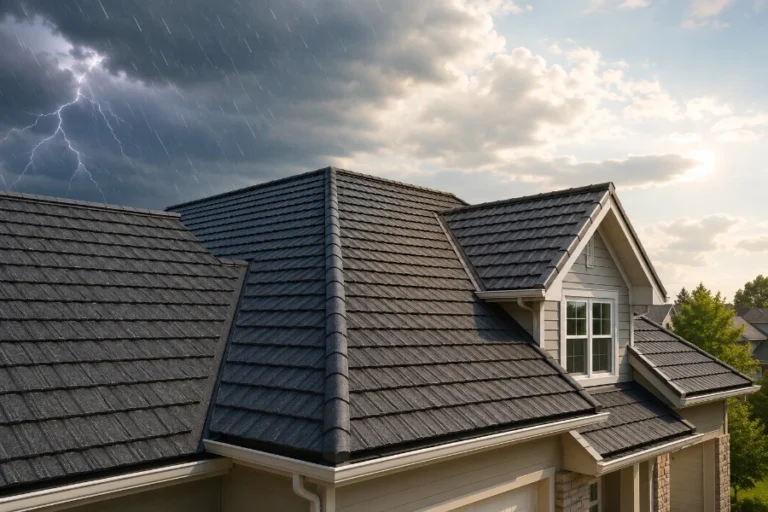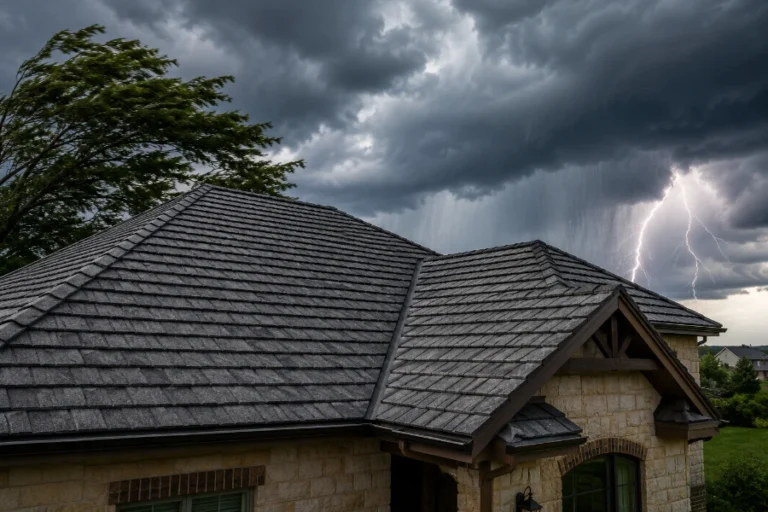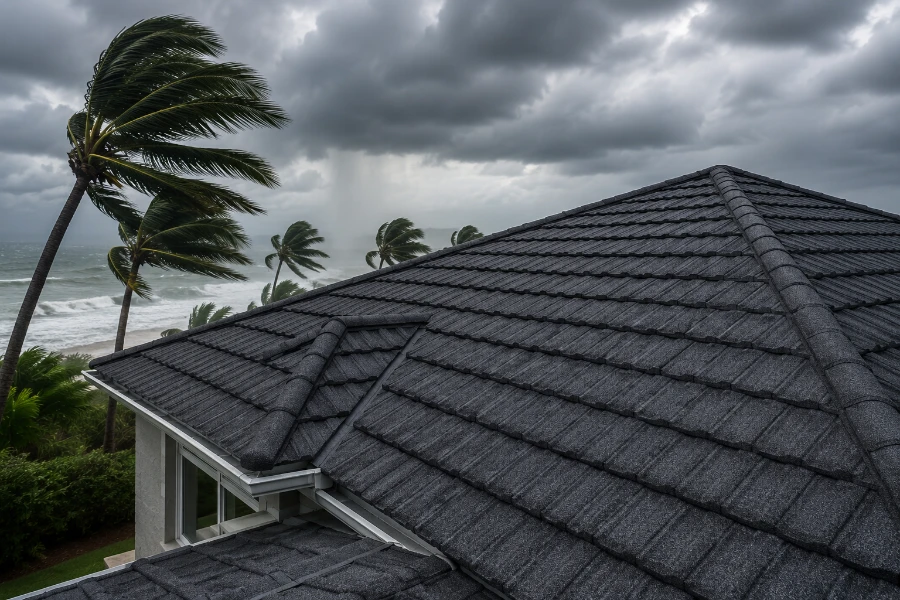
Every hurricane season reminds homeowners of one simple truth: your roof is your home’s first line of defense. Strong winds, relentless rain, and airborne debris can turn a small roofing weakness into a costly disaster in a matter of minutes. That’s why investing in hurricane resistant roofing systems isn’t just about preparing for the next storm—it’s about protecting your family, your belongings, and one of the biggest investments you’ll ever make.
I’ve seen how quickly severe weather can expose hidden roofing problems. A few missing fasteners, aging underlayment, or poorly secured flashing may seem insignificant on a calm day. Once hurricane-force winds arrive, however, those small issues can escalate into widespread damage. Fortunately, today’s roofing technology offers systems specifically designed to resist extreme weather while delivering decades of dependable performance.
Unlike traditional roofing approaches that focus only on the visible roofing material, hurricane resistant roofing systems combine multiple components into one integrated defense. Every layer plays a role, from the roof deck to the fasteners and underlayment. When installed correctly, these systems help reduce wind uplift, minimize water intrusion, and improve the roof’s overall structural strength.
In this guide, we’ll explore how these roofing systems work, what features matter most, and why selecting the right materials can make a significant difference before the next major storm arrives.
What Are Hurricane Resistant Roofing Systems?
Many homeowners assume buying stronger shingles or metal panels automatically creates a hurricane-ready roof. Unfortunately, it’s not that simple.
A roofing system performs as a complete unit. Every component contributes to its ability to withstand severe weather. If one element fails, the surrounding components become vulnerable as well.
That is why hurricane resistant roofing systems are designed as integrated systems rather than collections of individual products.
More Than Just Strong Roofing Materials
Think of a roof like a chain. Its strength depends on every link, not just the strongest one.
For example, premium roofing panels won’t perform as intended if they’re attached to a weakened roof deck. Likewise, the best underlayment cannot compensate for improperly installed flashing around chimneys or roof penetrations.
A complete hurricane-resistant system typically includes:
- Reinforced roof decking
- High-performance waterproof underlayment
- Corrosion-resistant fasteners
- Secure roof-to-wall connections
- Durable roofing materials
- Proper flashing
- Protected roof edges
- Reliable ridge ventilation
Every layer works together to resist wind pressure, prevent leaks, and maintain structural stability.
Primary Goals of Hurricane Resistant Roof Design
Modern hurricane resistant roofing systems are engineered with several priorities in mind.
| Objective | Why It Matters |
|---|---|
| Wind resistance | Prevents roofing materials from lifting during high winds. |
| Water protection | Reduces leaks caused by wind-driven rain. |
| Impact resistance | Helps withstand debris carried by hurricane winds. |
| Structural integrity | Strengthens the roof as a complete assembly. |
| Long-term durability | Extends the service life of the roofing system. |
Instead of relying on one feature alone, these systems distribute stress across multiple components. The result is a roof that performs better under extreme conditions.
How Hurricanes Damage Roofs
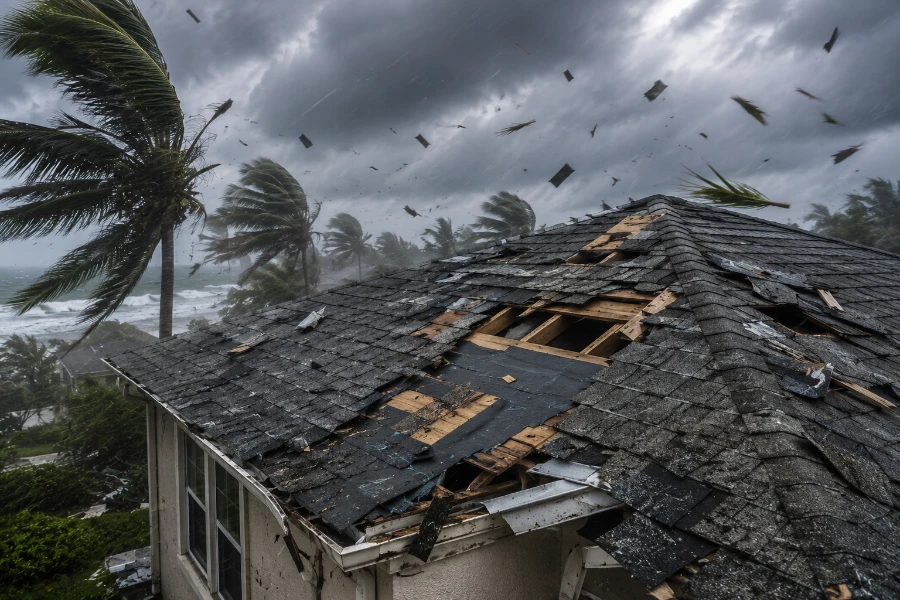
Understanding how hurricanes attack a roof helps explain why complete roofing systems outperform basic roof replacements.
Damage rarely begins with a catastrophic failure.
More often, it starts with one vulnerable area.
Once that area gives way, the rest of the roof becomes increasingly susceptible to damage.
High Wind Uplift
Wind doesn’t simply blow against a roof.
It flows over it.
As wind accelerates across the roof surface, pressure changes occur according to the principles of aerodynamics. These pressure differences create lifting forces that can pull roofing materials upward, especially near the roof edges and corners.
This process is known as wind uplift.
If shingles, tiles, or metal panels begin lifting, even slightly, stronger gusts can force their way underneath. Eventually, entire sections of roofing may separate from the structure.
That is why properly tested hurricane resistant roofing systems focus heavily on uplift resistance rather than simply material strength.
Wind-Driven Rain
Rain becomes far more destructive during a hurricane.
Instead of falling vertically, strong winds push rain sideways and upward. Water can infiltrate tiny openings around flashing, vents, valleys, skylights, and roof edges.
Even roofs that appear undamaged from the outside may experience hidden moisture intrusion.
Over time, trapped moisture may lead to:
- Wood rot
- Mold growth
- Damaged insulation
- Ceiling stains
- Interior drywall deterioration
Secondary water barriers installed beneath the roofing material help provide another level of protection if the outer covering becomes compromised.
Flying Debris
Hurricane winds transform ordinary objects into dangerous projectiles.
Tree branches.
Roof tiles.
Outdoor furniture.
Construction materials.
These objects strike roofing surfaces with tremendous force.
Impact damage may crack shingles, dent metal panels, loosen flashing, or puncture underlayment. Once the protective surface is breached, water intrusion often follows quickly.
Roofing systems designed for hurricane-prone regions frequently include materials with enhanced impact resistance to reduce the likelihood of structural damage.
Structural Stress
Not all hurricane damage is immediately visible.
Repeated wind pressure causes the roof structure itself to flex.
As the roof moves slightly during each wind gust, stress accumulates at connection points between the roof deck, trusses, rafters, and supporting walls.
Weak connections may gradually loosen until major structural failure occurs.
This is another reason complete hurricane resistant roofing systems place equal emphasis on structural fastening as they do on the roofing material itself.
Essential Components of Hurricane Resistant Roofing Systems
The visible roofing material receives most of the attention, yet much of a roof’s strength comes from components hidden beneath the surface.
Each layer contributes to overall performance.
Remove one, and the system becomes significantly weaker.
Reinforced Roof Deck
Everything begins with the roof deck.
It forms the structural base that supports the roofing system.
Whether constructed with plywood or oriented strand board (OSB), the decking must be thick enough to resist bending under wind pressure while remaining securely fastened to the framing below.
Key considerations include:
- Proper panel thickness
- Correct spacing between panels
- Adequate fastening schedules
- Structural integrity without water damage
Older homes may benefit from deck reinforcement during roof replacement, especially in hurricane-prone coastal regions.
Waterproof Underlayment
Think of underlayment as your roof’s emergency backup.
Even the highest-quality roofing materials can become damaged during severe storms. When that happens, underlayment becomes the home’s second line of defense.
Modern synthetic underlayments offer several advantages:
- Greater tear resistance
- Improved moisture protection
- Better UV stability during installation
- Longer service life
Many contractors also recommend self-adhering waterproof membranes in vulnerable locations such as valleys, roof edges, and around penetrations.
These products seal tightly around fasteners, helping prevent water intrusion if the outer roofing layer is compromised.
Enhanced Roof Fasteners
Fasteners receive very little attention from homeowners.
Yet they often determine whether a roof survives extreme winds.
Standard nails may loosen over time due to thermal expansion and contraction.
By comparison, ring-shank nails and specialized roofing screws provide much stronger holding power.
High-quality fastening systems typically feature:
- Corrosion-resistant coatings
- Improved pull-out resistance
- Better long-term durability
- Increased wind performance
Using manufacturer-approved fastening patterns is equally important. Even premium fasteners cannot compensate for improper installation spacing.
Hurricane Straps and Roof Connections
One of the most overlooked features of hurricane resistant roofing systems lies beneath the roof itself.
Hurricane straps create stronger connections between the roof framing and the home’s walls.
Instead of relying solely on traditional nails, these galvanized metal connectors help transfer wind loads throughout the structure.
Benefits include:
- Reduced roof uplift
- Improved structural stability
- Stronger resistance during sustained winds
- Better overall building performance
For homes located in coastal regions, these connectors are often among the most valuable upgrades available.
Ridge and Hip Protection
The ridge represents one of the highest points on any roof.
It also experiences significant wind pressure.
Poorly secured ridge caps may loosen during hurricanes, exposing the roof beneath to water infiltration and progressive wind damage.
Modern ridge systems use improved fastening methods while maintaining proper attic ventilation.
Likewise, hips require secure installation techniques to ensure roofing materials remain tightly attached during severe weather.
When every roofing component works together—from the reinforced deck to the ridge caps—the entire system becomes far more resilient. That comprehensive approach is exactly what sets hurricane resistant roofing systems apart from conventional roofing assemblies and prepares a home to better withstand the challenges of hurricane season.
Best Roofing Materials for Hurricane-Prone Areas
Not every roofing material performs equally when hurricane-force winds arrive. While proper installation is critical, choosing the right material can dramatically improve your home’s ability to withstand severe weather.
Let’s compare some of the most popular options.
Stone-Coated Steel Roofing
Stone-coated steel has become one of the leading choices for homeowners living in coastal and hurricane-prone regions.
Unlike traditional roofing materials, it combines the strength of galvanized steel with the appearance of conventional shingles, shakes, or tiles. The result is a roofing solution that delivers exceptional durability without placing excessive weight on the home’s structure.
Benefits include:
- Wind ratings often exceeding 120–180 mph depending on the system
- Excellent resistance to flying debris
- Lightweight construction that reduces structural stress
- Corrosion-resistant finishes
- Fire resistance
- Long service life that can exceed 50 years with proper maintenance
These qualities make stone-coated steel one of the most dependable hurricane resistant roofing systems available today.
If you’re comparing roofing options based on longevity, read our guide on How Long Does Stone Coated Steel Roofing Really Last? to understand why many homeowners consider it a lifetime investment.
Standing Seam Metal Roofing
Standing seam metal roofs are another excellent option for regions exposed to hurricanes.
Interlocking vertical panels reduce the number of exposed fasteners while allowing the roof to shed water efficiently.
Advantages include:
- Exceptional wind resistance
- Minimal maintenance
- Excellent water-shedding capabilities
- Long lifespan
- Energy efficiency through reflective coatings
Professional installation is especially important because panel alignment and fastening directly influence wind performance.
Concrete Roof Tiles
Concrete tiles provide outstanding durability and can perform well during hurricanes when installed using modern fastening systems.
However, they are considerably heavier than metal roofing.
Homeowners should ensure their home’s framing is capable of supporting the additional weight before installation.
Asphalt Shingles
Architectural asphalt shingles remain one of America’s most common roofing materials.
Premium products often carry wind ratings between 110 and 130 mph.
While they can provide solid protection, their performance depends heavily on installation quality and regular maintenance. Missing shingles or deteriorating sealant strips significantly reduce hurricane resistance.
Composite Roofing Materials
Synthetic roofing products continue gaining popularity.
Many imitate slate or cedar while offering improved impact resistance and lower maintenance requirements.
When evaluating composite products, always review certified wind and impact testing rather than relying solely on appearance.
Wind Ratings Explained
Shopping for a roof often means comparing wind ratings.
But what do those numbers actually represent?
Manufacturers test roofing systems under controlled laboratory conditions to determine how well they withstand simulated wind forces.
Generally, higher ratings indicate greater resistance to uplift and material failure.
| Wind Rating | Typical Performance |
|---|---|
| 110 mph | Suitable for moderate wind regions |
| 130 mph | Better protection in hurricane-prone areas |
| 150 mph | Designed for severe coastal conditions |
| 180+ mph | Premium roofing systems engineered for extreme weather |
Remember, laboratory testing assumes correct installation.
A premium roofing product installed incorrectly may perform worse than a mid-range product installed according to manufacturer specifications.
That is why experienced contractors remain essential when installing hurricane resistant roofing systems.
Building Codes for Hurricane Resistant Roofing Systems
Building codes have changed dramatically over the past several decades.
Each major hurricane teaches engineers valuable lessons about improving residential construction.
As a result, today’s code requirements often exceed those used only twenty years ago.
The Federal Emergency Management Agency (FEMA) regularly publishes guidance on disaster-resistant construction and mitigation strategies that help reduce storm-related damage.
High-Velocity Hurricane Zones
Some coastal regions have even stricter standards.
High-Velocity Hurricane Zones (HVHZ), such as portions of South Florida, require roofing systems to pass extensive testing before approval.
These requirements evaluate:
- Wind uplift resistance
- Water intrusion protection
- Impact resistance
- Fastener performance
- Structural attachment methods
Why Code Minimums Aren’t Always Enough
Meeting local code requirements provides a solid starting point.
However, minimum code compliance doesn’t necessarily represent the highest level of protection.
Many homeowners voluntarily upgrade to stronger materials and enhanced fastening systems to provide additional peace of mind during hurricane season.
Features That Improve Hurricane Performance
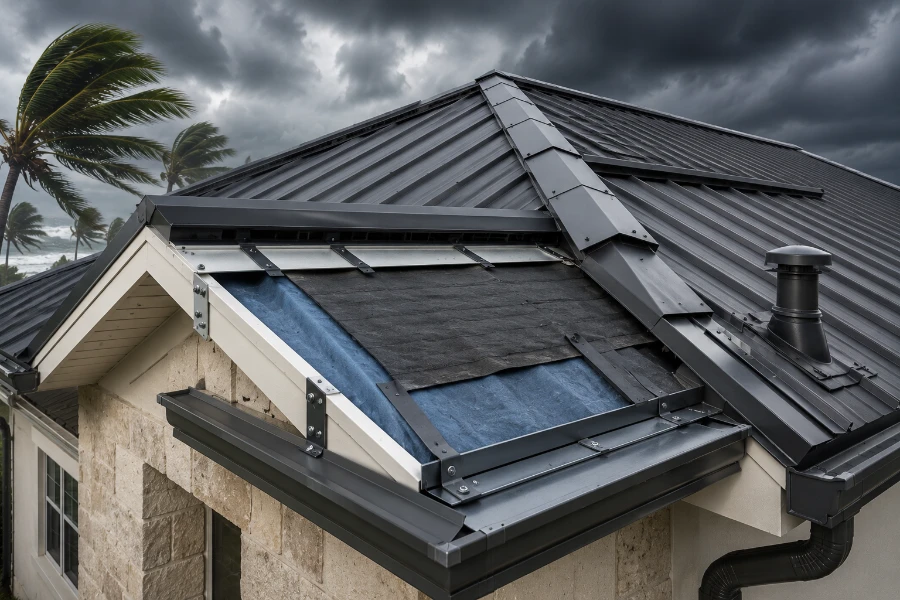
Strong roofing materials alone cannot compensate for poor design.
Several smaller components significantly improve the overall effectiveness of hurricane resistant roofing systems.
Closed Roof Valleys
Closed valleys reduce the amount of exposed metal while directing water efficiently away from vulnerable intersections.
Proper Roof Edge Protection
Roof edges experience some of the highest wind pressures during hurricanes.
Secure edge flashing helps prevent wind from lifting roofing materials at these critical locations.
Improved Flashing Systems
Professional flashing around:
- Chimneys
- Skylights
- Plumbing vents
- Dormers
- Roof intersections
helps reduce the likelihood of leaks during wind-driven rain.
Roof Vent Protection
Modern hurricane-rated vents allow attic ventilation while minimizing opportunities for water intrusion.
Impact-Resistant Skylights
If your home includes skylights, selecting impact-rated models helps reduce breakage from airborne debris.
Secure Gutter Attachment
Gutters are often overlooked.
Poorly attached gutters may tear away during storms, damaging fascia boards and creating additional repair costs.
Benefits of Investing in Hurricane Resistant Roofing Systems
Installing a stronger roof isn’t only about surviving the next hurricane.
The benefits continue long after the storm passes.
Better Home Protection
A stronger roofing system helps protect:
- Structural framing
- Insulation
- Drywall
- Flooring
- Furniture
- Personal belongings
Lower Repair Costs
Although premium roofing systems require a larger upfront investment, they often reduce repair expenses after severe weather events.
Insurance Advantages
Some insurance providers offer discounts for roofing systems that meet higher wind-resistance standards.
Always ask your insurance company about available incentives before replacing your roof.
Increased Property Value
Buyers increasingly recognize the value of durable roofing.
A well-documented roofing upgrade can improve resale appeal, especially in coastal markets.
Longer Lifespan
Premium roofing systems frequently outlast traditional materials, reducing replacement frequency over the lifetime of the home.
Greater Peace of Mind
Perhaps the greatest benefit is confidence.
Knowing your roof was designed to withstand severe weather allows you to focus on protecting your family rather than worrying about the structure above you.
Common Mistakes Homeowners Make
Even quality roofing systems can underperform when common mistakes are made.
Avoid these costly errors:
- Choosing the lowest bid without evaluating installation quality
- Hiring contractors without proper licensing or insurance
- Ignoring routine roof inspections
- Delaying replacement after visible storm damage
- Mixing incompatible roofing components from different manufacturers
- Overlooking attic ventilation requirements
- Skipping post-storm inspections
Prevention almost always costs less than emergency repairs.
How to Choose the Right Hurricane Resistant Roofing System
Every home is different.
Climate, roof design, local building codes, and budget all influence the best roofing solution.
Before making a decision, consider the following:
- Local hurricane history
- Certified wind ratings
- Impact resistance testing
- Roofing material lifespan
- Manufacturer warranties
- Contractor experience
- Maintenance requirements
- Long-term ownership costs
Rather than focusing solely on installation price, evaluate the total value the roofing system provides over several decades.
The best hurricane resistant roofing systems combine durable materials, professional installation, and reliable manufacturer support.
Maintenance Tips That Help Hurricane Resistant Roofing Systems Perform Better
Even the strongest roofing system benefits from regular care.
Simple maintenance can help preserve its performance for many years.
A practical maintenance routine includes:
- Inspect the roof every spring and fall.
- Remove leaves, branches, and other debris.
- Keep gutters clean to encourage proper drainage.
- Examine flashing around vents and chimneys.
- Replace damaged sealants promptly.
- Trim overhanging tree limbs.
- Schedule a professional inspection after major storms.
For additional guidance, explore our Stone Coated Roof Maintenance Checklist, which outlines practical steps homeowners can follow throughout the year.
Regular maintenance helps ensure your hurricane resistant roofing systems continue performing as intended when severe weather strikes.
Is a Hurricane Resistant Roofing System Worth the Investment?
For many homeowners, the answer is yes.
The cost of replacing a roof after major hurricane damage often exceeds the price difference between standard roofing and a premium storm-resistant system. Add the potential expense of water damage, mold remediation, damaged belongings, and temporary housing, and the value becomes even clearer.
A well-designed roofing system also offers benefits beyond hurricane season. Improved durability, lower maintenance needs, enhanced curb appeal, and a longer service life all contribute to better long-term value. Instead of viewing the investment as an added expense, consider it a proactive way to reduce future repair costs while protecting what matters most.
Conclusion
Hurricanes are unpredictable, but your roof’s ability to withstand them doesn’t have to be. Choosing hurricane resistant roofing systems means investing in a complete solution that combines durable materials, reinforced construction, and expert installation to provide reliable protection when extreme weather arrives.
Whether you’re building a new home or replacing an aging roof, focus on quality rather than shortcuts. From reinforced roof decks and advanced underlayments to stone-coated steel roofing and secure fastening systems, every component plays an important role in overall performance.
By selecting the right roofing system and maintaining it properly, you’ll not only improve your home’s resilience against hurricanes but also enjoy greater confidence, reduced maintenance costs, and lasting value for decades to come.
FAQs
What are hurricane resistant roofing systems?They combine durable materials and reinforced components to better withstand high winds, heavy rain, and flying debris.
Which roofing material is best for hurricanes?Stone-coated steel and standing seam metal roofs are among the best options due to their excellent wind and impact resistance.
How much wind can these roofing systems handle?Many premium systems are rated to withstand winds from 130 mph to over 180 mph when properly installed.
Can a hurricane resistant roof prevent leaks?It greatly reduces the risk of leaks by using waterproof underlayment, secure flashing, and proper installation.
Can I upgrade my existing roof?Yes. Reinforcing the roof deck, upgrading fasteners, and installing better underlayment can improve hurricane resistance.
Are hurricane resistant roofs worth the cost?Yes. They can reduce storm damage, lower repair costs, and provide long-term value.
How often should my roof be inspected?Inspect it annually and after any major storm to catch problems early.
Do building codes require hurricane resistant roofs?Some coastal areas do, but upgrading beyond minimum code can provide better protection.
Can debris still damage the roof?Yes, but impact-resistant roofing materials are designed to minimize damage from most flying debris.
How long do hurricane resistant roofing systems last?Depending on the material, many can last 40 to 70 years with proper installation and maintenance.