Managing an apartment community in Texas comes with many responsibilities, but protecting the building from above should always be a priority. The right apartment roofing systems Texas property owners select can determine how well a multifamily property handles intense heat, severe storms, hail, heavy rainfall, and years of weather exposure. A roof is more than a protective covering. It is a long-term investment that influences maintenance expenses, tenant satisfaction, energy performance, and property value.
Texas weather creates unique challenges for apartment communities. Long summer seasons expose roofing materials to extreme temperatures, while sudden storms can bring strong winds and damaging hail. Because of these conditions, property owners need roofing solutions designed specifically for durability and long-term performance.
Choosing the right roofing system requires more than looking at initial installation costs. It involves evaluating material strength, maintenance requirements, energy efficiency, and overall lifecycle value. A well-planned roofing investment can help prevent unexpected repairs and protect the property for decades.
Understanding Apartment Roofing Systems in Texas
Apartment buildings require different roofing considerations compared with single-family homes. While a residential roof typically protects one household, apartment roofing systems protect multiple units, shared spaces, mechanical equipment, and valuable property assets.
A roofing issue in one apartment building can quickly affect many residents. Water intrusion, damaged insulation, or structural concerns can create expensive repairs and disrupt daily operations. Therefore, property owners and managers must carefully evaluate roofing materials before beginning a replacement or upgrade project.
When reviewing apartment roofing systems Texas communities need, several important factors should be considered:
- Building size and roof design
- Local weather exposure
- Expected lifespan
- Repair and maintenance requirements
- Energy efficiency goals
- Installation budget
- Warranty coverage
A dependable roofing system should provide reliable protection while minimizing future disruptions.
What Makes Apartment Roofing Different From Residential Roofing?
Although both residential and apartment roofing systems serve the same basic purpose, multifamily properties require more detailed planning and stronger performance expectations.
Apartment roofs usually cover larger areas and may include multiple buildings, different roof sections, ventilation systems, drainage features, and rooftop equipment. Because of this complexity, installation and maintenance require experienced professionals who understand multifamily structures.
Some major differences include:
| Apartment Roofing | Residential Roofing |
|---|---|
| Covers larger building areas | Covers smaller homes |
| Protects multiple residents | Protects one household |
| Requires commercial planning | Often uses residential approaches |
| Maintenance affects many units | Repairs usually affect one property |
| Requires detailed safety planning | Smaller project requirements |
A roof failure in an apartment community is rarely an isolated problem. One leak can lead to multiple repair requests, interior damage, and tenant concerns. That is why durability should always be a major factor when choosing apartment roofing systems Texas property owners invest in.
Common Roofing Challenges for Texas Apartment Communities
Texas provides beautiful landscapes and warm weather, but the climate can be demanding on roofing materials. Apartment properties must prepare for environmental conditions that can shorten roof lifespan if the wrong materials are selected.
Intense Heat and UV Exposure
Texas summers are known for high temperatures and prolonged sunlight. Over time, constant UV exposure can weaken certain roofing materials, causing cracking, fading, or reduced performance.
Heat-resistant roofing materials help reduce the impact of extreme temperatures. They can also contribute to better indoor comfort by limiting how much heat transfers into apartment units.
Property managers should evaluate:
- Roofing material heat resistance
- Reflective surface options
- Insulation quality
- Proper ventilation
These details can make a noticeable difference in long-term performance.
Severe Storms and Hail Damage
Storm damage is one of the biggest concerns for Texas apartment communities. Strong thunderstorms can produce heavy rainfall, powerful winds, and hail that impacts roofing surfaces.
Hail can create small cracks, dents, or weak points that may eventually lead to leaks. Even when damage is not immediately visible, repeated exposure can reduce the effectiveness of roofing materials.
Because weather patterns vary across Texas, property owners should stay informed about local storm risks. The National Oceanic and Atmospheric Administration (NOAA) provides weather and climate information that helps communities better understand severe weather conditions and prepare for potential risks.
Regular inspections after major storms can help identify damage before it becomes a larger problem.
Moisture and Drainage Issues
Heavy rainfall can expose weaknesses in roofing systems, especially when drainage systems are not maintained properly.
Common moisture-related problems include:
- Blocked gutters
- Damaged flashing
- Standing water
- Poor drainage flow
- Roof membrane deterioration
Water problems often begin as small issues. However, ignoring them can lead to interior damage, mold concerns, and expensive structural repairs.
Types of Apartment Roofing Systems Used in Texas
Every apartment property has different requirements. The best roofing solution depends on building design, budget, expected lifespan, and weather exposure.
Below are some of the most common roofing options used for multifamily properties.
Metal Roofing Systems for Apartments
Metal roofing has become a popular choice among property owners because of its strength, durability, and long service life.
Unlike some traditional roofing materials, metal systems are designed to withstand challenging weather conditions while requiring less frequent maintenance.
Benefits of metal roofing include:
- Long-lasting performance
- Strong wind resistance
- Fire-resistant characteristics
- Lower maintenance requirements
- Energy efficiency benefits
For apartment communities focused on long-term value, metal roofing can provide dependable protection while reducing future repair concerns.
Stone Coated Metal Roofing for Apartment Communities
Stone coated metal roofing combines the strength of steel with the appearance of traditional roofing materials. This makes it an attractive option for apartment properties that want both durability and curb appeal.
Many property owners choose stone coated roofing because it offers protection against harsh Texas conditions while maintaining an appealing appearance.
Key advantages include:
- Resistance against hail and severe weather
- Lightweight construction
- Multiple style options
- Long-term durability
- Reduced maintenance needs
For apartment roofing systems Texas properties require, stone coated metal roofing provides an effective balance between performance and design.
The material can resemble traditional shingles, clay tiles, or wood shakes while providing stronger protection against environmental stress.
Texas apartment communities frequently experience hailstorms, making impact resistance an important consideration. Property owners comparing roofing options can also review how stone coated roofs vs asphalt during hail perform differently when exposed to severe weather conditions.
Asphalt Shingle Roofing Systems
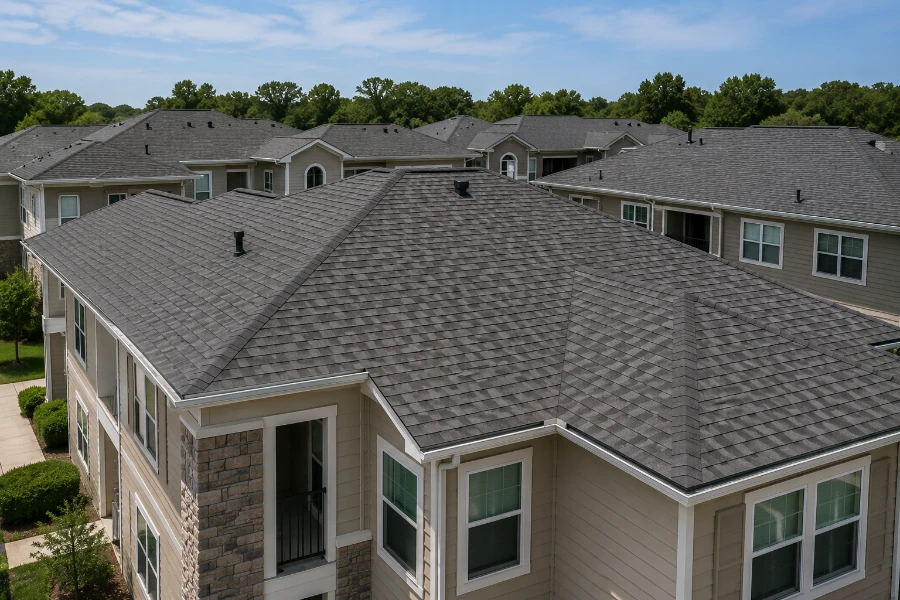
Asphalt shingles remain one of the most widely used roofing materials because of their affordability and availability.
For some apartment communities, asphalt shingles may provide a practical solution. However, property owners should consider long-term maintenance requirements before making a decision.
Advantages include:
- Lower upfront investment
- Easy installation
- Wide material availability
- Various design choices
However, asphalt shingles may require more frequent repairs or replacement compared with longer-lasting roofing options, especially in areas affected by extreme heat and severe storms.
Flat Roofing Systems for Apartment Buildings
Flat roofing systems are commonly used on certain apartment buildings, especially properties with modern architectural designs or larger commercial-style layouts.
Common flat roofing options include:
- TPO roofing
- EPDM roofing
- Modified bitumen roofing
These systems can provide practical benefits, including easier access for maintenance and efficient installation.
However, flat roofs require careful attention to drainage. Without proper maintenance, water accumulation can create serious issues.
Potential challenges include:
- Ponding water
- Drain blockages
- Surface damage
- Membrane deterioration
Routine inspections and proper installation practices are essential for maintaining flat roofing performance.
Key Factors When Choosing Apartment Roofing Systems in Texas
Selecting the right roofing material requires careful consideration. A cheaper option may reduce initial expenses, but it may also increase long-term repair costs.
Property owners should evaluate several important factors before making a final decision.
Weather Resistance and Durability
Texas roofing systems must handle extreme environmental conditions throughout the year.
Important performance features include:
- Wind resistance
- Hail protection
- Heat tolerance
- Waterproofing capability
- Material durability
Because storms and temperature changes are common throughout the state, property owners should focus on roofing materials designed for Texas conditions.
When evaluating apartment roofing systems Texas solutions, understanding how materials perform during severe weather is essential. Roofing options should not only look appealing but also provide reliable protection when conditions become challenging.
For additional guidance, property managers can explore what roof performs best during Texas windstorms when comparing roofing materials designed for high-wind environments.
Energy Efficiency and Cooling Performance
Roofing materials influence how much heat enters an apartment building. During Texas summers, this can directly affect cooling demands and energy costs.
Energy-efficient roofing features may include:
- Reflective roofing surfaces
- Proper insulation
- Improved ventilation
- Heat-resistant materials
The science behind heat movement plays an important role in building performance. Understanding thermodynamics helps explain how heat transfers between materials and environments, which is why insulation, ventilation, and roofing design are important considerations for energy efficiency.
A roofing system designed with energy performance in mind can support better indoor comfort while helping property owners manage operating expenses.
Lifespan and Long-Term Value of Apartment Roofing Systems
A roofing investment should always be evaluated beyond the initial installation price. Apartment owners and managers need to consider how long a system will perform, how often it will require repairs, and how well it protects the property over time.
A lower-cost roofing option may seem attractive at first, but frequent maintenance, storm repairs, and early replacement can create higher expenses in the future.
When comparing apartment roofing systems Texas properties need, consider the total value of the roofing system, including:
- Expected lifespan
- Repair frequency
- Energy savings
- Maintenance requirements
- Weather performance
- Warranty protection
A durable roofing system can help reduce unexpected costs while supporting long-term property planning.
| Roofing Material | Long-Term Considerations |
|---|---|
| Asphalt shingles | Affordable but may require more frequent maintenance |
| Flat roofing systems | Performance depends heavily on drainage and upkeep |
| Metal roofing | Long-lasting with strong weather resistance |
| Stone coated metal roofing | Combines durability, appearance, and extended performance |
For multifamily properties, longevity matters. Every year a roof continues performing effectively can reduce financial pressure on property owners.
Maintenance Requirements for Apartment Roofing
Even the strongest roofing materials require routine care. Maintenance does not only protect the roof itself. It protects the entire apartment investment.
A proactive maintenance program should include:
- Scheduled roof inspections
- Storm damage evaluations
- Drainage system cleaning
- Flashing checks
- Leak monitoring
- Surface condition assessments
Waiting until a leak appears can turn a small repair into a major expense. Preventive maintenance allows property managers to address problems before they affect residents.
A simple inspection schedule may include:
| Inspection Timing | Purpose |
|---|---|
| Before storm season | Identify existing weaknesses |
| After severe weather | Detect hail or wind damage |
| During routine maintenance | Monitor overall roof condition |
Regular attention helps extend roof performance and reduces emergency repair situations.
Apartment Roofing Installation Considerations in Texas
A successful roofing project requires more than choosing a material. Planning, communication, and professional installation all influence the final results.
Planning a Roofing Replacement Project
Before replacing an apartment roof, property owners should complete several important steps.
Schedule a Professional Roof Inspection
A detailed inspection helps determine:
- Current roof condition
- Existing damage
- Potential repair needs
- Whether replacement is necessary
An accurate evaluation prevents unnecessary spending and helps create a realistic project plan.
Compare Roofing Materials
Different roofing systems offer different benefits. Property owners should compare:
- Durability
- Maintenance needs
- Energy performance
- Weather resistance
- Long-term costs
The right choice depends on the property’s goals and location.
Establish a Realistic Budget
Roof replacement costs vary based on:
- Building size
- Roof design
- Material selection
- Labor requirements
- Existing structural concerns
A complete budget should include both installation costs and future maintenance expectations.
Minimizing Disruption for Apartment Residents
Roof replacement projects affect more than the building structure. They also affect the people living inside the community.
A professional roofing plan should include clear communication with residents.
Property managers can reduce disruption by providing:
- Advance project notifications
- Construction schedules
- Safety instructions
- Updates about progress
- Information about temporary access changes
Residents are more understanding when they know what to expect. Good communication creates a smoother experience throughout the project.
Hiring the Right Commercial Roofing Contractor
The quality of installation directly affects roofing performance. Even premium materials can fail if installed incorrectly.
When selecting a roofing contractor, apartment owners should look for:
- Experience with multifamily properties
- Proper licensing and insurance
- Strong references
- Knowledge of Texas weather conditions
- Clear warranty information
- Detailed project timelines
A contractor familiar with apartment roofing understands the challenges involved with larger properties, resident safety, and minimizing operational interruptions.
Benefits of Upgrading Apartment Roofing Systems
Replacing an aging roof can provide several advantages beyond preventing leaks.
A modern roofing system can improve property protection, reduce maintenance costs, and increase long-term value.
Improved Property Protection
A reliable roof protects important parts of the apartment community, including:
- Interior living spaces
- Electrical systems
- Insulation
- Common areas
- Resident belongings
Water intrusion can create expensive problems quickly. A stronger roofing system reduces the risk of damage caused by storms and moisture.
Increased Property Value
Roof upgrades can improve how investors, buyers, and potential residents view an apartment community.
A well-maintained roof demonstrates that the property has been properly managed and cared for.
Benefits may include:
- Stronger market appeal
- Better asset protection
- Increased confidence from investors
- Improved community appearance
A roof is one of the first features evaluated during property inspections, making quality materials a valuable investment.
Reduced Maintenance and Repair Expenses
A durable roofing system can reduce ongoing repair demands.
Instead of constantly responding to leaks, damaged materials, or weather-related issues, property managers can focus on planned maintenance.
Over time, this approach can create:
- Fewer emergency repairs
- Lower maintenance costs
- More predictable budgeting
- Improved operational efficiency
Better Tenant Experience
Residents may not always notice a new roof immediately, but they quickly notice roofing problems.
Leaks, water damage, temperature issues, and repeated repairs can negatively affect tenant satisfaction.
A dependable roof contributes to:
- Better indoor comfort
- Fewer maintenance complaints
- Safer living conditions
- A more positive community experience
Why Stone Coated Metal Roofing Is a Strong Option for Texas Apartments
Texas apartment properties need roofing solutions that can handle challenging conditions while maintaining visual appeal. Stone coated metal roofing has become a strong option because it combines practical performance with attractive design.
Unlike traditional materials that may deteriorate faster under extreme weather, stone coated metal roofing is designed for durability.
Key advantages include:
Strong Protection Against Texas Weather
Stone coated metal roofing provides resistance against:
- Hail impacts
- High winds
- Heavy rainfall
- UV exposure
- Temperature changes
This makes it especially suitable for properties located in areas where severe weather is common.
Aesthetic Flexibility
Apartment communities often prioritize appearance because curb appeal affects leasing decisions.
Stone coated roofing is available in designs that can complement many architectural styles, including appearances similar to:
- Traditional shingles
- Wood shakes
- Clay tiles
This allows property owners to improve protection without sacrificing the building’s appearance.
Long-Term Investment Benefits
For owners comparing apartment roofing systems Texas properties can use, stone coated metal roofing offers advantages that extend beyond installation.
Long-term benefits include:
- Reduced maintenance requirements
- Extended service life
- Improved weather performance
- Strong visual appeal
- Potential energy benefits
Apartment Roofing Maintenance Tips for Texas Properties
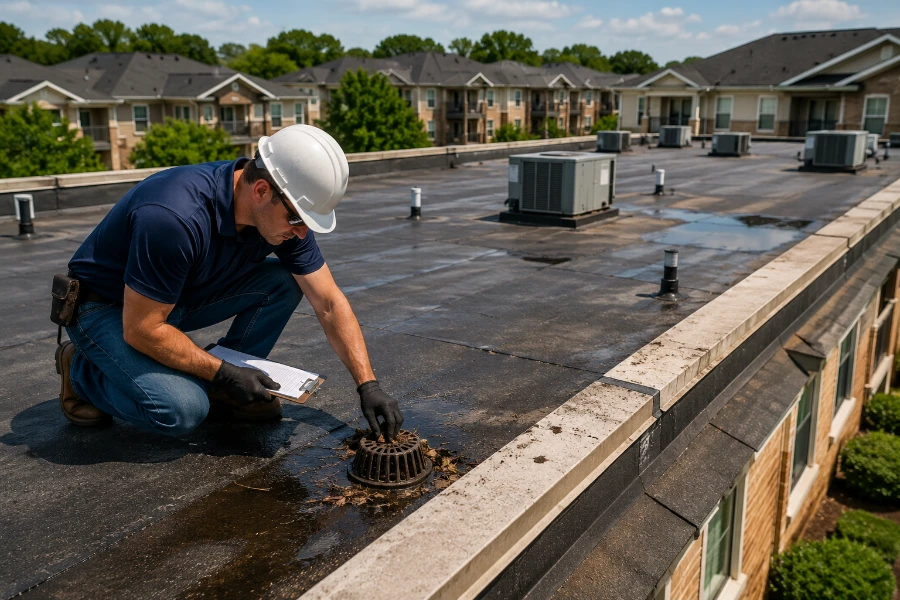
A strong roofing system performs best when supported by consistent maintenance.
Property managers should create a roofing maintenance plan that includes regular inspections and quick responses to potential issues.
Schedule Routine Roof Inspections
Roof inspections should be completed:
- Before severe weather seasons
- After major storms
- During property maintenance reviews
Professional inspections can identify problems that may not be visible from the ground.
Watch for Roofing Warning Signs
Common signs of roofing issues include:
- Ceiling stains
- Water leaks
- Missing roofing materials
- Damaged flashing
- Mold growth
- Increased cooling expenses
These warning signs should never be ignored. Early action often prevents larger repair costs.
Maintain Roof Drainage Systems
Proper drainage protects roofing systems from moisture problems.
Maintenance should include:
- Clearing gutters
- Checking downspouts
- Removing debris
- Inspecting drainage pathways
Standing water places unnecessary stress on roofing materials and can shorten the lifespan of the system.
Cost Considerations for Apartment Roofing Systems in Texas
Roofing costs depend on several variables. There is no single price that applies to every apartment community.
Factors that influence costs include:
- Roof size
- Building layout
- Material selection
- Labor requirements
- Existing roof condition
- Project complexity
However, focusing only on upfront expenses can lead to poor decisions.
A better approach is evaluating the complete investment. A higher-quality roofing system may provide better value through:
- Longer lifespan
- Reduced repairs
- Improved energy performance
- Better storm protection
Property owners should consider the cost of ownership rather than only the initial installation price.
Conclusion: Choosing the Right Apartment Roofing Systems Texas Properties Need
Selecting the right roofing solution is one of the most important decisions apartment owners and managers make. Texas properties face intense heat, severe storms, hail, and changing weather patterns, which means roofing systems must provide reliable performance year after year.
The best apartment roofing systems Texas communities use are built around durability, efficiency, and long-term value. While several materials are available, options such as stone coated metal roofing provide a strong combination of protection, appearance, and reduced maintenance needs.
A quality roof does more than protect a building. It supports resident comfort, preserves property value, and reduces unexpected expenses. By choosing durable materials, planning carefully, and working with experienced roofing professionals, apartment communities can create lasting protection from the top down.
FAQs
What are the best apartment roofing systems for Texas weather?Stone coated metal roofing and quality metal systems are ideal due to their durability, hail resistance, and ability to withstand high winds and extreme heat.
How long does an apartment roof last in Texas?Lifespan depends on the material; asphalt shingles may last 15–25 years, while stone coated metal roofs can last 40–70 years with proper maintenance.
Is stone coated metal roofing suitable for apartment buildings?Yes, it provides strength, low maintenance, long-term durability, and aesthetic flexibility for multifamily properties.
How often should apartment roofs be inspected in Texas?Professional inspections should be done at least twice a year and after severe storms to catch potential issues early.
What roofing system provides the best protection against hail?Stone coated metal roofing and high-quality metal systems offer superior impact resistance compared to traditional asphalt shingles.
Are metal roofing systems energy efficient for apartments?Yes, reflective metal surfaces can reduce heat absorption, lower cooling costs, and improve indoor comfort.
How much does apartment roof replacement cost in Texas?Costs vary based on size, material, and complexity, but total investment should consider long-term durability and maintenance savings.
Can roofing upgrades reduce apartment energy expenses?Absolutely, installing reflective or insulated roofing materials can reduce HVAC usage and help lower utility bills.
What signs indicate an apartment roof needs replacement?Common warning signs include leaks, missing or damaged materials, water stains, and increased energy costs.
How can property managers minimize disruption during roof installation?Effective communication with tenants, clear scheduling, safety precautions, and updates during construction help reduce inconvenience.