A commercial roof is not just another building component. It protects operations, inventory, equipment, employees, tenants, and long-term property value. Choosing long lifespan commercial roofing can reduce replacement costs, limit disruption, and help property owners plan expenses with greater confidence.
That sounds simple. It is not.
Roofing systems perform differently depending on the building, climate, slope, drainage design, installation quality, and maintenance routine. A material promoted as lasting several decades may fail much earlier when installed poorly or ignored after completion.
The goal is not merely to buy the roof with the longest published lifespan. A smarter approach is to choose a system that delivers reliable service for your specific property at a reasonable lifetime cost.
Let’s break down what that looks like in practice.
What Is Considered Long Lifespan Commercial Roofing?
Long lifespan commercial roofing generally refers to a roofing system designed to remain functional for several decades when installed and maintained correctly.
Some commercial roof membranes may provide around 15 to 30 years of service. Higher-end metal, slate, tile, and stone-coated steel systems may last considerably longer under favorable conditions.
Published lifespan estimates, however, should be treated as planning ranges rather than guarantees.
A commercial roof’s actual service life depends on several connected factors:
- Roofing material and product quality
- Installation workmanship
- Roof slope and drainage
- Climate and storm exposure
- Building use
- Frequency of inspections
- Speed of repairs
- Amount of rooftop foot traffic
- Ventilation and insulation performance
A high-quality roofing product can still fail early when flashing is installed incorrectly, drains remain blocked, or technicians repeatedly damage the surface while servicing rooftop equipment.
That is why lifespan should be viewed as the outcome of the entire roofing system.
Why Commercial Roof Lifespan Matters
Replacing a commercial roof is expensive. It can also interfere with business operations, tenant access, parking, deliveries, and equipment use.
A longer-lasting roof can reduce those problems.
Lower Long-Term Replacement Costs
The initial price of a commercial roofing system matters, but it should not control the entire decision.
Consider two simplified options:
| Roofing option | Initial cost | Expected service life | Approximate cost per year |
|---|---|---|---|
| System A | $120,000 | 20 years | $6,000 |
| System B | $180,000 | 40 years | $4,500 |
System B costs more at installation. However, its annualized cost may be lower if it reaches its expected service life.
This calculation does not include repairs, inflation, energy use, or business disruption, but it gives property owners a clearer way to compare options.
Ask every roofing contractor for an estimated service life. Then divide the total installed cost by that figure.
It is a basic calculation. Still, it can expose the difference between a low bid and genuine long-term value.
Less Disruption to Business Operations
Roof replacement can create noise, dust, equipment movement, blocked entrances, and temporary work zones. For retail centers, apartments, medical buildings, schools, restaurants, and offices, these disruptions can affect revenue and tenant satisfaction.
Fewer replacements mean fewer interruptions.
That is a major advantage of long lifespan commercial roofing, especially for occupied properties that cannot easily pause normal operations.
Better Property Value
A commercial property with a recently installed, durable roof may be more attractive to buyers, lenders, and tenants.
Buyers commonly evaluate:
- Remaining roof life
- Recent leak history
- Maintenance records
- Warranty coverage
- Drainage condition
- Evidence of moisture beneath the roof
- Expected repair costs
A roof with documented maintenance and a long remaining service life can reduce uncertainty during a sale. It may not produce a dollar-for-dollar increase in value, but it can remove a major objection during negotiations.
How Long Do Commercial Roofing Systems Last?
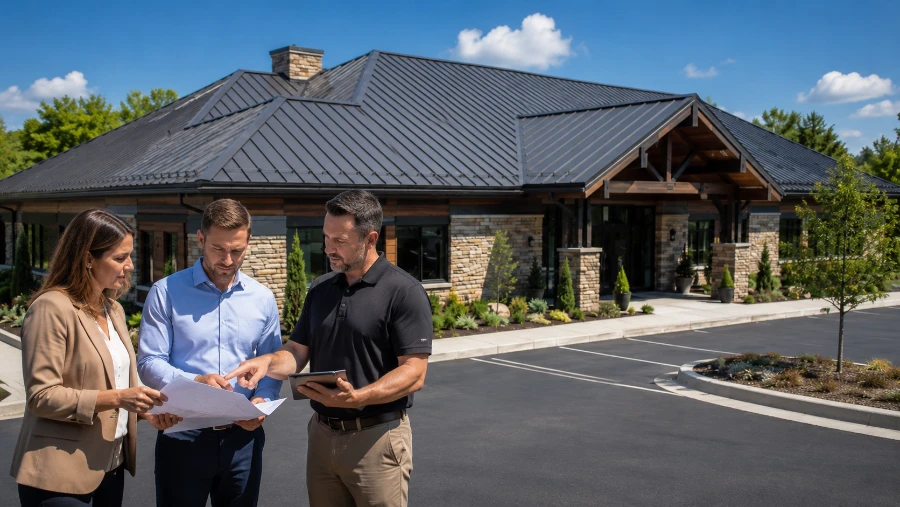
The following lifespan ranges are general estimates. Actual performance can vary considerably by product, installation, location, and maintenance.
| Roofing material | Typical lifespan | Maintenance level | Common applications |
| Stone-coated steel | 40–70 years | Low to moderate | Offices, retail, apartments, churches |
| Standing seam metal | 40–70 years | Low to moderate | Warehouses, offices, industrial buildings |
| Slate | 75–100+ years | Moderate | Historic, institutional, premium commercial |
| Clay tile | 50–100 years | Moderate | Hospitality, retail, mixed-use buildings |
| Concrete tile | 40–75 years | Moderate | Offices, apartments, retail |
| Built-up roofing | 20–30 years | Moderate | Low-slope commercial buildings |
| Modified bitumen | 20–30 years | Moderate | Retail, industrial, multifamily |
| PVC | 20–30 years | Moderate | Restaurants, manufacturing, flat roofs |
| TPO | 15–30 years | Moderate | Warehouses, retail, offices |
| EPDM | 20–30 years | Moderate | Large low-slope commercial roofs |
| Asphalt shingles | 15–30 years | Moderate | Small offices, multifamily, light commercial |
Use this table as a starting point rather than a purchasing guide.
Weight, slope, wind resistance, impact resistance, appearance, repair access, drainage, installer availability, and initial cost all matter. A roof that lasts 60 years but does not fit the building’s structure is not a practical choice.
Best Materials for Long Lifespan Commercial Roofing
There is no single roofing material that fits every commercial building. Each option has strengths, limitations, and ideal applications.
Stone-Coated Steel Roofing
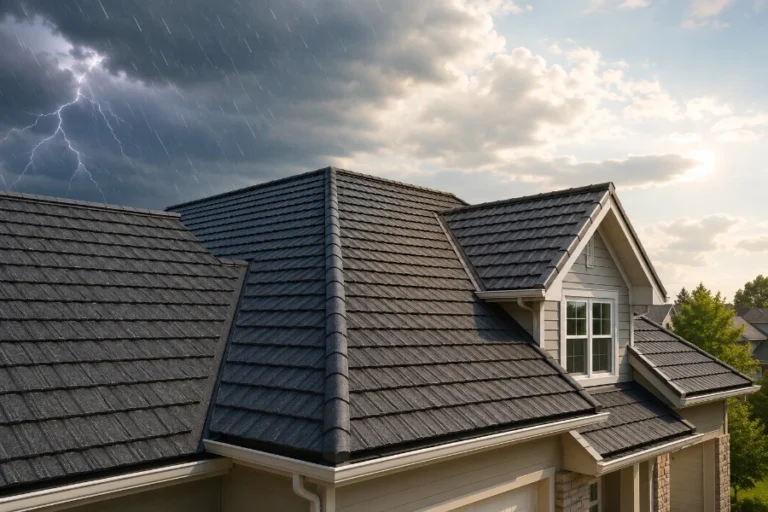
Stone-coated steel combines a steel roofing panel with corrosion-resistant coatings and bonded stone granules.
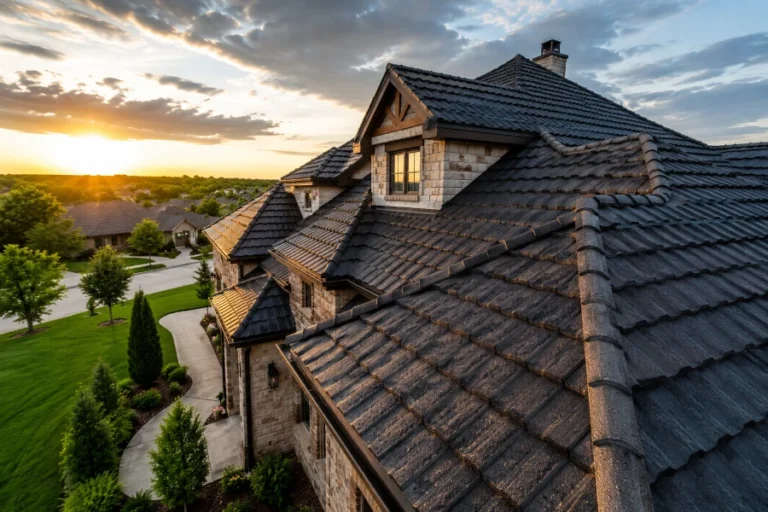
The steel provides strength. The coating system helps protect against corrosion and weather exposure, while the textured surface creates the appearance of tile, shake, slate, or shingles.
For many buildings, stone-coated steel offers an appealing balance of durability, weight, and architectural flexibility.
Potential benefits include:
- Long service life
- Strong wind performance
- Resistance to hail and flying debris
- Lower weight than natural slate or concrete tile
- Noncombustible steel construction
- Multiple profiles and colors
- Reduced risk of cracking compared with some tile materials
- Suitability for reroofing and new construction
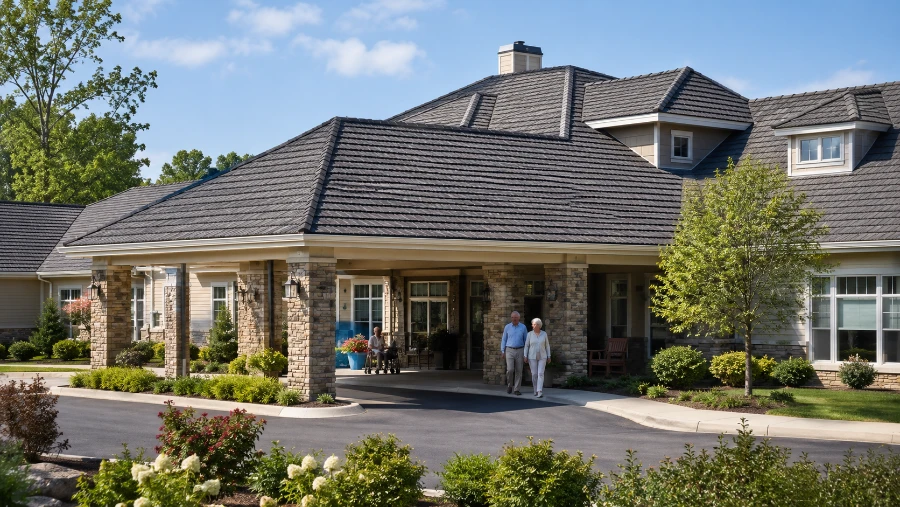
Stone-coated steel can work well on offices, churches, apartment buildings, restaurants, clubhouses, retail properties, and hospitality facilities.
It is particularly useful when the property owner wants the appearance of traditional roofing without placing the full weight of clay tile, concrete tile, or slate on the structure.
Property owners comparing metal options should also review the differences between stone-coated and standing seam metal roofing. Both can provide excellent durability, but their appearance, attachment methods, installation requirements, and ideal applications differ.
For a suitable building, stone-coated steel can be a powerful long lifespan commercial roofing option.
Standing Seam Metal Roofing
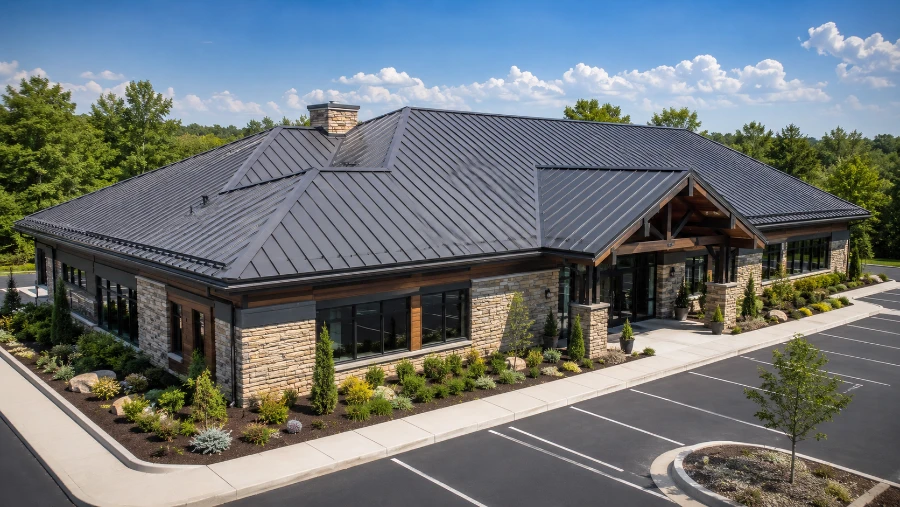
Standing seam metal roofing uses long metal panels connected by raised seams. Fasteners are generally concealed beneath the panel connections, reducing their direct exposure to sunlight, rain, and temperature changes.
Fewer exposed fasteners can mean fewer potential leak points.
Standing seam systems are commonly installed on:
- Warehouses
- Office buildings
- Manufacturing facilities
- Agricultural properties
- Schools
- Government buildings
- Modern retail developments
Metal expands and contracts as temperatures change, so panel design and installation details matter. Clips, seams, flashing, penetrations, and transition points must accommodate that movement.
A poorly designed metal roof can develop loose connections, distorted panels, or flashing failures. A well-installed system can perform for decades.
Standing seam metal may also simplify future solar installations because some mounting systems attach directly to the raised seams without penetrating the roof panels. The exact approach should still be reviewed by the roofing manufacturer and solar contractor before work begins.
Slate Roofing
Slate is one of the longest-lasting roofing materials available.
It is durable, fire-resistant, visually distinctive, and capable of lasting beyond the useful life of many commercial structures.
However, slate is heavy.
Before installation, the building may require a structural assessment to determine whether the roof framing can support the material. Slate installation also requires specialized contractors. Individual pieces can crack when stepped on incorrectly, making future rooftop access more complicated.
Slate is usually best suited for historic buildings, institutional properties, luxury hotels, churches, and premium commercial developments.
The lifespan is impressive. The upfront investment is substantial.
Property owners must also plan for specialized repairs because a contractor experienced with membrane or asphalt roofing may not be qualified to work on slate.
Clay and Concrete Tile
Clay and concrete tile perform well in hot, sunny climates. They resist insects, rot, and ultraviolet exposure while providing a distinctive architectural appearance.
Clay tile typically offers greater longevity. Concrete tile may have a lower initial cost.
Both systems require careful planning.
Property owners should consider:
- Structural weight
- Underlayment quality
- Wind attachment methods
- Hail exposure
- Replacement tile availability
- Safe access for maintenance crews
- Flashing compatibility
- Roof slope
The tiles may last for decades, but the underlayment beneath them may need replacement earlier. That detail is often overlooked.
A tile roof is not a single-layer product. Its service life depends on the entire assembly, including the deck, underlayment, fasteners, battens, flashings, and drainage details.
TPO, PVC, and EPDM Membranes
Single-ply membranes are widely used on low-slope commercial roofs.
TPO stands for thermoplastic polyolefin, a material used in several industrial and building applications. On commercial roofs, TPO membranes are commonly selected for their reflective surface, heat-welded seams, and balance between price and performance.
TPO and PVC seams are generally joined using hot-air welding. EPDM seams typically rely on compatible tapes or adhesives.
These systems can cover large roof areas efficiently and may provide reliable performance when drainage, flashing, attachment, and seam construction are handled correctly.
PVC can be especially useful for restaurants and facilities where grease, oils, or certain chemical exposures may occur. Product compatibility must still be verified for the building’s specific operations.
EPDM is known for flexibility and is frequently used on large low-slope buildings.
TPO remains popular for warehouses, offices, retail centers, and similar properties. Product thickness, reinforcement, membrane attachment, seam quality, and installation conditions can all affect its service life.
These systems may not last as long as premium metal, slate, or tile roofs, but they remain practical and cost-effective for many commercial properties.
Built-Up and Modified Bitumen Roofing
Built-up roofing uses multiple layers of reinforcing material and asphalt. Modified bitumen systems combine asphalt with polymers that improve flexibility and strength.
Both can offer strong waterproofing and good resistance to controlled rooftop traffic.
They are commonly used on low-slope commercial buildings where service crews regularly access HVAC equipment, vents, and mechanical systems.
The quality of seams, flashing, surface protection, and drainage will strongly influence performance. Blisters, open laps, damaged coatings, and standing water should be addressed early.
These are proven systems. Still, they require attentive maintenance to reach the upper end of their expected lifespan.
Why Stone-Coated Steel Deserves Attention
Commercial property owners often face a difficult choice.
They may want the long life of metal, the appearance of tile, and the lower structural burden of a lightweight system. Stone-coated steel can bring those qualities together.
It also works across a broad range of architectural styles.
A hotel may use a tile-style panel. A multifamily property may choose a shake profile. A retail building may select a shingle-style system that blends with surrounding development.
Stone-coated steel does not eliminate maintenance. No roof does.
However, it may reduce some problems associated with cracked tile, exposed fasteners, or frequent asphalt shingle replacement. Its steel core provides strength, while its protective layers help shield the panel from moisture and weather exposure.
Actual performance depends on the product, climate, installation, ventilation, and maintenance. Property owners can examine these variables more closely in this guide to stone-coated steel roof lifespan.
For decision-makers evaluating long lifespan commercial roofing, stone-coated steel deserves a serious comparison alongside standing seam metal, tile, slate, and premium membranes.
Factors That Affect Commercial Roof Lifespan
Material selection is only part of the equation.
A roof expected to last 50 years can fail much earlier if critical details are ignored.
Installation Quality
Installation quality is one of the strongest predictors of roof performance.
Contractors should pay close attention to:
- Flashing transitions
- Roof penetrations
- Valleys
- Parapet walls
- Edge metal
- Fastener placement
- Panel alignment
- Underlayment
- Drainage pathways
- Ventilation
- Expansion and contraction
Leaks frequently begin at transitions and penetrations rather than in the middle of the roof surface.
That is why contractor experience matters so much.
Ask potential contractors for examples of completed commercial projects using the exact system being proposed. Experience with “metal roofing” generally is not the same as experience with a particular stone-coated panel, standing seam profile, or membrane manufacturer.
Local Weather Conditions
Climate can dramatically shorten roof life.
Commercial roofs may face:
- Large hail
- High winds
- Intense heat
- Heavy rainfall
- Freeze-thaw cycles
- Coastal salt exposure
- Snow accumulation
- Flying debris
- Rapid temperature changes
A roofing system that performs well in a mild climate may not be the best choice in an area exposed to severe hail, hurricanes, or prolonged heat.
Material selection should reflect local weather patterns. Installation requirements should, too.
For example, a high-wind area may require different fastening patterns, edge details, clips, or adhesives than a less exposed location.
Roof Slope and Drainage
Water should leave the roof efficiently.
When water remains on a low-slope roof, it increases stress on seams, flashing, insulation, and membranes. Standing water can also collect dirt, support organic growth, and accelerate surface deterioration.
Commercial property owners should keep the following components clear:
- Interior drains
- Scuppers
- Gutters
- Downspouts
- Overflow drains
- Drain baskets
Ponding water is not a minor cosmetic issue. It is a warning sign.
After heavy rain, check the roof once conditions are safe. Record areas where water remains and have a qualified commercial roofer determine whether the cause is debris, blocked drainage, compressed insulation, deck movement, or insufficient slope.
Building Use
Different buildings expose roofs to different risks.
Restaurants may discharge grease through exhaust systems. Manufacturing facilities may release chemicals, heat, or moisture. Apartment buildings may experience frequent mechanical service visits. Warehouses may have enormous roof areas with limited drainage slopes.
A roof system should match the building’s operations.
The membrane or coating around an exhaust fan, for example, may require different chemical resistance than the roof over a standard office.
Rooftop Traffic
HVAC technicians, electricians, plumbers, satellite installers, and maintenance crews can damage a commercial roof.
Punctures, dropped tools, crushed insulation, loose fasteners, and separated seams may result from uncontrolled traffic.
Designated walkways can help protect vulnerable areas and guide workers toward service equipment.
Create a written rooftop access policy. Require contractors to sign in, use approved walk paths, and report any dropped equipment or accidental damage before leaving.
That simple process can prevent an expensive leak.
Maintenance Tips for Extending Commercial Roof Life
Good maintenance does not need to be complicated.
It does need to be consistent.
Schedule Routine Inspections
Commercial roofs should generally be inspected at least once or twice per year, depending on the roofing system, warranty requirements, building use, and local conditions.
Additional inspections should follow:
- Hailstorms
- High-wind events
- Heavy rainfall
- Nearby construction
- Rooftop equipment replacement
- Falling tree limbs
- Reports of interior leaks
Inspectors should review seams, flashing, fasteners, drains, penetrations, coatings, edge conditions, and signs of trapped moisture.
Do not rely only on a visual inspection from the ground. Many commercial roof problems are invisible from the parking lot.
Repair Small Problems Quickly
A minor opening can become a major leak.
Loose flashing, cracked sealant, displaced panels, open seams, punctures, and broken tiles should be repaired before water reaches insulation or interior finishes.
Once insulation becomes wet, repair costs can rise rapidly. Moisture may also spread horizontally, making the interior stain appear far from the roof opening.
Set an internal deadline for evaluating reported leaks. For occupied commercial buildings, same-day documentation and prompt professional inspection are far better than waiting for the next storm.
Keep the Roof Clean
Leaves, branches, packaging, dirt, and construction debris can block drainage.
Remove debris carefully. Avoid using tools that could puncture membranes, remove protective granules, or scratch coated metal.
Roof cleaning should include areas around:
- HVAC units
- Parapet walls
- Drainage outlets
- Roof hatches
- Solar equipment
- Plumbing vents
- Sign supports
Pay special attention to corners where wind-driven debris collects.
Control Contractor Access
Require rooftop contractors to document their work.
After equipment installation or repair, inspect the surrounding roofing area for punctures, loose materials, dropped screws, or damaged flashing.
Mechanical contractors should not cut, seal, or modify the roofing system unless the work has been coordinated with a qualified roofing professional. An unapproved penetration may also affect warranty coverage.
Keep Detailed Records
Maintenance records provide valuable evidence.
Document:
- Inspection dates
- Photographs
- Repair locations
- Contractor names
- Materials used
- Storm events
- Warranty communications
- Leak reports
- Rooftop equipment work
These records can support warranty claims, insurance discussions, budgeting, and property sales.
They also help identify recurring problem areas. If the same penetration has been repaired three times, another patch may not be the right solution.
Signs a Commercial Roof May Be Nearing the End of Its Life
Not every leak means the roof needs replacement. However, repeated or widespread problems may indicate that repairs are no longer cost-effective.
Watch for:
- Recurring leaks in multiple areas
- Widespread corrosion
- Open or separated seams
- Membrane cracking
- Blisters or bubbles
- Wet insulation
- Persistent ponding water
- Damaged edge metal
- Loose or missing panels
- Broken tiles
- Frequent emergency repairs
- Interior mold or moisture stains
The pattern matters.
One isolated repair may be reasonable. Multiple failures across an aging roof suggest a larger system problem.
Track annual repair spending. When costs rise steadily, compare the next proposed repair with the annualized cost of replacement. Continuing to repair a failing system can consume funds that would be better directed toward a planned capital project.
Repair, Restore, or Replace?
This decision should be based on evidence rather than urgency.
Repair
Repair may be appropriate when:
- Damage is localized
- The roof is relatively young
- Insulation remains dry
- The existing system is generally stable
- Replacement materials are available
- The problem has a clearly identifiable cause
Ask the contractor to explain why the damage occurred. Repairing the visible symptom without correcting the cause can lead to another failure.
Restore
Roof restoration may involve coatings, seam reinforcement, flashing repairs, fastener treatment, and surface preparation.
It may be suitable when the roof remains structurally sound but needs renewed weather protection.
Restoration is not a cure for saturated insulation, widespread corrosion, poor drainage, unstable decking, or severe structural movement.
Before approving a coating, request moisture testing and written confirmation that the existing roof is a suitable substrate. Coating a wet or unstable assembly can conceal problems rather than solve them.
Replace
Replacement may be the better choice when:
- Repairs are becoming frequent
- Damage is widespread
- Moisture is trapped beneath the roof
- The roof has exceeded its expected service life
- Energy performance is poor
- The existing system cannot support future plans
- The property owner expects to retain the building long term
A professional roof assessment should identify the condition of the roofing material, insulation, decking, drainage, and flashing.
For large properties, consider requesting core samples or non-destructive moisture testing before making a final decision.
How to Compare Commercial Roofing Options
Ask contractors to provide more than a total price.
A useful proposal should explain:
- Roofing material and manufacturer
- Product thickness or panel specifications
- Underlayment
- Insulation
- Fastening or attachment method
- Flashing details
- Drainage improvements
- Warranty coverage
- Expected maintenance
- Estimated service life
- Disposal costs
- Project schedule
Energy performance also deserves attention, particularly for buildings in hot climates. The U.S. Department of Energy explains that cool roofs are designed to reflect more sunlight and absorb less solar energy than conventional roofing surfaces.
A reflective roof can reduce roof surface temperature, but actual financial results depend on climate, insulation, HVAC efficiency, utility costs, roof area, and building use. Avoid accepting a broad energy-savings claim without a building-specific analysis.
Next, calculate the estimated cost per year of service.
Then consider risk.
A cheaper system may require more repairs, create more disruption, or need replacement sooner. A premium system may cost more initially but deliver stronger long-term value.
This is where long lifespan commercial roofing becomes a financial strategy rather than simply a construction choice.
Understanding Commercial Roofing Warranties
Roof warranties can be confusing.
A material warranty may cover manufacturing defects in the product. A workmanship warranty may cover installation errors. A system warranty may include broader coverage, depending on the manufacturer and contractor arrangement.
Read exclusions carefully.
Common exclusions may involve:
- Poor maintenance
- Unauthorized repairs
- Severe weather beyond stated limits
- Structural movement
- Ponding water
- Chemical exposure
- Improper rooftop equipment installation
- Failure to document inspections
A long warranty does not automatically mean a long-lasting roof.
The strength of the contractor, manufacturer, inspection process, and coverage terms all matter.
Ask who is responsible for inspecting a reported problem. Confirm whether the warranty includes labor, materials, removal, disposal, interior damage, or only replacement roofing products.
Get those answers in writing.
Is the Longest-Lasting Roof Always the Best Choice?
Not necessarily.
A slate roof may last more than a century, but it may be too heavy or expensive for a warehouse. A membrane roof may have a shorter service life, yet fit a low-slope building perfectly. Stone-coated steel may offer excellent longevity, but the roof design must support the required slope and installation method.
The best roof matches the property.
Consider:
- Building structure
- Roof slope
- Local climate
- Occupancy
- Budget
- Ownership timeline
- Energy goals
- Appearance
- Maintenance capacity
- Storm exposure
A property that will be sold in five years may require a different financial strategy than a family-owned commercial building intended to remain in the portfolio for several decades.
Property owners should focus on lifecycle value, not lifespan alone.
Choosing a Contractor for Long Lifespan Commercial Roofing
The contractor can matter as much as the product.
Before hiring, ask for:
- Proof of insurance
- Relevant licensing where required
- Commercial project references
- Manufacturer certifications
- Written installation specifications
- Warranty details
- Safety procedures
- Drainage plans
- Start and completion expectations
- Change-order policies
Ask who will supervise the project and who will handle warranty concerns after completion.
Request the names and product specifications for major components, including panels or membranes, insulation, underlayment, fasteners, sealants, flashing, coatings, and edge systems.
Avoid choosing solely based on the lowest bid.
A low price can become expensive when flashing fails, drainage is overlooked, incompatible materials are used, or repairs begin shortly after installation.
Final Thoughts
A commercial roof should protect the building for years without creating constant uncertainty.
That requires more than buying a well-known material. It requires a roofing system suited to the property, installed by an experienced contractor, inspected regularly, and repaired promptly.
Stone-coated steel, standing seam metal, tile, slate, and premium membrane systems can all provide strong results in the right setting.
The best long lifespan commercial roofing solution is the one that balances service life, cost, maintenance, weather resistance, structural needs, and business operations.
Compare the full system. Review every important detail. Calculate the cost over time.
A commercial roof is a major investment. Make it one that continues working long after the installation crew leaves!
FAQs
What commercial roofing lasts the longest?Slate, tile, standing seam metal, and stone-coated metal are among the longest-lasting options.
How long does a commercial roof last?Most commercial roofs last 20 to 70 years, depending on the material and maintenance.
Is metal roofing good for commercial buildings?Yes. Metal roofing is durable, weather-resistant, and suitable for many commercial properties.
How long does stone-coated metal roofing last?Stone-coated metal roofing can often last 40 to 70 years.
What shortens commercial roof lifespan?Poor installation, standing water, storm damage, and delayed repairs can reduce roof life.
How often should a commercial roof be inspected?Inspect it at least twice a year and after major storms.
Can roof coatings extend roof life?Yes, when the existing roof is dry, stable, and suitable for restoration.
Is a long-lasting roof worth the cost?Usually, because it can reduce repairs, disruptions, and replacement expenses.
When should a commercial roof be replaced?Replacement may be needed when leaks are widespread or the system is severely deteriorated.
How can owners extend commercial roof life?Use quality materials, maintain drainage, schedule inspections, and repair damage quickly.