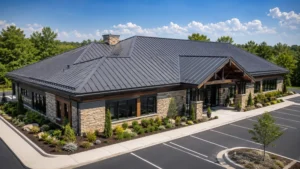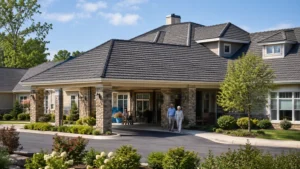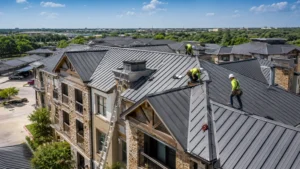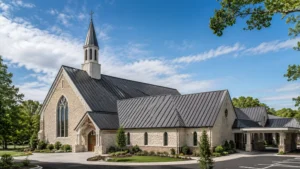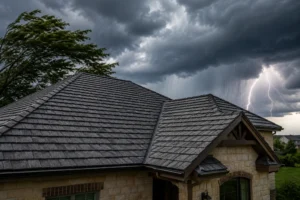
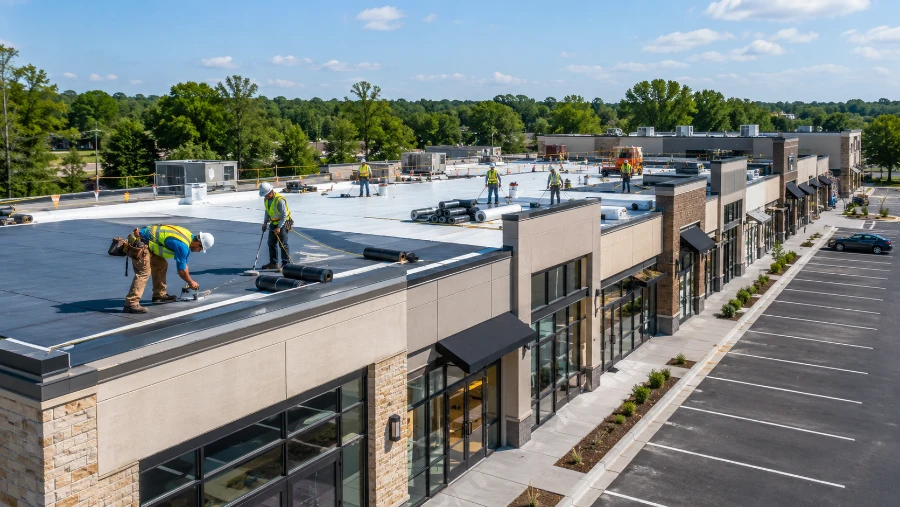
A retail center roofing replacement is much more than a construction project. It can affect tenants, customers, deliveries, parking, safety, maintenance budgets, insurance concerns, and the long-term value of the property. When the work is carefully planned, most businesses can continue operating with limited interruption. When it is rushed, however, blocked entrances, uncontrolled debris, recurring leaks, and poor communication can quickly turn the project into an operational headache.
The goal is not simply to install new roofing.
The goal is to protect the building while keeping the retail center functional, accessible, and safe. That takes an accurate inspection, a realistic scope of work, the right material, and a contractor who understands how to work above occupied commercial spaces.
Here is how property owners and managers can approach the project with greater confidence.
Why Retail Center Roofing Replacement Requires Careful Planning
Replacing a roof above a vacant building is relatively straightforward. Replacing one above restaurants, medical offices, boutiques, grocery stores, salons, and busy public walkways is different.
People are moving below the work zone throughout the day.
Deliveries must arrive on time. Employees need parking. Customers need clear paths to each storefront. Tenants may have temperature-sensitive inventory, food preparation areas, ceiling-mounted equipment, or strict operating schedules.
A successful retail center roofing replacement plan should address these issues before materials are delivered:
- Storefront and sidewalk access
- Parking and delivery routes
- Noise, dust, odors, and vibration
- Rooftop HVAC equipment
- Emergency exits and accessible paths
- Waste-container placement
- Temporary weather protection
- Tenant communication
- Work-hour restrictions
Small planning failures can create significant consequences. A blocked delivery lane may delay a restaurant’s food order. Roofing dust may enter a clothing store. Heavy vibration could interfere with a dental or medical office.
The solution is simple in principle: organize the roofing project around the center’s operations rather than expecting every tenant to adapt without notice.
Signs a Retail Center Roof May Need Replacement
Commercial roofs rarely fail in a single dramatic moment. Problems usually develop gradually, and property owners often spend years making repairs before considering replacement.
The key is knowing when another repair is reasonable and when it merely delays a larger problem.
Frequent Roof Leaks
One isolated leak may only require a targeted repair. Several leaks in different tenant spaces suggest a broader issue.
Watch for these patterns:
- The same leak returns after repeated repairs
- Water enters multiple stores
- Ceiling stains spread after every storm
- New leaks appear in previously dry areas
- Repair crews repeatedly patch seams and flashing
- Moisture reaches flooring, inventory, or electrical fixtures
Water does not always fall directly beneath the opening in the roof. It can travel across decking, insulation, structural components, or ceiling systems before appearing indoors.
That makes diagnosis difficult.
Repeated leaks can also damage insulation and decking long before the interior damage becomes obvious. If repairs are becoming frequent, request a full roof assessment rather than another quick patch.
Widespread Roofing Damage
Cracking, blistering, punctures, open seams, loose fasteners, failing coatings, missing panels, and deteriorated flashing can indicate that the system is approaching the end of its useful life.
Location matters.
One puncture beside an HVAC unit may be repairable. Cracks and seam failures spread across several roof sections are more serious. They may indicate age-related deterioration, installation defects, storm damage, or excessive movement.
Ask the inspector to take both close-up and wide-angle photographs. Close-ups show individual defects, while wider images reveal how extensively the damage is distributed.
Ponding Water and Poor Drainage
Standing water should never become a normal feature of the roof.
After rainfall, water should move toward drains, gutters, or scuppers. A small amount may remain briefly, but broad areas of persistent ponding can accelerate deterioration and add unnecessary weight to the structure.
Possible causes include:
- Blocked drains
- Poor roof slope
- Crushed or uneven insulation
- Settled decking
- Incorrectly positioned drainage outlets
- Debris around gutters and scuppers
A retail center roofing replacement creates an opportunity to correct these drainage problems. Installing new material without addressing the underlying water flow may shorten the life of the replacement system.
Rising Repair Costs
Track every roofing expense by date, location, and type of work.
Individual repair bills may appear manageable. Together, they can reveal an expensive pattern.
For example, six $2,000 service calls represent $12,000 spent without securing a new warranty or significantly extending the roof’s life. Emergency work can cost even more because it occurs under pressure and may only provide temporary protection.
Create a simple repair log that records:
| Information to Track | Why It Matters |
| Date of repair | Reveals increasing repair frequency |
| Tenant or roof section | Identifies recurring problem areas |
| Type of defect | Shows common failure patterns |
| Repair cost | Supports repair-versus-replacement analysis |
| Contractor notes | Preserves technical findings |
| Photographs | Documents changes over time |
Once repairs become routine, planned replacement may offer better financial control.
The Roof Is Near the End of Its Service Life
Roof age matters, but it should not be the only deciding factor.
A carefully installed and maintained roof may outperform a newer system with poor drainage, heavy rooftop traffic, or repeated storm exposure. Local heat, hail, wind, and temperature swings can also affect performance.
Schedule a detailed condition assessment when the system approaches its expected service range. The evaluation should cover:
- Surface materials or membranes
- Seams and fasteners
- Flashing
- Insulation
- Roof decking
- Drains and gutters
- Equipment curbs
- Skylights and penetrations
- Previous repair areas
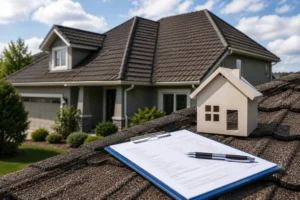
The inspection should produce more than a verbal opinion. Request photographs, moisture findings, recommended repairs, estimated remaining service life, and replacement options.
Repair or Replace?
The decision should be based on condition, remaining service life, moisture beneath the surface, future costs, and ownership goals.
Use this table as a starting point:
| Factor | Roof Repair | Roof Replacement |
| Best suited for | Isolated damage | Widespread deterioration |
| Initial expense | Usually lower | Higher upfront cost |
| Service-life extension | Limited | Significant |
| Warranty options | Often restricted | New warranties may apply |
| Disruption | Usually brief | Requires detailed coordination |
| Long-term predictability | Lower | Higher after completion |
| Drainage improvements | Limited | Easier to incorporate |
| Energy upgrades | Rare | Often practical |
Repair may be appropriate when damage is limited and the surrounding system remains dry and stable.
Replacement becomes more practical when failing seams, wet insulation, recurring leaks, deteriorated flashing, or widespread damage affect several areas.
Ownership strategy matters too. An owner planning to hold the property for decades may prioritize long-term service life and predictable maintenance. An owner preparing to sell should still consider how an aging roof could affect inspections, financing, negotiations, and property value.
Common Roofing Systems for Retail Centers
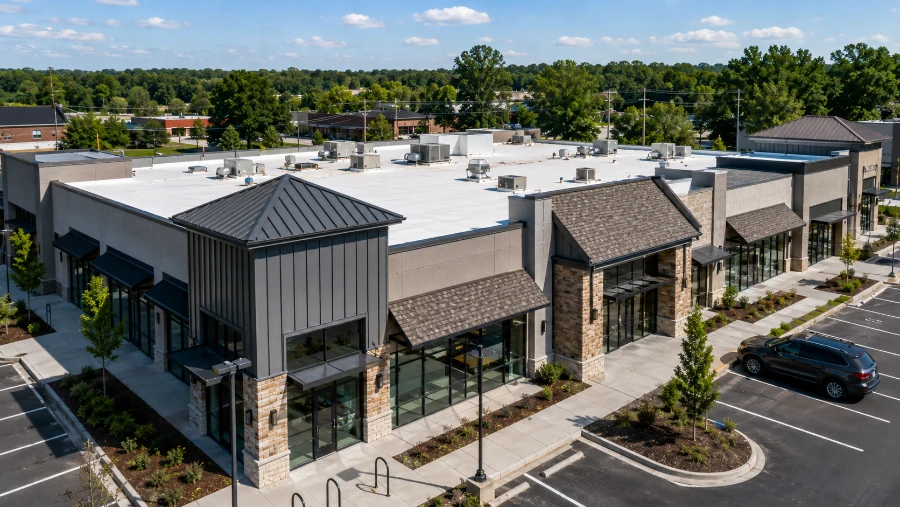
Not every material suits every retail building. Roof slope, structure, drainage, appearance, weather exposure, foot traffic, and maintenance requirements all influence the decision.
Single-Ply Roofing Membranes
TPO, PVC, and EPDM are commonly used on low-slope commercial roofs.
They can perform well across large roof areas when the seams, penetrations, and transitions are installed correctly. Many failures begin around curbs, drains, edges, and flashing rather than in the middle of the membrane.
Compare the following before selecting a system:
- Seam construction
- Puncture resistance
- Reflectivity
- Chemical resistance
- Warranty conditions
- Maintenance requirements
- Availability of trained local installers
Restaurants may create grease exposure near exhaust vents, while frequent HVAC servicing can increase the risk of punctures.
Modified Bitumen and Built-Up Roofing
These layered systems can provide durable coverage, especially where regular rooftop traffic is expected.
However, owners should consider how the installation method may affect tenants. Equipment, noise, odors, and material movement must be carefully managed on an occupied property.
Ask the contractor to explain how sensitive businesses will be protected.
Standing-Seam Metal Roofing
Standing-seam metal is often used on pitched sections, canopies, entrances, towers, and prominent architectural areas.
It can provide long-term weather protection, but installation details are critical. Metal expands and contracts as temperatures change, so the clips, seams, flashing, and fastening methods must allow controlled movement.
Poor installation can lead to leaks, loose panels, distorted metal, or premature wear.
Stone-Coated Steel Roofing
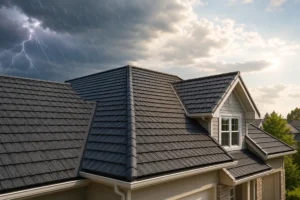
Stone-coated steel may be a strong option for pitched retail roofs, mansard sections, entry structures, and areas where curb appeal matters.
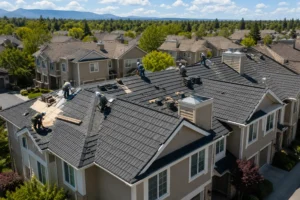
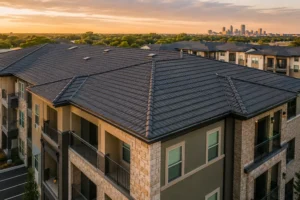
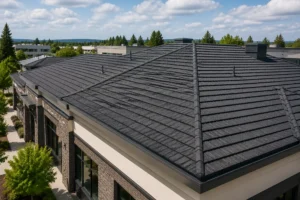
The material combines a steel core with a textured stone-granule finish. It can offer the strength of metal while creating the appearance of tile, shake, slate, or shingles. Property owners considering this system can explore the applications, advantages, and planning factors discussed in this guide to commercial stone coated roofing.
Appearance is important for retail properties.
The roof may be highly visible from roads, parking areas, neighboring buildings, and customer entrances. An upgraded roof can refresh the center’s appearance without requiring a complete exterior renovation.
Stone-coated steel is not intended for every low-slope roof section. However, it may work well on suitable pitched areas within a larger retail center roofing replacement project.
Roof Coatings and Restoration
A coating system may extend the life of a qualifying roof, but it is not a reliable solution for trapped moisture, damaged decking, or widespread structural failure.
Before approving restoration, confirm that:
- The existing roof remains structurally sound
- Moisture levels are acceptable
- Damaged areas can be repaired
- Drainage functions properly
- The coating is compatible with the existing material
- The warranty requirements are clear
Coating a failing roof may improve its appearance temporarily while leaving major problems beneath the surface.
Choosing the Right Roofing Material
Do not choose a system solely by comparing price per square foot.
A lower-cost roof may require more maintenance, deliver a shorter service life, or perform poorly under the property’s specific conditions. Instead, evaluate the total cost and performance over the years you expect to own the center.
Consider:
- Roof slope and layout
- Structural capacity
- Hail and wind exposure
- Heat and ultraviolet exposure
- Drainage
- Rooftop equipment
- Maintenance traffic
- Appearance from street level
- Energy goals
- Warranty terms
- Planned renovations
- Expected ownership period
Ask each contractor to explain why the proposed system suits the building. “We install it all the time” is not a complete answer.
The recommendation should be based on the property’s condition, design, operations, and climate.
How Much Does Retail Center Roofing Replacement Cost?
There is no universal price for retail center roofing replacement.
A single rectangular building with easy access may be relatively straightforward. A multi-level center with dozens of HVAC units, parapet walls, skylights, multiple roof sections, active restaurants, and limited staging space will require more labor and coordination.
Major cost factors include:
- Total roof area
- Existing roofing layers
- Removal and disposal
- Material selection
- Insulation thickness
- Deck condition
- Drainage corrections
- Flashing complexity
- Roof access
- HVAC equipment
- Permit requirements
- Labor conditions
- Restricted working hours
- Temporary protection
- Warranty level
Hidden moisture is one of the biggest variables.
A membrane may look repairable from above while the insulation beneath it is saturated. Wet insulation often loses performance and may need removal. Once the existing system is opened, damaged decking may also be discovered.
Include a contingency in the budget. For older roofs with incomplete records, a contingency of approximately 10% may provide room for unexpected conditions, although the appropriate amount should reflect the inspection findings and project complexity.
Commonly Overlooked Costs
| Cost Item | Why It Matters |
| Temporary weather protection | Reduces exposure during tear-off |
| Cranes or lifts | Moves materials and equipment safely |
| Parking controls | Protects vehicles and customers |
| Interior protection | Limits dust, debris, and water exposure |
| Deck replacement | May become necessary after removal |
| Drainage improvements | Helps protect the replacement roof |
| After-hours work | Reduces disruption but may add labor cost |
| HVAC coordination | Protects equipment and roof curbs |
| Testing and inspections | May support permits or warranties |
The proposal should separate known costs, allowances, exclusions, and unit prices for unexpected work. Vague estimates make change orders harder to control.
Planning Around Tenants and Customers
Good communication can make the difference between an organized project and a stream of daily complaints.
Start early.
Tenants should receive information about the expected schedule, affected areas, parking restrictions, deliveries, noise, access changes, and whom to contact with urgent concerns.
Provide updates even when the schedule remains unchanged. Silence creates uncertainty.
Divide the Work Into Phases
Large retail roofs are often easier to replace in sections.
Phased installation can:
- Limit the number of affected tenants
- Keep more parking available
- Reduce exposed roof area
- Improve debris control
- Maintain customer access
- Simplify weather planning
The tradeoff is duration. Phasing may extend the calendar, but it can significantly reduce disruption from day to day.
Protect Entrances and Walkways
Every tenant should retain a safe and obvious customer route.
Use physical barriers, warning signs, controlled work zones, and covered walkways where appropriate. Waste containers and material pallets should never block emergency exits, accessible parking, or required fire lanes.
Inspect ground-level controls at the beginning and end of each day.
A barrier that was correctly positioned in the morning may be moved during deliveries or heavy customer traffic.
Manage Noise and Vibration
Roof removal, fastening, cutting, and material movement can be loud.
Coordinate high-noise work with individual tenants. A daycare, dentist, restaurant, financial office, and boutique may have very different needs.
When practical, schedule the most disruptive tasks before opening, after closing, or during agreed periods. Give tenants advance notice before crews begin working directly above their units.
What Happens During the Replacement Process?
A professional retail center roofing replacement normally follows several clear stages.
Inspection and Assessment
The contractor or roofing consultant documents existing conditions, investigates moisture, reviews drainage, maps penetrations, and identifies structural concerns.
Moisture scanning, test cuts, or roof core samples may be recommended when conditions are unclear.
Scope Development
The team defines which materials will be repaired, removed, or replaced. The scope should address:
- Roofing material
- Insulation
- Decking
- Flashing
- Drains and gutters
- Roof edges
- Equipment curbs
- Penetrations
- Walk pads
- Warranty requirements
Anything omitted from the scope may later become an additional charge.
Preconstruction Planning
Before installation starts, the contractor organizes permits, deliveries, staging areas, tenant notices, safety controls, work hours, and emergency weather procedures.
Hold a formal preconstruction meeting.
This is where broad promises should become specific responsibilities. Confirm who communicates with tenants, who approves additional work, how leaks will be handled, and where materials may be stored.
Removal and Deck Inspection
Once existing roofing is removed, the crew can directly inspect the insulation and deck.
Unexpected damage should be photographed, measured, and documented before additional costs are approved. Property management should receive a clear explanation rather than a simple request for more money.
New Roof Installation
The selected system is installed according to the approved design and manufacturer requirements.
Quality control should occur throughout the project. Waiting until the final inspection to identify installation problems may make correction slower and more expensive.
Final Inspection and Closeout
The contractor completes punch-list work, removes waste, cleans affected areas, and submits closeout documentation.
Request:
- Warranty certificates
- Product information
- Inspection reports
- Installation photographs
- Maintenance instructions
- Final permits
- Approved change orders
- Emergency service information
Store these records in one clearly labeled digital folder.
How Long Does the Project Take?
Project duration depends on property size, weather, roof complexity, tenant restrictions, material availability, and the amount of hidden damage uncovered.
A small retail building may take days or several weeks. A multi-building shopping center may take months.
Speed should not be the only priority.
An aggressive schedule may look appealing, but removing too much roofing at once can expose the property to weather. A practical schedule balances productivity, quality control, tenant needs, and daily weather conditions.
Whenever possible, avoid the center’s busiest sales period. Retailers may be especially sensitive to disruption during holiday shopping, seasonal promotions, grand openings, or major local events.
Reducing Disruption During Construction
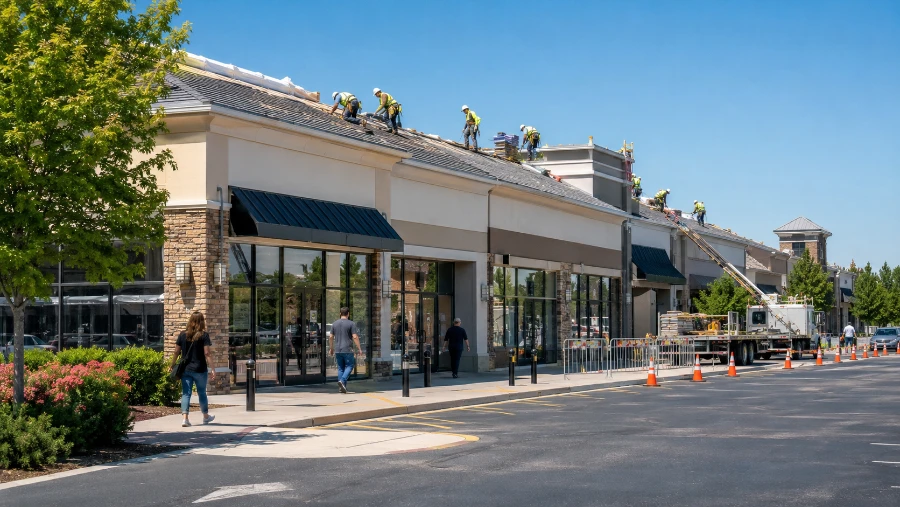
Small operational decisions can make a major difference.
Use these steps:
- Complete noisy work outside peak hours
- Begin above vacant units when practical
- Maintain at least one clear entrance for each tenant
- Reserve dedicated material and waste zones
- Coordinate daily with property management
- Notify tenants before work moves above them
- Protect sensitive inventory and ceiling systems
- Clean sidewalks and parking areas every day
- Maintain visible directional signs
- Prepare temporary coverings before storms
- Keep delivery routes open during agreed windows
A clean jobsite builds trust.
Customers may accept temporary inconvenience, but they should never feel that the center is unsafe, disorganized, or difficult to enter.
Energy Efficiency and Long-Term Operating Costs
Roof replacement provides an excellent opportunity to improve thermal insulation and reduce unwanted heat movement through the building.
Once the old system is removed, contractors may be able to replace wet insulation, increase insulation levels, seal gaps around penetrations, and correct poorly protected equipment curbs. These improvements can help the heating and cooling system maintain indoor conditions more efficiently.
Depending on the building, climate, and selected system, cool roofing surfaces may reflect more sunlight and absorb less solar energy than conventional dark roofing. That can lower roof temperatures, although actual energy savings will depend on insulation, HVAC efficiency, operating hours, material selection, and local climate.
Avoid promises based on one roofing feature.
Ask the contractor or design professional to evaluate the complete assembly, including the roofing surface, insulation, air leakage, ventilation where applicable, and equipment penetrations.
Preparing for Severe Weather
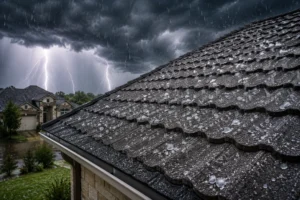
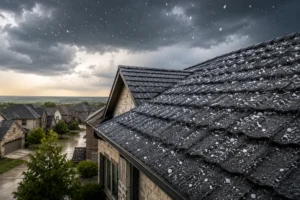
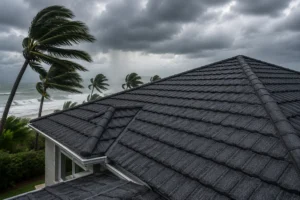
Retail centers in hail- and wind-prone regions need more than basic water resistance.
Review:
- Impact-resistance ratings
- Wind-uplift requirements
- Roof-edge attachment
- Flashing details
- Drainage capacity
- Equipment anchoring
- Skylight protection
- Panel or membrane warranty terms
Edges and corners deserve particular attention because they can experience greater wind pressure.
After completion, photograph all roof sections, equipment curbs, flashing, drains, and edges. Store the images with the warranty documents. They establish the roof’s post-installation condition and may be valuable after a future storm.
Selecting a Retail Roofing Contractor
General commercial roofing experience is important. Experience working above occupied retail properties is even more valuable.
Ask each contractor:
- What comparable retail projects have you completed?
- How will customers and tenants be protected?
- Who provides daily updates?
- What is the emergency weather procedure?
- How will unexpected moisture be documented?
- Which warranties are included?
- Who performs quality inspections?
- How will HVAC equipment be protected?
- How are change orders approved?
- What happens if an interior leak occurs during construction?
Compare proposals line by line.
A low bid may exclude disposal, insulation, permits, drainage work, flashing, edge metal, interior protection, or after-hours labor. The final number means little unless the scope is complete.
The contractor should also explain the work in plain language. Owners should not have to decode vague allowances or confusing descriptions before making a major investment.
Maintain the New Roof
The project does not end when the crew leaves.
Routine maintenance protects the investment and may be required to keep warranty coverage valid. Schedule inspections at planned intervals and after major storms, construction work, or rooftop equipment replacement.
Owners choosing stone-coated steel can use a formal stone coated roof maintenance plan to guide inspections, debris removal, flashing checks, drainage care, and post-storm reviews.
Regular maintenance should include:
- Clearing drains and gutters
- Checking seams and flashings
- Inspecting sealants
- Repairing punctures
- Monitoring ponding water
- Controlling roof access
- Documenting HVAC work
- Removing loose debris
- Reviewing previous repair areas
Other trades can damage a roof accidentally. HVAC technicians, sign installers, electricians, and communications contractors may puncture materials or disturb flashing without recognizing the effect.
Control access and require contractors to report any roofing disturbance immediately.
Common Replacement Mistakes
Several mistakes repeatedly create avoidable expenses:
- Waiting until leaks become emergencies
- Selecting materials only by initial price
- Ignoring wet insulation
- Failing to improve drainage
- Starting without a weather plan
- Giving tenants insufficient notice
- Accepting an incomplete scope
- Overlooking warranty exclusions
- Removing too much roofing at once
- Neglecting maintenance after installation
The biggest mistake is treating retail center roofing replacement as a simple material purchase.
It is a building-protection and business-continuity project. The roof must protect the structure, while the installation process must protect every business operating beneath it.
Final Thoughts
A successful retail center roofing replacement starts long before the first roofing material is removed.
It begins with an honest condition assessment, a detailed scope, a realistic budget, clear tenant communication, and a roofing system selected for the property’s actual needs. From there, careful phasing, daily safety controls, strong documentation, and regular updates keep the project under control.
The finished system should provide more than a dry interior.
It should deliver predictable maintenance, stronger weather protection, improved curb appeal, and greater confidence for owners, tenants, employees, and customers. Plan carefully, ask direct questions, and choose a contractor who understands that retail operations cannot simply stop because roofing work has started.
FAQs
Replace it when leaks, damage, ponding water, or repair costs become widespread.
It may take days, weeks, or months depending on size, weather, and complexity.
Yes, with phased scheduling, safe access, and clear tenant communication.
The best option depends on roof slope, climate, structure, and budget.
Cost depends on size, materials, insulation, access, and hidden damage.
Repair isolated damage; replace the roof when problems affect large areas.
Use phased work, clear walkways, off-hours scheduling, and regular updates.
Yes, especially when insulation and reflective materials are upgraded.
It should cover materials, labor, removal, warranties, exclusions, and extra-cost items.
Inspect it regularly, clear drains, control access, and repair damage quickly.